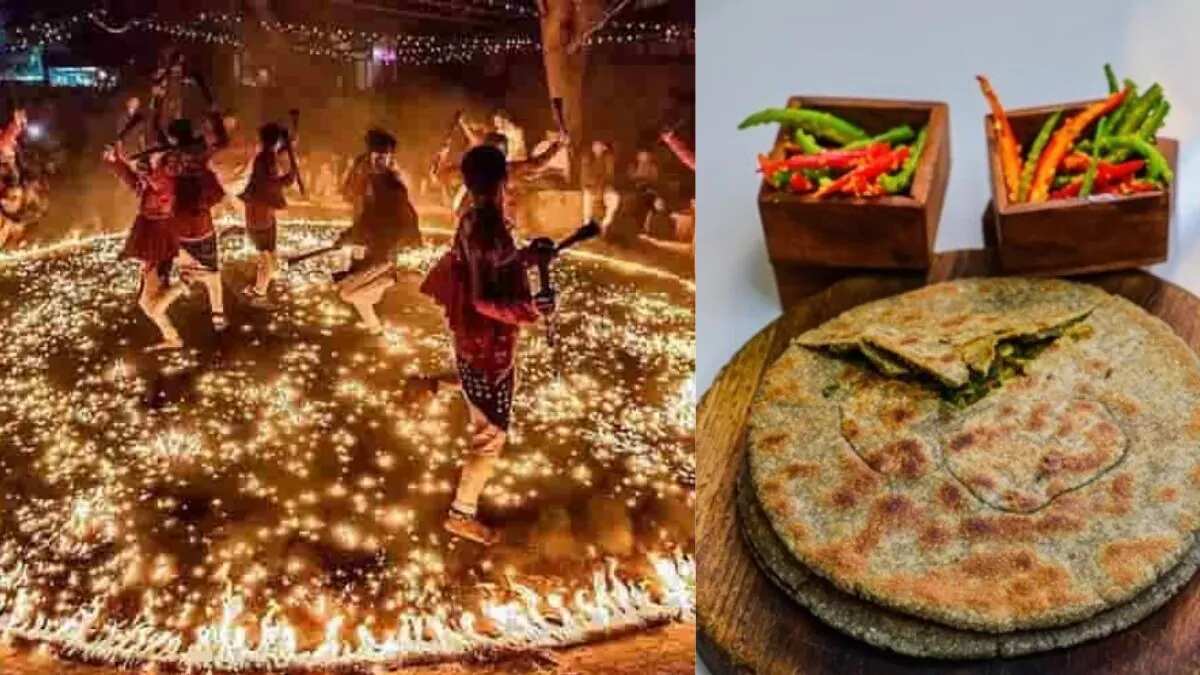
Navratri in Saurashtra blends large public events with community traditions that thrive in towns and villages. The spectacle of dance finds balance in the food that supports it, and the flavours of Kathiyawadi cuisine guide how people fast, feast and share across nine nights. Rajkot’s race course grounds, Jamnagar’s torchlit Mashaal Garba, Porbandar’s Mer and Kharva Raas and Bhadrakali temple garbas all create their own atmosphere. What binds them together is the central role of food, prepared for both scale and intimacy, reflecting the region’s distinct culinary identity.
Jamnagar’s Mashaal Garba And Corporate Garba
Jamnagar is famous for Mashaal Garba, where dancers move in circles carrying lit torches. The performance is as demanding as it is devotional. Around these grounds, stalls serve vrat-friendly Kathiyawadi snacks such as rajgira puris, sabudana khichdi and sweet potato patties. Reliance-sponsored garbas, organised on large grounds in Jamnagar and Rajkot, employ professional caterers. Their menus stretch beyond fasting food to include Kathiyawadi farsan like khaman, fafda and patra. Such events create a festive food court, where tradition meets scale, and the demand for Kathiyawadi tastes is evident among thousands of participants.
Porbandar’s Mer And Kharva Raas Garba
In Porbandar, the Raas traditions of the Mer and Kharva communities carry deep cultural significance. The Mer, with their agrarian and martial heritage, sustain Raas Garba that highlights strength and collective discipline. After hours of dance, community kitchens provide meals rooted in Kathiyawadi staples, with bajra rotla, garlic chutney and lentil dishes that are both filling and familiar. The Kharva community, with its seafaring background, holds Raas Garbas that also showcase coastal foodways. Coconut barfi, groundnut chikki and jaggery sweets are common offerings, along with large servings of khichdi and kadhi cooked in open vessels for all participants. These meals strengthen the community bonds as much as the dance itself.
Bhadrakali Temple Garba And Prasadam
Bhadrakali temples across Saurashtra host nightly garbas, where food assumes a sacred role. After aarti, prasadam is distributed, often consisting of Kathiyawadi favourites such as sukhdi, dudhi halwa, lapsi and sheera. Buttermilk and simple khichdi are also common, ensuring devotees receive light, nourishing food after long sessions of worship and dance. Temple kitchens prepare these dishes with strict care, treating food as an extension of devotion. The simplicity of prasadam reflects the temple’s ritual atmosphere, setting it apart from the more commercial food scenes of city grounds.
Rajkot’s Large-Scale Garba Events
Rajkot is a major centre for large Navratri celebrations. The Race Course Ground and premium garba venues such as Bamboo Beats are known across Gujarat. The food at these events must meet the demands of thousands each night. Caterers design menus that feature Kathiyawadi farsan, including lilva kachori, handvo and dhokla, as well as farali chevdo, rajgira laddus and singhara sheera for fasting participants. Around the Race Course Ground, street vendors sell bajra rotla with jaggery, chaas in earthen pots and packets of dry snacks. The result is that the Rajkot Navratri scene becomes both a cultural stage and a living market of Kathiyawadi food.
Sheri Garba And Neighbourhood Hospitality
Sheri Garba remains the most personal form of celebration in Saurashtra. In these neighbourhood gatherings, families contribute food to a shared spread that sustains dancers after late-night devotion. Women prepare farali dishes such as sabudana vada, rajgira sheera and kuttu puris, while men often arrange logistics like seating and serving. Children are handed small sweets like peanut chikki or dry fruit barfi. The feast that follows Sheri Garba is served in courtyards and streets, emphasising the Kathiyawadi value of collective hospitality. Food here is less about variety and more about togetherness, making the Sheri Garba meal an expression of community life.
Kathiyawadi Cuisine As The Core Of Navratri In Saurashtra
What distinguishes Navratri food in Saurashtra is the unmistakable flavour of Kathiyawadi cuisine. Farali thalis contain sabudana khichdi, potato shaak with peanuts, rajgira puris and singhara laddus. When families break the fast, meals often feature bajra rotla with garlic chutney, khichdi kadhi and seasonal shaak. Sweet shops prepare sukhdi, mohanthal and dry fruit barfi in bulk for offerings and gifts. Every element is rooted in Kathiyawadi tradition, from the bold use of garlic and bajra in savoury dishes to the earthy sweetness of jaggery in desserts. These foods not only sustain dancers but also remind them of the agricultural and cultural heritage of Saurashtra.