The halls of the Indian Embassy in Thailand recently witnessed a rare alignment of heritage and modernity. As Her Royal Highness Princess Sirivannavari Nariratana Rajakanya prepares for her official visit to India, the evening served as a sensory introduction to a nation that is as much about its ancient roots as it is about its bold, contemporary future. Leading this narrative was Chef Garima Arora, the visionary behind the two Michelin starred Gaa in Bangkok, who took on the role of a cultural storyteller through a bespoke menu designed for the royal guest. Garima Arora has long been a trailblazer in the global food scene. As the first Indian woman to lead a restaurant to two Michelin stars, her work has always been about more than just taste. It is about the intellectual and emotional deconstruction of Indian flavours, presented with a finesse that commands international respect. Her invitation to curate this dinner by the Indian Embassy underscores a shift in diplomacy, where food is no longer just a side note to a meeting but the primary vehicle for connection and soft power.
Image credit: Garima Arora
The evening was an intimate affair, designed to foster a dialogue between two nations that share centuries of intertwined history. The relationship between India and Thailand is one of deep ancestral links, defined by the ancient spice routes, the movement of people, and the sharing of spiritual and linguistic traditions. By placing Chef Garima at the helm, the Embassy ensured that these historical ties were not just spoken about but experienced through the palate.
The menu itself was a masterclass in culinary balance. It began with an ingenious creation called Tom Kha Pani Puri. This dish served as a playful tribute to a Thai classic while retaining the quintessential Indian street food experience. By filling the crisp spheres with a chilled Tom Kha broth and Maitake mushroom, the chef created a bridge between the spicy, tangy notes of India and the creamy, aromatic profiles of Thailand. It was a clear signal of the evening's intent: to show that while the ingredients may differ, the soul of the two cuisines often beats to the same rhythm.
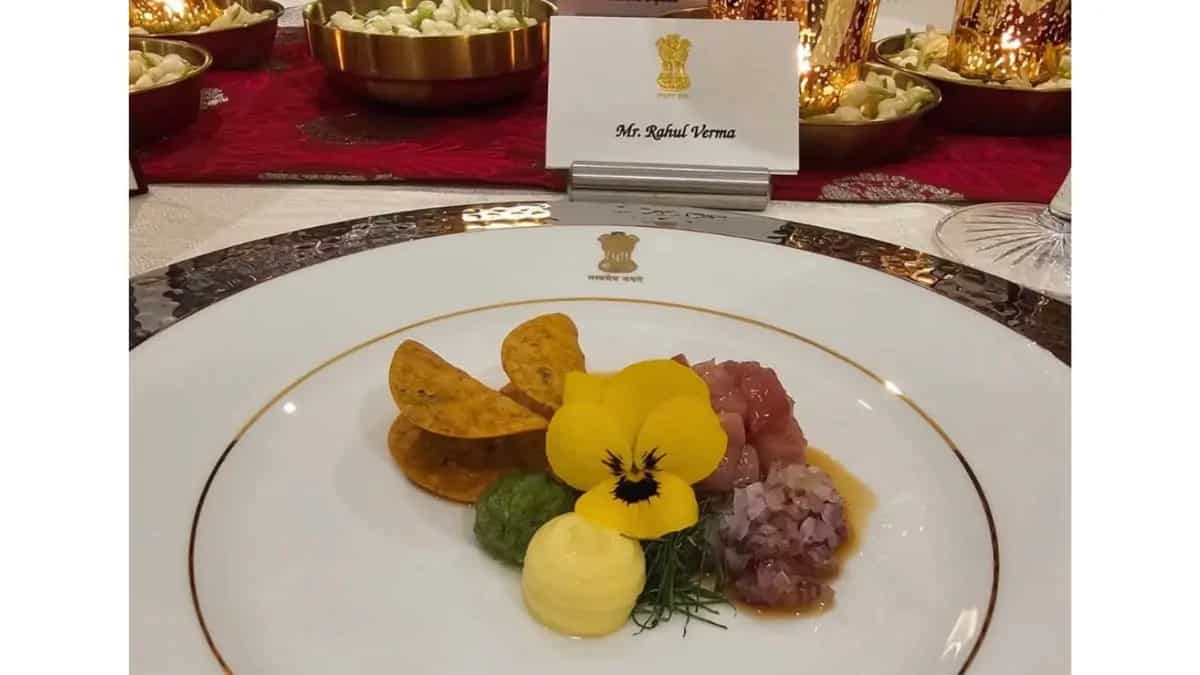
Following this was the Tuna Bhel, a sophisticated take on a Mumbai staple. Using premium chutoro, the dish incorporated khakra for texture and fresh herbs for vibrancy. The addition of fermented chilli and somsa lime chutney added layers of complexity, showcasing how traditional Indian snacks can be elevated to the level of fine dining without losing their inherent joy.
Image credit: Garima Arora
The progression of the meal continued with Berry Chaat, a dish that challenged the traditional perceptions of what a chaat can be. By pairing a mixed berry granita with sweetened yoghurt and a lemon basil chutney, the kitchen created a refreshing palette cleanser that still felt rooted in the Indian tradition of contrasting temperatures and textures. The use of crispy betel and mango leaves added an earthy, herbal finish that echoed the lush landscapes of both India and Thailand.
For the main course, the focus shifted to the richness of Indian hospitality. The Chicken Malai Kebab was reimagined with smoked tofu and a jaggery vinaigrette, providing a smoky sweetness that complemented the succulent meat. This was served alongside a slow-cooked Saag and a delicate Pumpkin Kebab. One of the standout features of the main spread was the Jackfruit Rann, a creative vegetarian interpretation of the classic slow-cooked lamb dish, which demonstrated the versatility of Indian seasonal produce.
The centrepiece of the meal was the Morel Mushroom Biryani, an aromatic masterpiece accompanied by artisan breads, papadums, and raita. Biryani is perhaps the most iconic representative of Indian culinary diversity, and by using morels, Chef Garima brought a sense of forest-floor earthiness to the royal table. The meal concluded on a high note with a Chai Mousse. Crafted from black Darjeeling tea and served with raspberries and candied ginger, the dessert was a sophisticated nod to the tea culture that is so central to Indian life.
Beyond the technical brilliance of the dishes, the true value of the evening lay in the interaction between the chef and the Princess. Seated together, Chef Garima personally guided Her Royal Highness through each course, offering insights into the regional origins of the ingredients and the stories behind the techniques. This was not merely a chef explaining a recipe; it was a cultural ambassador explaining the evolution of a nation’s identity.
Image credit: Garima Arora
They spoke of the shared history of trade and migration, discussing how the spice routes of the past have evolved into the creative exchanges of the present. For the Princess, the dinner was a prelude to her journey to India, providing her with a conceptual framework of what to expect. It highlighted the fact that India is no longer just a land of tradition, but a vibrant, evolving landscape where young creators are redefining what it means to be Indian on a global stage.
In her own reflections on the event, Chef Garima expressed that it was a profound honour to share the table with Her Royal Highness. She noted that the team at Gaa aimed to create a menu that brought the food cultures of both countries onto a single plate, telling a story that spans from the past to the present. This sentiment captures the essence of modern Indian gastronomy: it is respectful of its heritage but never shackled by it.
As the Princess prepares for her official visit, she carries with her the memory of this dinner, a blend of Tom Kha and Pani Puri, of Darjeeling tea and Thai lime. It is a reminder that in the world of international relations, the most enduring bonds are often those forged through shared experiences and mutual respect. Chef Garima Arora has once again proven that her kitchen is a place where boundaries blur and a new, shared language of flavour is born.
The success of this evening at the Indian Embassy in Thailand is a testament to the power of contemporary Indian cuisine. It shows that our food is one of our greatest exports, capable of engaging the highest levels of royalty and diplomacy. By blending the familiar with the innovative, Garima Arora has set the stage for a royal visit that promises to be as much a celebration of culture as it is a diplomatic milestone.