The landscape of Indian cuisine keeps getting shaped with a quiet, yet profound revolution. For many generations, vegetarianism has been a cornerstone of Indian culture, but a new movement is taking root. You can witness a shift from the predictable dishes to a progressive approach, especially when it comes to plant-forward dining.
Long gone are the days when staples like vegetarian dal makhani and paneer pasanda were the highlights os a menu. Chefs and restaurants are now celebrating vegetables as an alternative to meat and heroes on the plate. The recent pop-up of Mharo Khet from Jodhpur at Hyatt Centric Chandigarh, is an impeccable example that brought its farm-to-table concept to the Tricity.
Also Read: Chef Amninder Sandhu’s Pop-Up Reinvents Indian Cuisine With Hyper-Local Flavours In Chandigarh
Walking Through Mharo Khet, Jodhpur
Spread across 40 acres in Manai, a village in Jodhpur, Mharo Khet was founded by Rajnush Agarwal and his wife, Vedika. “We have maintained the lush green in an otherwise arid Thar desert by growing about 80 to 90 varieties of crops,” says Rajnush. “Our goal is to maximise the use of produce growing within the farms and minimise the production coming from outside.”
While the pop-up menu touches nine states of India, the ever-evolving tasting menu at Paeru, Mhaor Khet takes you through the nine decades of life. The open-to-sky dining experience is further enhanced with the seating arranged in a guava orchid. “You can stay at Mharo Khet for as long as you want and make it your home away from home. With farm tours, yoga sessions, and champis, we offer a retreat of a kind,” Rajnush elaborates.
Mharo Khet X Hyatt Centric Chandigarh
Curated by Chef Ishan Ahluwalia, the plant-forward menu is a celebration of Indian cuisine with a modern-day makeover. “I like to keep the traditional flavours, but keep the outlook and perspective of a dish global, Chef Ishan highlights. “So, my team and I take into account the global pairings, humble regional dishes, plating, and so on.”
Inside The 9-Course Menu
The entire menu is a walk through across different states of India. Chef Ishan has picked a regional classic, given it a contemporary twist, and added it to the 9-course menu.
1. Banarasi Tamatar Chaat: Italy Meets Uttar Pradesh
The first course is a modern-day rendition of bruschetta. Giving the regional street food its due respect, Chef Ishan explains, “we’ve replaced the bread in bruschetta with spinach tempura and the cheese component with herbed yoghurt.” And truly, when I closed my eyes and ate, it was a chaat bomb explosion in my mouth, which tasted exactly like Banarasi tamatar chaat.
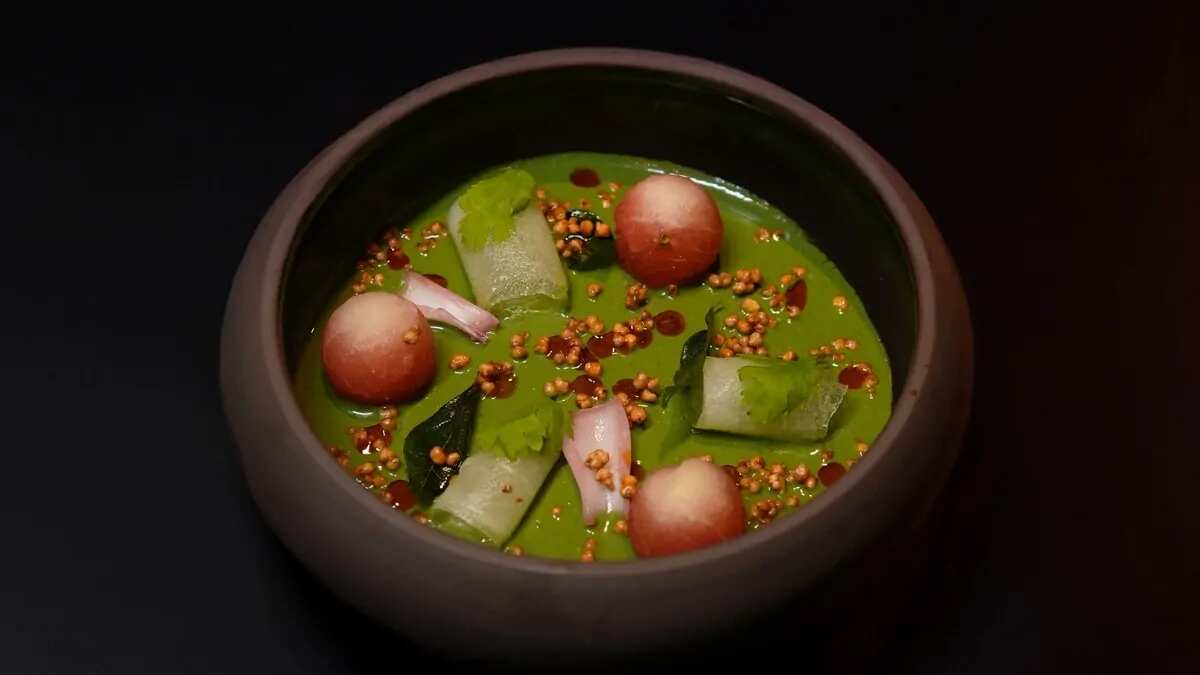
2. Sweet Melon Crudo: Peru Meets Kerala
Drawing inspiration from Peruvian ceviches and crudos, Chef Ishan replaced the seafood with muskmelon. The dressing is made with coconut and basil. The dish is then garnished with puff millets that are grown in Mharo Khet.
3. Baby Corn Polenta: Chef’s Special
Giving the Punjabi-classic makai methi malai a spin, Baby Corn Polenta replaces makai with baby corn and the malai with white onion soubise and fenugreek. “We serve it with cherry tomato achaar, because well, Punjabis love their achaars. So, that’s an added element of surprise and familiarity,” Chef Ishan says.
4. Kachori Tartlet: France Meets Rajasthan
The tartlet is inspired by Rajasthani pyaaz kachori. It comprises a Nigella seed tartlet, roasted potatoes, and a sweet and savoury onion jam on top. To enhance it further, there’s a jalapeno thecha as a flavourful garnish.
5. Solkadhi: Italy Meets Goa
Breaking the journey between appetisers and the main course, the sorbet on the menu featured Solkadhi. Made with kokum and coconut, it is spiked with chilli and mint. Beautifully paired with chocolate crush, the unique take of Solkadhi blew the minds of every diner.
6. Squash Paturi: Reimagined Bengali Staple
It’s the vegetarian version of the classic Paturi Maach, made with pumpkin. Marinating pumpkin with mustard, wrapped in a banana leaf, steamed to perfection, and served with bokchoy and a drizzle of hot honey, Squash Paturi comes with Mharo Khet’s special Jhuri Alu Bhaja.
7. Jackfruit Haleem: Middle East Meets Kashmir
“I try to take inspiration from non-vegetarian classical pairing, and I try to bring them as close as possible to the vegetarian take on it,” notes Chef Ishan. The Jackfruit Haleem is slow-cooked with a variety of lentils and Mharo Khet’s in-house pice mix. It is served with a Kashmiri Bhakarkhani, flavoured with almonds, saffron and cardamom.
8. Stewed Apple: Europe Meets Maharashtra
Chef Ishan describes the preparation process, “Stewed apple is basically an apple petha. We poach the apples in a saffron syrup and pair them with lemon shrikhand.” Served with salted cinnamon oat crumbles, the pre-dessert had the best of every texture.
9. Filter Coffee Payasam: Turkey Meets Tamil Nadu
The dessert is a filter coffee inspiration, but in the form of panna cotta. Made with coffee, coconut, and cardamom, it is served with a plum jam and Turkish kataifi pastry. Being a huge fan of desserts, it’s safe to say this was my favourite part of the elaborate menu.
The Future Of Plant-Forward Dining
India has always had a rich vegetarian cuisine. However, plant-forward dining goes beyond abstaining from meat in your diet. It makes plants and vegetables the centre of the plate, and not something you’d serve on the side. The highlights from the pop-up’s menu were Jackfruit Haleem, Melon Crudo, and Squash Paturi, which will make you forget about the meat and fish.
“I’m a hardcore carnivore. But take it from a meat-eater; that's what Rajnush, the team of chefs at Mharo Khet, and I have created, which will not make non-vegetarians uncomfortable. We’ve used vegetables in a way that fish and meat are replaced with vegetables, and the cooking processes and flavours are sure to induce nostalgia, making every diner think hard about a plant-forward diet,” says Chef Ishan. Furthermore, Rajnush adds, “the road ahead for plant-based diets is truly bright. Since Jodhpur is more centric towards vegetarianism, we’ve never had to sell our plant-forward menus hard.”
With the mission of making you think beyond the North Indian classics like Shahi Paneer, Dal Bukhara, etc, anytime you think of the vegetarian menu, Mharo Khet and many other global chefs and nutritionists are experimenting with vegetables every day. Not only is it helping to move towards sustainable agriculture, but it is also sparking conversations around climate change and soil health.