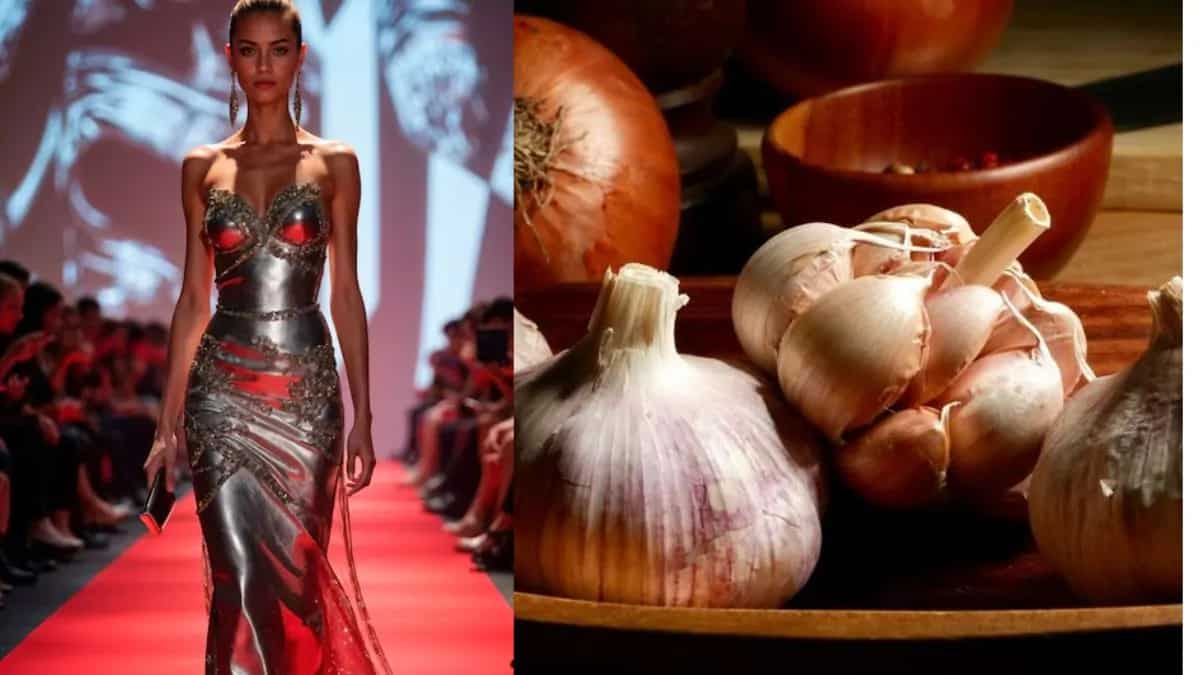
Every year on the first Monday of May, the steps of the Metropolitan Museum of Art, in the United States, turn into one of the most-watched red carpets, globally, i.e., the Met Gala. Hosted by Vogue and led by Anna Wintour, the evening is less about dinner and more about spectacle and carefully designed appearances and couture.
But behind the shining gowns and theatrical entrances lies a surprising food code. Unlike many high-profile events where menus are created to impress, the Met Gala’s food rules are made around the protection of outfits, aesthetics and the overall experience. With garments that are often delicate, archival or worth thousands, sometimes even millions, even a dot of sauce or gravy can be fatal.
So while guests do eat and treat themselves, what they do not eat is just as important. Some foods are excluded every year, not for the sake of taste, but for practicality, appearance and the mere logistics of an evening where fashion takes the centre stage.
Why Food Rules Exist At The Met Gala
The Met Gala is not a usual dinner event; it is a visual production. Every element, right from lighting to table settings, is curated to align with the theme. Food, thus, should not interrupt. Dishes that are messy, extremely aromatic or visually distracting are bypassed. There is also a logical aspect: hundreds of guests in couture outfits passing through tight spaces can result in spills, crumbs and stains, which are a real concern. The rules, hence, ensure that nothing on the plate contests with what is on the red carpet.
These guidelines are typically supervised by Anna Wintour in collaboration with the Vogue team, event planners and selected chefs. Together, they make a menu that is graceful but controlled, providing that food supports the event’s aesthetic rather than contending with it.
Foods That Are Banned In The Met Gala And Why?
Get to know here what foods are banned at the Met Gala and also the reason behind it:
Parsley And Garnish Greens
Parsley and other garnish greens may look harmless on a plate, but they are avoided at events like the Met Gala. The reason is straightforward- these tiny leaves have a habit of getting stuck in between the teeth, something that becomes instantly very evident under the constant camera flashes. With close-up shots, interviews and media interactions happening throughout the evening, even the smallest visual distraction can stand out. In a location where appearance is everything, such little details are carefully handled to maintain a polished, picture-perfect look of the celebs coming to attend at all times.
(Image credit: Freepik)
Garlic-Heavy Dishes
Garlic is the powerhouse of flavour, but it does not find a place on the menu at the Met Gala. Here, guests are frequently engaging in close conversations, greeting each other and interacting in close spaces. Strong smells from garlic-heavy dishes can remain even long after having the meal, making interactions a bit awkward. The purpose is to keep the environment pleasing and neutral, letting people focus on discussions, fashion and the overall experience. Avoiding such ingredients guarantees that no smell overpowers the atmosphere or diverts from the evening’s refined setting.
Onion-Forward Foods
Much like garlic, onions, particularly when raw or heavily used, are not utilised. Their sharp fragrance can remain in the breath and become very evident in close discussions. Given the number of interactions, photographs and media moments, even slight discomfort can affect the overall experience. The food served is prepared to be elegant but also socially seamless, so that guests can move through the evening without stressing about strong flavours concerning their presence or interactions.
Bruschetta And Crumbly Bites
Crumbly foods such as bruschetta may be popular at most gatherings, but not here. At the Met Gala, where outfits are often detailed and delicate, loose crumbs can easily fall onto the fabrics and cause damage or marks that are visible or get stuck onto them. Many garments are custom-made, detailed or archival, making them challenging to clean or to replace. Even a small crumb can set the look off. To avoid such troubles, foods that break apart easily are not included, guaranteeing that guests can enjoy their meal without worrying anything about their attire.
(Image credit: Freepik)
Saucy Or Drip-Prone Dishes
Anything that dribbles, spills or has excess sauce is intentionally avoided. In a setting like this event, where guests are clothed in couture and constantly moving for pictures, interviews, even a small spill can cause considerable damage. Flowing gowns, structured silhouettes and delicate fabrics need more attention than you may think. The menu is therefore created to minimise risk—foods are plated and portioned in a way that keeps them neat, organised and easy to manage, reducing the chances of spillage.
Hard-To-Eat Foods
Foods that need effort, like multiple utensils, cutting or careful handling, are not appropriate for an event like the Met Gala. Guests are often standing, posing for photographs or moving, making it unusable to manage any complicated dishes. The focus is on comfort and refinement, with food that can be eaten fast and confidentially. This ensures that dining does not interrupt the flow of the evening, allowing guests to stay entertained with the event while still enjoying what is served.