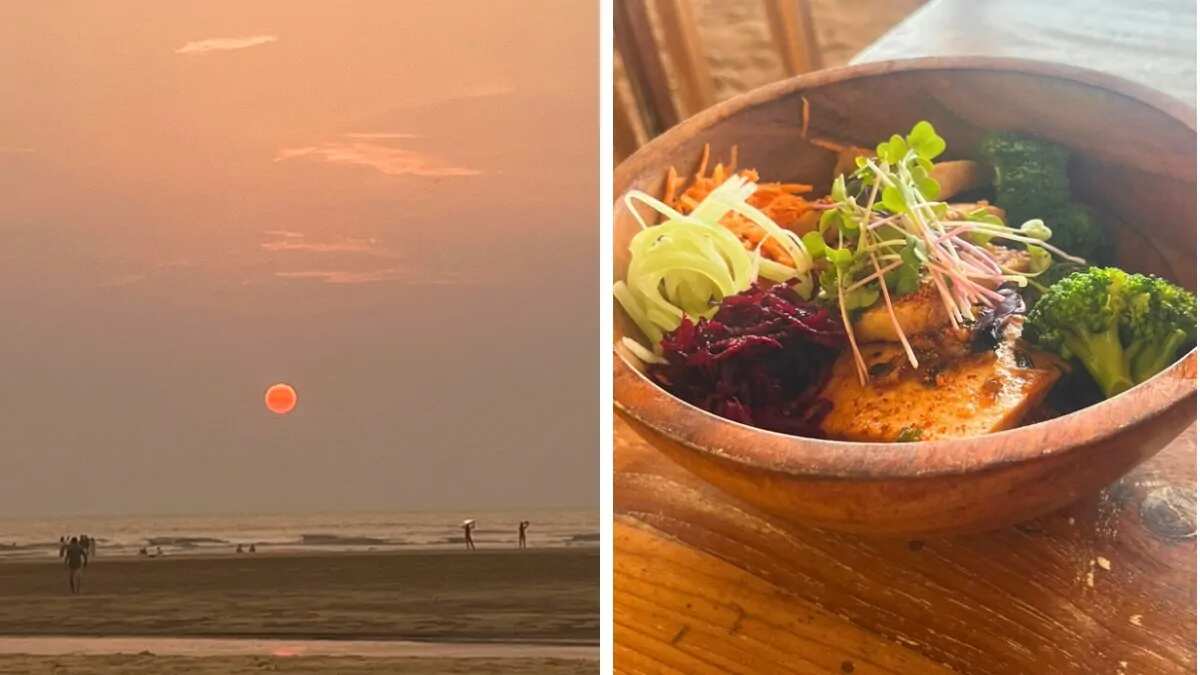
Mandrem, a small beach town in Goa, sits quietly along the northern edge of the state, in the Pernem taluka. In Mandrem, the land slowly dips into long stretches of white sand and a shallow creek runs parallel to the beach. The geography gives the place an underrated charm; casuarina groves leaning toward the water, narrow bridges over the tidal creek, and long uninterrupted shoreline that continues into Ashwem on one side and Arambol on the other. Historically the village was known for its local artisans, masons, carpenters and its older fishing traditions, long before tourism shaped its newer identity. The beach has long gentle stretches, and in my personal opinion it remains one of the loveliest in Goa for people who prefer a less crowded view. Yet the identity of this area stretches beyond its coastline. Between Mandrem and Ashwem, which sits right next to it, a surf culture has grown over the years and now forms one of the stronger lifestyle communities in North Goa. This whole belt is known for surf schools that attract travellers who stay for weeks or months, learning and practicing until their days take on the rhythm of the waves. Over time, this surf community has become a distinct part of the local landscape, fitting itself beside the already-present drum circles and the many yoga teacher training centres.
Image credit: Author
Surfing naturally shapes how people eat. Surfers need to stay light, strong and agile, and the food culture surrounding Mandrem and Ashwem reflects that mindset. You see menus that lean towards whole ingredients, thoughtfully prepared meals, bowls built around vegetables and grains, fresh salads and clean flavours. Protein is given a fair amount of attention, along with fibre-rich sides and ingredients that keep the stomach comfortable through long, active days.
Prana, Mandrem is one of the clearest examples of how the surf culture and food culture meet effortlessly. It sits right by the beach, functioning as a shack and a café, and a large number of surf lessons begin and end around it. The menu is designed so that the food can be eaten in between long sessions without feeling heavy. What stands out is how they have curated separate menus for breakfast, lunch and dinner, each with its own thoughtful approach. Breakfast leans heavily towards protein-forward plates that keep you steady through the first half of the day. Lunch is built around bowls that are filling without weighing you down, usually layered with brown rice, vegetables and a source of protein. Dinner becomes slightly more elaborate, yet the cooking stays mild, clean and light. Across all three menus, the focus stays on fibre, protein and minimal spice. Prana is also loved for its smoothies, teas and coffees, along with cocktails that are surprisingly well crafted for a beachside shack.
Image credit: Author
A few steps away from the beach sits Café Brightside, a place that many people naturally drift towards early in the day. The coffee here is especially stellar, the green juices feel refreshing after a morning walk or an early surf session, and the breakfast options are balanced with bagels, continental plates, fruit bowls and a few well-made Indian dishes. The café is run by Apoorv Bisht, who is a surfer himself, and that shows in the way the place is designed around slow mornings, good conversations and clean, comforting food. Brightside also tends to attract a steady circle of regular faces; people who stay in Mandrem for longer periods and end up forming their own morning routine here. It is also a great spot to work from, because the Wi-Fi stays reliable and the atmosphere has the kind of calm that makes laptop hours feel easy.
As the evening settles in, many people drift naturally towards Dunes. It has become the natural gathering point once the sun starts going down. The dinner spread is broad, with Israeli plates, Italian dishes, Indian staples, and a few Northeastern flavours. The sea view is one of the loveliest in the area, and the food carries a strong Goan seafood presence that suits both locals and travellers who prefer fish over meat. What makes the place particularly interesting is how it becomes the evening meeting spot for the same surfers and long-stayers who might have eaten lunch at Prana. The circuit forms on its own, giving this belt a sense of familiarity.
Image credit: Author
Artjuna, which sits within Mandrem’s wider food circuit, deserves its own mention because of how strongly it embraces vegan and plant-based cooking. The menu is filled with thoughtful dishes that feel light even when they are satisfying. Their hummus plates are particularly well constructed, and somehow manage to be filling without feeling too heavy. The desserts have their own following, especially among people who prefer something less sweet but still indulgent. Artjuna also has fresh sourdough every single day, which becomes a quiet draw for regulars who appreciate a good slice of bread with clean dips or spreads.
Image credit: Author
A few steps towards Arambol, Café Food Planet may carry the “café” tag, but it truly functions more like a beach shack; close to the water, sand right underfoot, lean-back seats and a wide open ambience. The menu is impressively vast and varied: you’ll find burgers, fast-food bites, European dishes, Thai, Mexican, seafood platters, salads, shakes and continental breakfast plates. It works beautifully for early mornings with hearty breakfast options, smoothies and fresh fruit, and equally well for long dinners with a couple of drinks by the sea. The atmosphere shifts naturally from bright beach-light breakfast to relaxed sunset dining, making this shack ideal for either a quick stop between lessons or a full-flavoured evening by the waves.
For those who want familiar Indian comfort, Mandrem has its own places worth stopping by. Wango Wango is a dependable choice for a balanced South Indian meal with dosas, idlis and uttapams that feel grounding after a long day.
Image credit: Author
In the end, what stayed with me most about Mandrem was the way the community shaped itself around movement and nourishment. The surf culture here isn’t limited to one age group; you see children taking their first lessons in the shallows, teenagers who treat the sea as their playground, and older travellers who come back every season to continue what they started years ago. The ocean pulls in people of every age, and that mix creates a steady flow of familiar faces moving between surf schools, cafés and evening meet-ups.
Alongside the waves, fitness has quietly become another strong thread in this belt. The beachside gym, Human Potential Movement in Mandrem, stays busy from early morning, and it has become one of the places where surfers, travellers and long-stay residents work on strength and mobility. The growing number of yoga teacher trainings in Mandrem brings in another set of people who spend their days thinking about balance, flexibility and mindful routines. It all blends into one broad circle of individuals who may arrive through different paths but end up valuing the same things: movement, staying grounded, and eating in a way that supports how they want to live.
Because this community is so tuned in to physical well-being, the cafés and shacks have naturally shaped themselves around those needs. Clean eating, simple flavours, fresh ingredients and mindful portions have become the norm rather than the exception. Over time, the people and the places have started feeding into each other. The surfers, the fitness crowd, the yoga students and the long-day beachgoers keep returning to the same cafés, and the cafés, in turn, keep evolving to reflect what this community cares about. It becomes a kind of cycle where food supports the lifestyle, and the lifestyle helps define the food culture. And that, more than anything else, is what gives Mandrem its own quiet, distinct character.