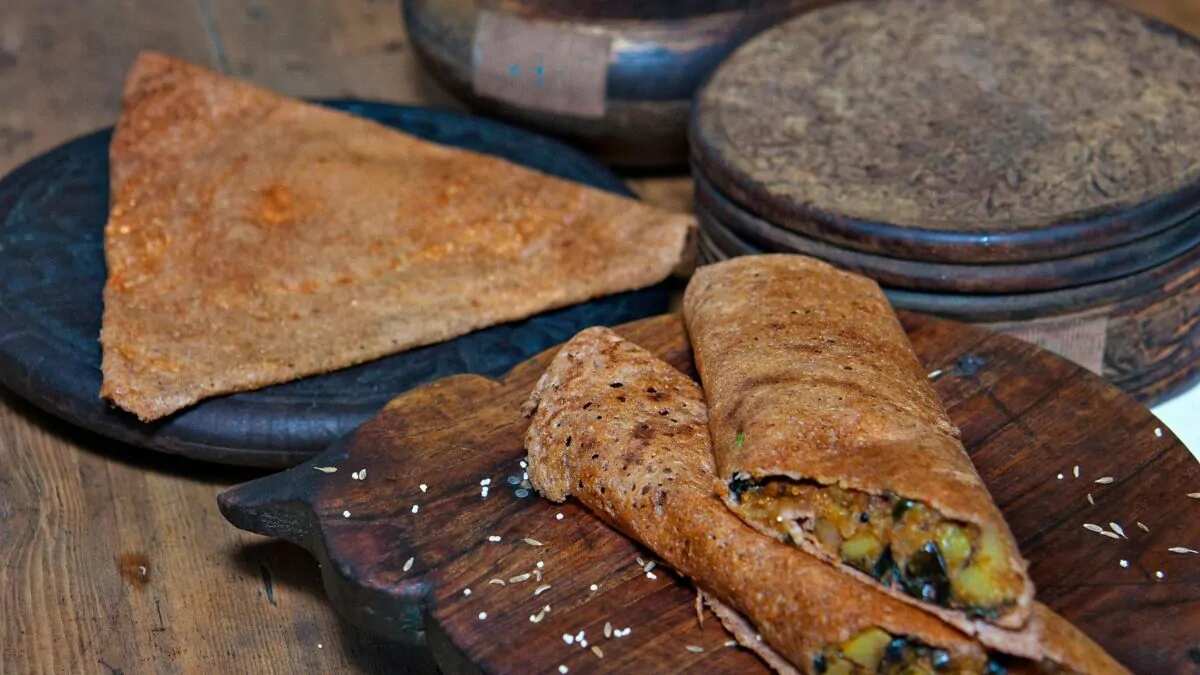
Healthy recipes that promise nourishment coupled with great flavour are always sought after. One such healthy pancake that is becoming quite popular across Indian kitchens is the flax seed dosa, enjoyed for its slightly nutty profile. Flax seeds are rich in vitamins, proteins and fats essential for building robust health. Dosas made with the addition of flax seeds to the rice and lentil batter echo with these wholesome properties and the deep, rich flavour of the oil-filled ingredient. Fibre and healthy fats enrich the flax seed dosa making it sumptuous enough as a breakfast alternative.
However, getting the fermentation on the flax seed batter is a slightly tricky affair. That’s because flax seeds absorb a lot of water which leads to the creation of a gel-like texture which can affect overall fermentation. A few handy hacks help in creating a well-fermented batter that leads to crisp, airy and light flax seed dosas.
Also Read: 5 Benefits Of Consuming Flax Eggs
Precise Flax Seeds To Lentil Ratio
To make the flax seed dosa, mix the seeds with rice and urad dal. What you would also need are millets and poha or flattened rice which will aid the fermentation process. Using just flax seeds to make the batter can be tricky because they form a very dense and sticky paste that takes too long to ferment. What works instead is a precise coming together of 2-3 tablespoons of flax seeds for every cup of the traditional dosa batter ingredients. This keeps the mixture light enough for proper fermentation.
Soak And Grind Ingredients Separately
This is an old trick to be found in your grandmother’s playbook of recipes. Since flax seeds absorb water quicker than the other ingredients and become sticky, they can interfere with grinding later on. So, soak flax seeds and the regular dosa mixture comprising rice and dal separately for 4-5 hours. Grind the flax seeds at the very end and then add them to the rice and dal mixture. This will lead to the making of a smoother batter and an even fermentation, getting rid of any residual stickiness.
Keep The Batter Thin
Owing to their inherent fatty and oily character, flax seeds can make dosa batter dense and naturally thicken it during the fermentation process. To avoid this, make a batter that is slightly thinner and runnier than regular dosa batter. With this, even if the flax seeds were to thicken the batter, it will assume its required consistency upon fermentation. Ideally, the batter should be pourable without turning watery.
Ferment In A Warm Spot
Once the rice and dal mixture is ground and the flax seeds blended into it, the whole batter is ready to be fermented. Since this may ferment slower than a traditional dosa batter, it is always better to let it rest for at least 8-12 hours, or even overnight. Keep the batter in a warm place that facilitates smoother fermentation. This can include placing it inside the oven with the light on or in an insulated container. Or, place the batter in a vessel, cover it with a muslin cloth and put an additional weight over it to prevent external air from reaching in. This will accelerate even fermentation.
Add Salt While Making Dosas
Experts swear by this technique as the best way to make light, airy and well-flavoured dosas. Not only does salt affect fermentation, it also turns the batter sour, interfering with the taste of the flax seed pancakes. When small bubbles and a slightly tangy aroma emerge from the batter, know that it has fermented and risen enough. Now, take only as much batter as required to make one batch of the flax seed dosas and add salt only to this mixture. This hack will yield light and airy flax seed dosas complete with a full ferment, nourishing properties and a delicious flavour.