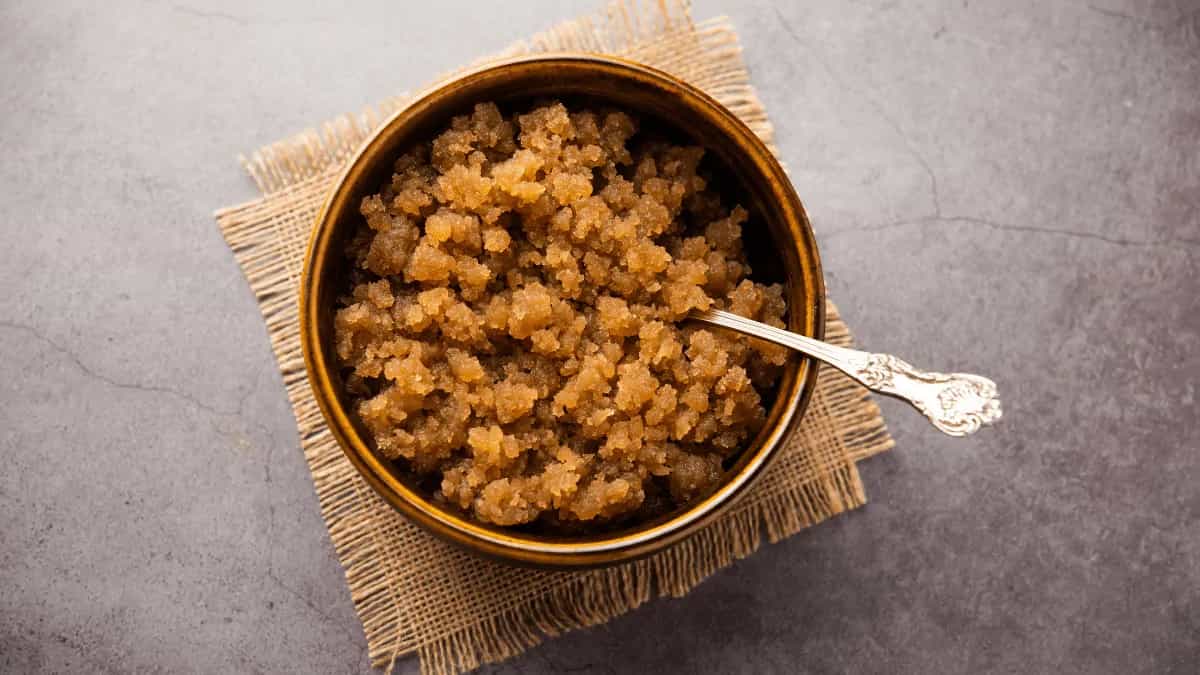
As much as the technique matters, for kadha prashad, the intention is equally important. Whether you make it on a wood fire, a gas stove, or a modern infrared cooktop, the humble ingredients, when cooked in the right proportions and sequence, will give you an aromatic prashad.
While you might have already mastered the process with knowledge about low and high flames of a gas stove, it could be a little tricky to get the perfect kadha prashad on an infrared cooktop, especially if you are making it for the first time. However, even though it might be new to the settings, Usha’s infrared cooktop allows you to have precise control over the temperature, yielding a perfectly caramelised, brown-coloured atta halwa, aka kadha prashad. If this Baisakhi, you’re making kadha prashad, keep these quick tips handy.
The Right Kadhai
The best part about Usha’s infrared cooktop is that you don’t need to invest in induction-safe cookware. You can use your go-to pan or kadhai to make kadha prashad. However, since the heat will be transferred through the glass surface, you’ll need a flat pan to ensure even heating. So, go for a heavy-bottomed kadhai or pan that has a flat base and avoid any undercooked patches of atta.
Preheat Ghee Gradually
Image Credit: Freepik
Once you’re set with the cookware, preheat the ghee. Since the infrared cooktop can produce sudden heat, ghee can reach its smoke point quickly. Thus, start with a low wattage, let the ghee melt and coat the entire base of the pan with ghee before adding atta. This way, you will be able to get a lump-free kadha prashad.
Note The Golden Ratio
Keep in mind the golden ratio to make kadha prashad - 1:1:1:2 of ghee, atta, sugar, and water, respectively. Use the right portions, and you’ll nail the consistency. Also note that the heat transferred through Usha’s infrared cooktop is directional. So, keep stirring continuously to avoid the halwa from sticking to the bottom. You can simply make an ‘eight’ with a spatula till the halwa cooks, and your flour will not burn, and the sugar will completely dissolve.
Prepare The Sugar Syrup
Image Credit: Freepik
Instead of adding dry sugar to the pan, make a sugar syrup simultaneously if you have a 2-burner infrared cooktop. Otherwise, prepare the chashni a little in advance. Since the timing of adding sugar to roasted atta is precise, there is little room for delay. Thus, it’s better if you already have sugar syrup to whisk into the roasted flour to minimise the risk of lumps.
Let Residual Heat Work
A unique advantage of Usha’s infrared cooktop is residual heat. Even after turning the switch off, the cooktop remains a little hot for some time. Use it to your advantage, turn off the heat just before the kadha prashad is fully done, and let it finish in the remaining heat. This will prevent the kadha prashad from overcooking without letting the halwa dry.