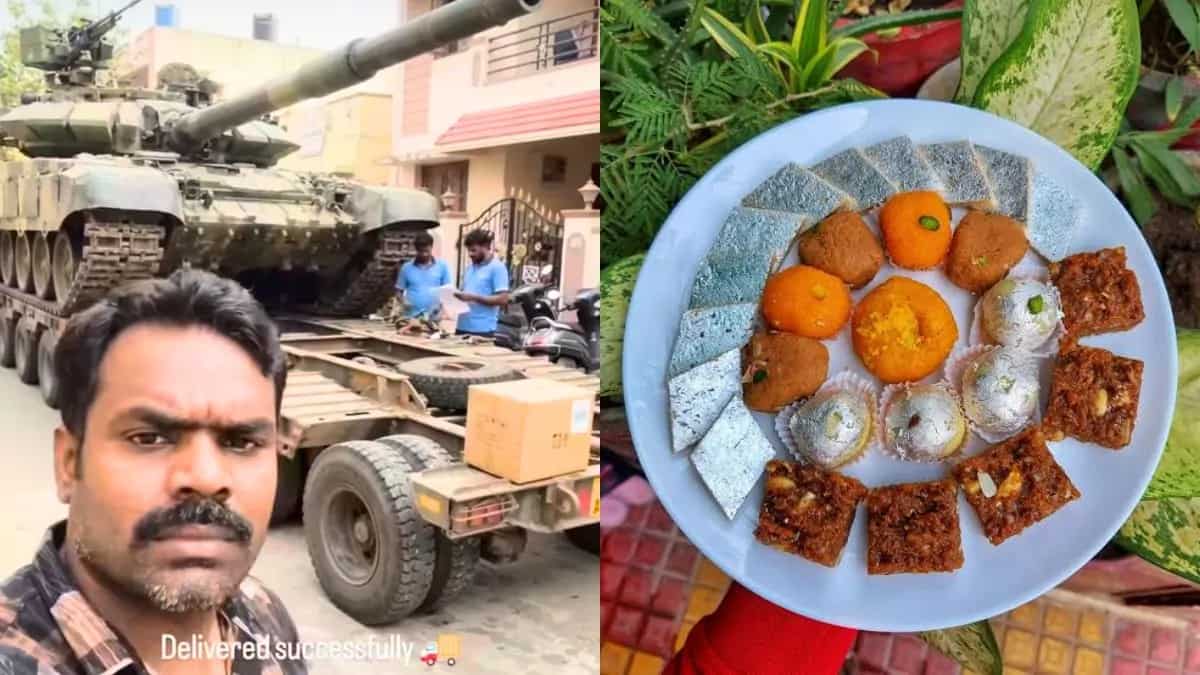
Festive seasons in India usually bring an outpouring of warmth, joy, and endless boxes of dry fruits. Veeramani, a social media content creator based in Madurai, thought it would be the perfect moment to test the generosity of his online follower base. Having previously successfully crowdfunded a modest holiday trip to Kerala through internet well-wishers, he decided to drop his home address online alongside a casual appeal for a box of Diwali sweets. He was likely imagining a neatly wrapped assortment of Mysore pak or milk peda arriving at his doorstep. Instead, the collective humour of the internet manifested in a far more heavy-duty fashion. Within hours, the West Anuppanadi neighbourhood became the unofficial drop zone for major e-commerce platforms and courier services.
When Kaju Katli Becomes A Smart TV
The packages that arrived were far heavier than any box of sweets could ever be. Delivery agents from Amazon and Flipkart began queuing outside his house, carrying sleek smartphones, double-door refrigerators, fully automatic washing machines, and high-end televisions. Among the stack was a massive television valued at an eye-watering 1.69 lakh rupees.
Every single item shared one terrifying common denominator: cash on delivery. While the digital pranksters took seconds to hit the checkout button, the local delivery personnel were left standing at the door expecting actual payments. Since Veeramani had neither ordered the electronics nor possessed the cash or necessary one-time passwords to authenticate the purchases, the doorstep interactions quickly turned into awkward standoffs.
Image credit: Veeramani_official91 on IG
Also read: Upcoming Trends In Indian Festive Sweets: 10 Mithai Trends We Will See Everywhere In 2026
The Escalation From Desserts To Heavy Machinery
As if a household full of unwanted electronics was not overwhelming enough, food delivery drivers from Swiggy and Zomato joined the constant stream of visitors. The internet hive mind was thoroughly committed to the joke, ensuring that the poor creator was being handed bills for hot meals alongside bills for refrigerators. Social media platforms soon elevated the prank to mythical proportions. Memes and viral posts began claiming that pranksters had gone a step further by booking cash-on-delivery orders for industrial JCB excavators and military tanks. While those heavy machinery claims were pure internet satire, the reality on the ground was chaotic enough without actual construction equipment blocking the street.
Folding Hands And Vacating Premises
Visibly shaken by the endless doorbell rings and the mounting frustration of hardworking delivery agents, Veeramani posted a series of urgent video appeals. In one clip, he literally folded his hands and pleaded with viewers to stop placing orders in his name, explaining that he simply did not have the financial means to buy out an entire electronics store. He expressed deep remorse for the courier workers who were travelling long distances only to be turned away empty-handed.
When the appeals failed to stop the onslaught, the creator resorted to the ultimate defence mechanism: locking his front door and leaving town. Neighbours later confirmed that the residence stood empty, while recent social media updates showed the influencer riding a bus to an undisclosed location, effectively rendered a festive refugee by e-commerce algorithms.
The Moral Of The Digital Sugar Rush
This bizarre incident serves as a sharp, hilarious reminder of the unspoken rules of online fame. The digital realm can certainly be generous when you ask for a small favour, but sharing a private residential address with thousands of strangers is always a gamble. If you are planning to ask your followers for a box of Diwali sweets this year, perhaps stick to a digital gift card instead. Otherwise, you might find yourself staring down a delivery driver holding the invoice for a double-door refrigerator when all you really wanted was a single piece of gulab jamun.