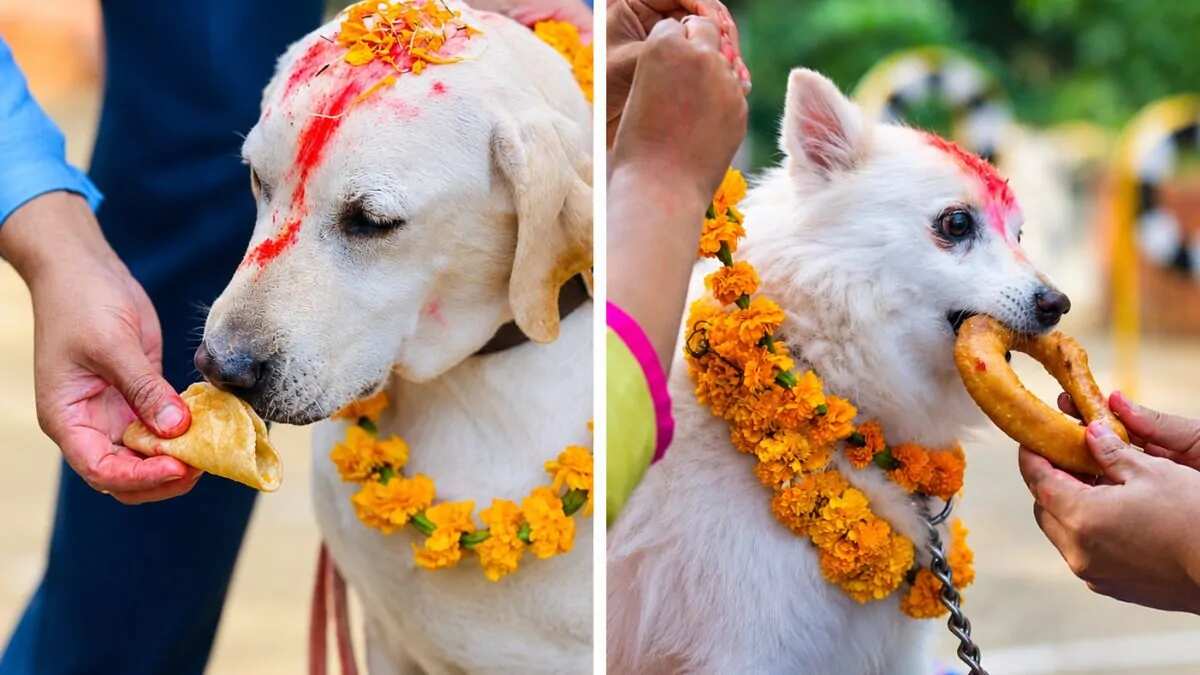
Imagine a festival where the first guests to receive flowers, festive food and blessings are not family members, but dogs. This is the spirit of Kukur Tihar, one of the most distinctive celebrations within Nepal's five-day Tihar festival. Observed by Nepali communities with considerable affection, the occasion honours dogs through traditional rituals that include bathing, flower garlands, vermilion tika and special food offerings. Kukur means dog in Nepali, and the festival is dedicated to acknowledging the animal's place in human life. From household pets and working dogs to those living on the streets, the celebrations extend beyond animals with owners. Dogs are honoured for their loyalty, companionship, protective instincts and their association with Yama, the Hindu god of death. In 2026, Kukur Tihar falls on 8 November, making it an opportunity to look beyond ceremonial gestures and consider how everyday care can improve the lives of dogs around us.
Image credit: Pexels
The History And Religious Significance Of Kukur Tihar
Kukur Tihar is traditionally observed as part of the five-day Tihar festival, also known as Yamapanchak. The wider celebration honours animals, deities and relationships through a sequence of rituals. Crows are honoured during Kaag Tihar, dogs during Kukur Tihar, cows during Gai Tihar, and oxen during Goru Tihar. The festival concludes with Bhai Tika, when sisters pray for their brothers' well-being. The association between dogs and Yama has deep connections with Hindu religious tradition. In Vedic literature, Yama is accompanied by two dogs, often described as four-eyed guardians who watch over the path to the afterlife. They are associated with the protection and guidance of souls travelling towards Yama's realm. Dogs consequently occupy an unusual position in this symbolism: they are not simply domestic companions, but guardians connected with the mysteries of life and death.
The Mahabharata offers another important reference to the animal's symbolic importance. Towards the end of the epic, Yudhishthira begins his final journey towards heaven, accompanied by a dog. When he reaches the gates of heaven, he refuses to abandon the animal to gain entry. The dog is ultimately revealed to be Dharma, his divine father. The episode celebrates loyalty, moral conviction and the refusal to forsake a companion for personal reward. These stories help explain why dogs receive special attention during Tihar. Worshipping them is traditionally associated with seeking Yama's protection and warding off misfortune. The rituals are also an expression of gratitude towards an animal that has accompanied human communities for generations.
Special Food Offerings Made To Dogs During Kukur Tihar
Food is an important part of Kukur Tihar, and the offerings are intended to make dogs feel honoured and cared for. Families prepare special meals for their pets and extend the gesture to community dogs and strays. The food varies between households and regions, but commonly includes milk, eggs, meat, rice, sel roti and commercially available dog biscuits.
Sel roti, a traditional Nepali ring-shaped rice bread, is particularly associated with festive food culture. Prepared from rice flour and deep-fried until golden, it is commonly made during Tihar and other celebrations. Some households share small portions with dogs as part of their offerings. Other families prepare rice with meat or eggs, giving their canine companions something more substantial than their usual meal.
The offerings are accompanied by a sequence of rituals. Dogs are traditionally bathed, adorned with marigold garlands and marked on the forehead with a red tika, often made using vermilion and rice. Some households also offer incense and perform aarti as a gesture of respect. An important aspect of the celebration is its inclusivity. Street dogs are also offered food and receive tika and garlands in several communities. The festival does not restrict its recognition to pedigree animals or household pets. Every dog is considered deserving of the day's affection, making the practice particularly meaningful in a country where community dogs are a familiar part of everyday life.
The Importance Of Dogs In Nepalese Culture
The reverence shown to dogs during Kukur Tihar is closely connected to their practical and spiritual roles in Nepali society. For generations, dogs have guarded homes, accompanied farmers, protected livestock and served as companions in rural communities. Their ability to detect danger and alert people to unfamiliar activity has made them valued members of households. Their contribution also extends to modern public services. Nepal's police and armed forces have canine units trained to detect explosives and narcotics, locate missing people, assist in disaster rescue operations and support criminal investigations. Kukur Tihar is also observed at these facilities, where trained service dogs receive ceremonial honours from their handlers. These celebrations recognise the work and discipline of animals that often operate in demanding conditions.
However, the bond between humans and dogs in Nepal extends beyond their utilitarian roles. While dogs have historically guarded homesteads, herded livestock and assisted in tracking, their cultural value is also deeply connected to mutual companionship. Nepali traditions reflect an understanding of existence as an interconnected relationship between humans, animals and nature, with each having a place in maintaining harmony. Kukur Tihar gives this philosophy a visible expression. The festival breaks down distinctions between household pets and street dogs, offering the latter the same ceremonial recognition and affection. This inclusive approach challenges the idea that an animal's worth is determined by its breed, ownership or usefulness to humans. By elevating ordinary community dogs into honoured guests, the tradition encourages people to recognise their dignity and place within shared public spaces. It also offers a broader lesson in compassion, suggesting that how a society treats its most vulnerable inhabitants says much about its values.
What Kukur Tihar Can Teach Us About Caring For Street Dogs In India
For us in India, Kukur Tihar offers an interesting opportunity to reconsider the relationship between people and community dogs. Across Indian cities, street dogs are familiar sights outside residential buildings, shops, markets and neighbourhood parks. Some residents feed them regularly, while others volunteer with animal welfare organisations to arrange vaccinations, sterilisation and medical treatment. However, caring for community dogs requires more than occasionally leaving food outside the house. It involves understanding their dietary needs, maintaining hygiene and ensuring that feeding practices do not create problems for the animals or the neighbourhood. The Animal Birth Control Rules, 2023, address the feeding of community animals under Rule 20. They provide for designated feeding arrangements involving resident welfare associations, apartment owners' associations and local bodies. Feeding locations should be agreed upon and managed responsibly, keeping them away from busy entrances and other high-footfall areas.
Image credit: Wikimedia Commons
A few practical measures can make a difference:
- Keep fresh drinking water available: Dehydration can become a concern, particularly during India's hotter months. A clean, regularly replenished water bowl is a simple way to help.
- Choose a designated feeding spot: Feed dogs at an agreed location away from building entrances, busy roads, children's play areas and pedestrian pathways.
- Maintain feeding hygiene: Use clean bowls, remove uneaten food and wash the feeding area after meals. Avoid leaving food exposed for long periods, as it can attract insects and rodents.
- Coordinate with animal welfare groups: Local organisations and veterinary professionals can help arrange treatment, rabies vaccination and sterilisation through recognised Animal Birth Control programmes.
- Respect the animal's temperament: Approach unfamiliar dogs carefully, avoid sudden movements and never force physical contact. Dogs should be allowed to eat without being disturbed.
These practices make feeding safer and more sustainable, while helping build a better relationship between residents and the animals in their neighbourhoods.
Image credit: Kathmandu & Beyond
Healthy And Affordable Homemade Foods To Feed Street Dogs
One of the most meaningful ways to participate in the spirit of Kukur Tihar is to prepare a nutritious meal for community dogs. This does not require expensive ingredients or elaborate recipes. A few everyday kitchen staples can make suitable occasional meals and treats, provided they are cooked properly and served without seasonings.
Here are some affordable options:
1. Plain Rice And Boiled Eggs
Rice and eggs make an accessible combination for an occasional meal. Cook rice until soft and prepare eggs by boiling them thoroughly. Remove the shells, chop the eggs and mix them with the rice. Serve at room temperature without salt, butter, oil or spices.
2. Chicken And Rice
Boiled chicken mixed with plain rice is another suitable option. Use boneless chicken, cook it thoroughly and shred it into small pieces before mixing it with the rice. Avoid adding ginger-garlic paste, turmeric, chilli, onions or other ingredients commonly used in Indian home cooking.
3. Pumpkin And Rice Mash
Pumpkin is an affordable vegetable that can be boiled or steamed until soft. Mash it and combine a small quantity with cooked rice for an easy-to-digest occasional meal. Remove the seeds and avoid adding seasoning.
4. Carrot And Egg Meal
Boiled carrots can be chopped finely and mixed with a thoroughly cooked egg. The combination offers some variety and is easy to prepare using inexpensive ingredients. Keep the portions modest, particularly for dogs that are not accustomed to vegetables.
5. Plain Chicken Broth With Rice
A simple broth prepared by boiling chicken in water can be mixed with rice to make a softer meal. Remove all bones and skim off excess fat. Do not use packaged stock cubes, ready-made soups or commercial seasoning mixes, as these can contain excessive salt, onion or garlic.
These foods are best considered occasional meals or supplementary treats rather than complete long-term diets. Dogs have different nutritional requirements depending on their age, size, activity levels and health. A veterinarian can recommend an appropriate feeding plan for animals receiving regular home-cooked meals.
Foods To Avoid: Chocolate, grapes, raisins, onions, garlic, xylitol-containing products, alcohol, heavily salted snacks, fried foods and cooked bones should never be offered to dogs. Milk can also cause digestive discomfort in some animals. Avoid sharing leftover curries, biryani, sweets, namkeen and festive mithai simply because they are available. Even traditional festive foods such as sel roti, which may feature in Kukur Tihar offerings, are fried and should not become a regular dog treat.
Beyond One Day Of Celebration: Making Animal Welfare An Everyday Practice
Kukur Tihar is a celebration of the bond between humans and dogs, but its most meaningful lesson extends beyond the festival itself. A garland and a plate of food can make a day special, but the animals sharing our neighbourhoods need consistent care throughout the year. For Indian households, this could mean keeping water bowls outside during summer, arranging affordable meals for community dogs, supporting local vaccination drives or helping animal welfare organisations with medical expenses. It could also mean teaching children to treat animals with kindness and understand the importance of respecting their boundaries.
Nepal's tradition offers a beautiful perspective on how animals can be acknowledged as an important part of society. Its message is particularly relevant in urban environments, where the relationship between residents and community dogs can sometimes become contentious. As Kukur Tihar arrives on 8 November 2026, its celebration of dogs is a reminder that compassion should not be reserved for a single auspicious day. The true spirit of the festival lies in extending dignity, nourishment and protection to animals that have shared human spaces for centuries. After all, a meal, a bowl of clean water or timely medical attention can mean far more to a street dog than an elaborate festive offering.