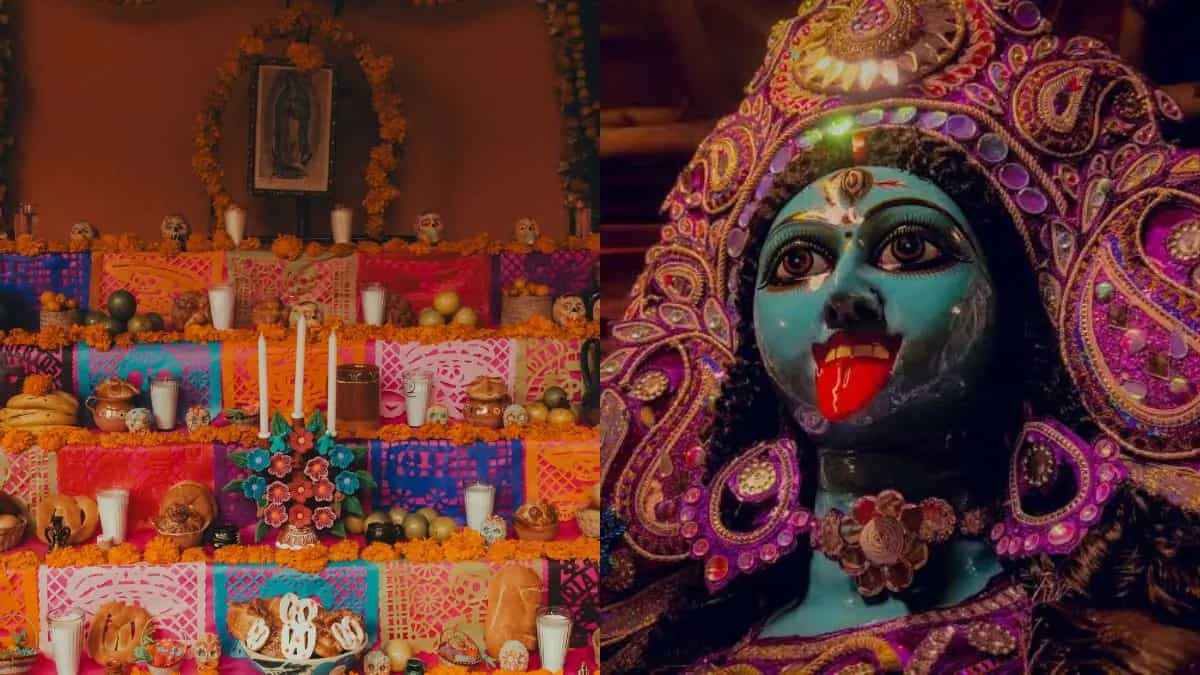
Every autumn, as nights lengthen and breezes cool, distinct civilisations across the world pause to acknowledge the mystery of the unseen. Millions in Mexico gather beside glowing home altars from 1 to 2 November 2026 to welcome returning family spirits during Día de los Muertos. Almost simultaneously on the lunar calendar, households across India light brass lamps on the dark fourteenth night of Kartik Krishna Paksha to observe Kali Chaudas on 7 November 2026. Though separated by vast oceans and distinct histories, these observances share a captivating spiritual architecture. Both traditions treat the thinnest nights of the year not as times of terror, but as opportunities for profound spiritual alignment, ancestral honour, and cosmic renewal. 
Crossing the Veil: Historical Foundations Of Mexican And Indian Night Celebrations
The historical roots of both traditions stem from deep indigenous observation of cosmic cycles and agriculture. Día de los Muertos traces back to pre-Hispanic Mesoamerica, where civilisations including the Aztecs, Zapotecs, and Maya held month-long rituals dedicated to the underworld and harvest cycles. Following Spanish colonisation, these practices merged with Catholic observances, giving rise to the modern syncretic celebration.
Kali Chaudas, also closely linked across regional Indian traditions with Narak Chaturdashi and Bhoot Chaturdashi, emerges from ancient Puranic literature and Tantric practices. Observed during the dark night preceding Deepavali, this occasion historically represents the triumph of light over dark forces, marked by Lord Krishna defeating the demon Narakasura. Simultaneously, it serves as a powerful nocturnal window for sadhana, ancestral remembrance, and spiritual cleansing. 
While no direct ancient trade or direct contact linked pre-Columbian Mexico with classical India, both cultures independently arrived at identical metaphysical conclusions. Each recognised that the autumn transition marks a critical point where the boundary between physical life and the subtle spiritual world temporarily softens.
The European Echo: Samhain And The Pagan Roots Of Halloween
Across the Atlantic, a parallel spiritual phenomenon unfolded in ancient Western Europe through the pagan Celtic festival of Samhain. Observed around late October to mark the end of the harvest and the dawn of the dark winter months, Samhain represented the pagan New Year, a liminal threshold when the veil separating the physical realm from the Otherworld temporarily dissolved. To the ancient Celts, this transition was both practical and deeply sacred. Communities gathered on hilltops to light immense communal bonfires, relighting their domestic hearths from the sacred embers to protect against harsh winter spirits and cold winds. Households laid out food offerings on doorsteps to appease wandering souls and supernatural beings, while villagers wore animal hides or frightening masks to disguise themselves from malevolent forces, a custom that directly birthed modern Halloween costumes. When Christian authorities later introduced All Hallows Eve to assimilate pagan practices, the sacred, ancestral core of Samhain gradually morphed into the commercial Halloween celebrated today. Yet beneath the modern secular festivities lies the exact same ancient impulse found in Mexico and India: stepping into the twilight of the year with light, shared food, and profound respect for the mysteries of mortality and spiritual passage.
Altars Of Remembrance And Thresholds of Light: Sacred Spaces In Mexico And India
The visual and functional parallels between the spaces created for both observances are remarkable. In Mexican homes, families construct multi-tiered ofrendas decorated with vibrant cut paper, glowing candles, and personal belongings of the departed. The altar acts as an inviting bridge, offering food, water, and comforting familiar items to weary souls making their annual journey back home.
In Indian households during Kali Chaudas and Bhoot Chaturdashi, the physical threshold of the home receives similar focused devotion. Families thoroughly cleanse their entryways and place oil lamps at corners, doorways, and outdoor crossroads to dispel negativity and guide divine and ancestral energy. In Eastern regions, fourteen clay lamps are lit specifically to illuminate the pathway for fourteen generations of ancestors, mirroring the exact intent of the flickering candles that line Mexican cemeteries and altars. 
Image credit: Pexels
Sacred Culinary Offerings: How Food Bridges Living Realms And Unseen Spirits
Food operates as the primary medium of connection in both festivals. Traditional belief dictates that visiting spirits consume the subtle essence and aroma of offerings, leaving physical matter behind for the living to consume later as blessed food.
- Sweet Bread and Savoury Staples vs Prasadam and Traditional Greens: On the Mexican ofrenda, pan de muerto takes pride of place alongside rich chicken mole and corn tamales. Similarly, during Indian observances on Kali Chaudas, specific offerings such as sesame sweets, puffed rice, chirmura, and freshly cooked prasadam are prepared for Goddess Kali and ancestral spirits. In Eastern India, traditional families prepare a mandatory meal featuring fourteen distinct leafy green vegetables on this dark night, a ritual meal designed to cleanse the body and protect against dark energies.
- Symbolic Ingredients for Purification: Both traditions rely on pure elemental ingredients to cleanse offerings. Salt sits on the Mexican altar to protect spirits from corruption during their travels. In India, mustard oil, sesame seeds, raw sugar, and camphor play identical roles, purifying sacred spaces and driving away harmful influences.
The Chemistry Of Scent And Smoke: Marigolds, Incense, And Spiritual Pathways
Step into a Mexican home preparing for Día de los Muertos or an Indian household for Kali Chaudas, and the sensory environment feels strikingly similar. The vibrant orange Mexican marigold, or cempasúchil, forms bright pathways from street thresholds directly to the home altar, its distinct scent acting as an aromatic compass for wandering souls. In India, marigolds are equally central to festive decor, woven into thick garlands hung over doorways and around deities to signify purity and auspicious life force.
Coupled with marigolds is the essential use of aromatic smoke. Mexican families burn copal resin, an ancient tree sap, to clear heavy atmospheric energy and lift prayers skyward. Indian households light dhoop, frankincense, or camphor during evening prayers, creating an identical aromatic shield meant to elevate the spiritual frequency of the home and welcome subtle divine presences.
Image credit: Pexels
Sacred Feminine And Divine Guardians: Mictecacihuatl And Goddess Kali
At the theological centre of both festivals sits a powerful archetype of the Sacred Feminine overseeing life, death, and transformation.
Aztec mythology honoured Mictecacihuatl, the Queen of the Underworld, who guarded the bones of the dead and presided over ancient ancestor festivals. Over centuries, her imagery evolved into the iconic La Calavera Catrina, the elegant skeleton figure that reminds humanity of its shared mortal fate regardless of wealth or status.
In India, Kali Chaudas is dedicated to Goddess Kali, the fierce manifestation of the divine mother who destroys ignorance, time, and dark forces. She is depicted standing triumphantly over chaotic forces, wearing imagery that confronts mortality head-on. Neither tradition views these feminine icons as terrifying or evil. Instead, both cultures revere them as fierce protectors, loving mothers, and guardians who lead humanity safely through darkness into ultimate spiritual truth.
Transforming Fear Into Devotion: How Ancient Civilisations Harmonised Death And Life
Ultimately, the deepest connection between Día de los Muertos and Kali Chaudas lies in their shared philosophy toward mortality. Modern industrial societies often hide death away, treating it with anxiety, denial, or fear. In contrast, both Mexican and Indian cultural traditions integrate mortality fully into the sacred rhythms of everyday family life. Through song, sacred offerings, shared meals, and bright illumination, both festivals transform potential fear of the dark into profound acts of devotion and love. Whether guiding a relative spirit back to an altar laden with sweet bread in Oaxaca or lighting oil lamps at midnight to honour cosmic protection in Gujarat or Bengal, human hearts across the globe perform the exact same timeless gesture: choosing light, memory, and spiritual connection over forgotten shadows.