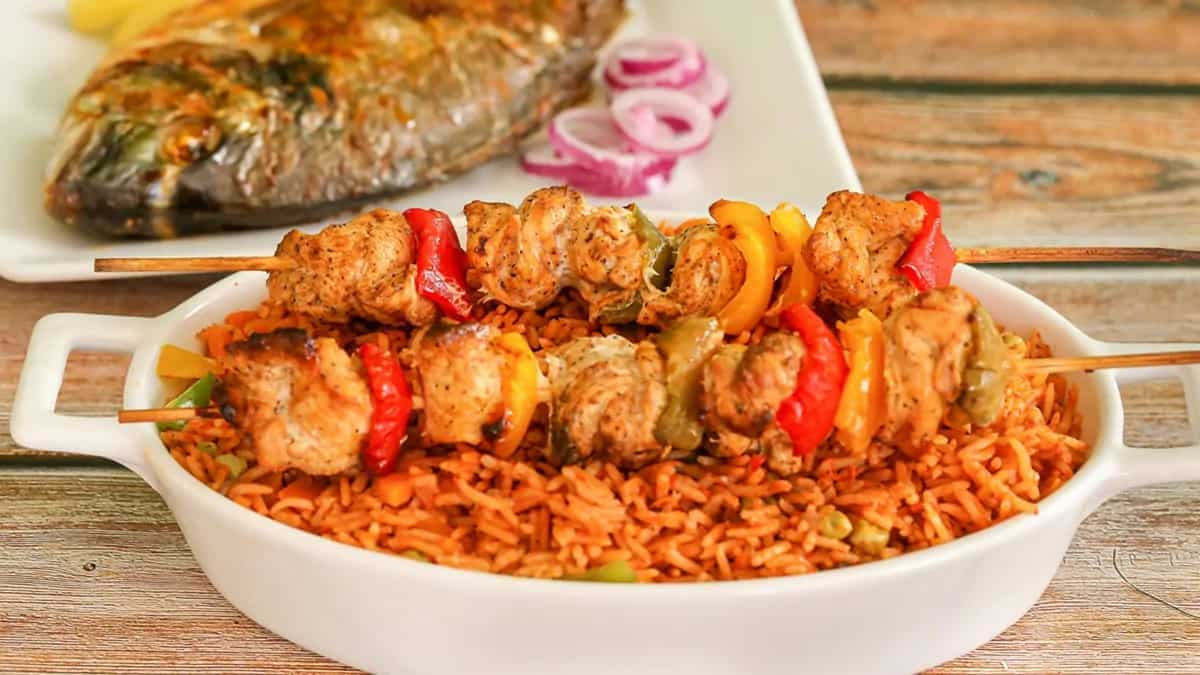
THE authorship – and therefore origins – of jollof rice (called ceebu jën in Senegal according to the Wolof spelling) has been the subject of a spicy debate between West African nations. In particular, Senegalese, Nigerians and Ghanaians claim ownership. And each believes their recipe surpasses all others.
However, there is much that points out the “Senegality” of this dish. The word jollof refers to an ancient kingdom that was a part of Senegal between the 12th and the 13th centuries.
More broadly, the origin of the dish is linked to a particular period in history – the entrenchment of colonial rule in West Africa. Between 1860 and 1940 the French colonisers replaced existing food crops with broken rice imported from Indochina. In time, broken rice came to be much more prized by the Senegalese than whole rice grain.
This was followed by what we call "le ceebu jën, un patrimoine bien sénégalais" – the genius of the natives, especially the Saint-Louisians, who set about creating something completely new. Ceebu jën consists of rice and fish, accompanied by vegetables and sometimes tomatoes.
As it happens in history, when an art reaches a certain fame or notoriety, its paternity becomes an object of controversy. This is what has indeed happened with jollof rice.
COLONIAL LEGACY
The first act of the settlers was to make all those disconnected from agricultural activities dependent on rice. This included the men and women who had come to try to make their fortune in the markets of Saint-Louis, one of the gateways to the West and, for a good period, the capital of French West Africa.
Add to this teachers, various agents of the administration and the military, and we can better understand the pernicious process of rice promotion. Overflowing in urban centres, rice was consumed in practically all of the colony of Senegal.
The success of the rice promotion strategy resulted in the entrenchment of an economy that became increasingly dependent on crops preferred by the colonisers. To this day efforts continue to be made to grow rice in Casamance and the Saint-Louis region.
At the same time, the exploitation of the market garden areas of Niayes and Gandiol contributed to meeting the population’s need for vegetables.
THE PASSION
To understand the importance of ceebu jën in the diet and imagination of the Senegalese, it would be wise to point out that its attractiveness can’t be reduced to its nutritional value or its intrinsic delicacy.
This culinary art is closely linked to a know-how and a way of life. Thus, the consumption of the dish is strongly linked to the ceremonial – the aesthetics of the presentation and the service.
The women of Saint Louis, a port city in the northern part of Senegal, are singularly credited with remarkable know-how in this area. Their finesse and elegance is expressed in the way they dress, their speech and their gestures. All are put to good use so that the meal is a moment when they give pleasure by being pleased themselves.
At the end of 2021, UNESCO included the Senegalese version of jollof rice – ceebu jën – on the intangible heritage of humanity list.
Fatima Fall Niang is Directrice du Centre de recherche et documentation du Senegal (CRDS), Université Gaston Berger. With contributions by Alpha Amadou Sy, co-author of the book Ceebu jën, un patrimoine bien Sénégalais. This essay originally appeared on The Conversation and is republished under the Creative Commons Licence.