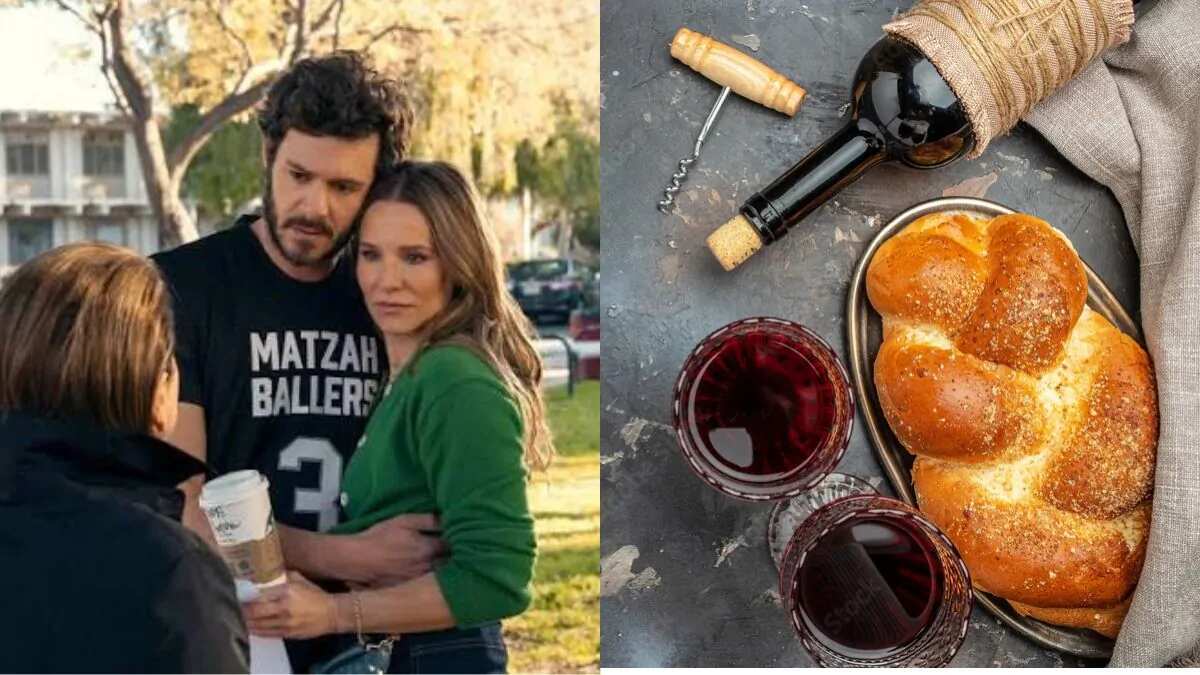
Set in Los Angeles, Nobody Wants This is a smart, simmering story about faith, relationships, and the meals that quietly bind them. Between awkward dinners and complicated emotions, the show slips in some deliciously telling moments around food. It’s there at the Shabbat dinners, where the table becomes a stage for connection, discomfort, and comfort food. With Season 2 now streaming on Netflix, the series continues to weave its tender exploration of Jewish traditions into the rhythms of modern love. Set against the backdrop of a romcom, it deepens its focus on identity, family, and the rituals that hold people together, even when everything else feels uncertain.
How The Show Puts A Spotlight On Jewish Food Culture
One of the more persistent threads in Season 2 is the ritual of Shabbat: the Friday evening meal that marks the start of the Jewish sabbath. The dialogue emphasises the two loaves of bread laid on the table, the lighting of candles, the gathering of family; all of which the show uses as framing devices around conversations and tensions. This is reminiscent of how in Indian households the weekend or festival meal becomes the frame for discussion, for family, for reconciliation, for negotiating relationships. The braided challah bread, with its eggs, flour, a hint of sweetness; symbolises more than a carbohydrate. It stands for rest, for pause in the weekly rush, for community.
Image credit: Adobe Stock
When we see dishes such as matzo ball soup or kugel appear in the show (an engagement party, a family dinner) we are brought closer to how food traditions carry memories and cultural identity. For example, the matzo ball (dumpling made from matzah meal, egg, fat) has its roots in the Ashkenazi Jewish tradition. The show has a moment where Joanne’s family asks, “What is that kugel? It’s like a delicious noodle birthday cake.” That moment matters; it treats the dish as something to be curious about, rather than just a joke. So as an Indian viewer you are reminded: if you glance at cuisine with curiosity rather than mystification, food becomes a door into someone’s culture.
At its heart, the show is not a cooking show. But because it locates food inside relationships and ritual it invites reflection: how food marks belonging, how it binds people, how it signals values.
What An Indian Viewer Can Take Away
One takeaway is the value of the “ritual meal”, how a weekly dinner becomes a culture-keeper. In India we might take weekend lunches or Sunday brunches for granted, but rarely do we consciously see the meal as ceremony. The show prompts you to reflect: what regular meals in your life are doing more than filling your plate? Which breads, which soups, which dishes carry memory for you?
Image credit: Adobe Stock
Second, it teaches that cuisine is layered. Jewish cuisine is not monolithic. The show touches on Ashkenazi references, holiday meals, naming ceremonies (brit bat) and more. If you saw a bread and assumed “that must be Jewish bread,” the show nudges you to ask: from which tradition? In India you might ask: is this Challah bread, or Libyan Jewish sweet bread? That curiosity enlarges worldview.
Third, it invites crossover thinking. When Joanne joins Rabbi Noah's family at Shabbat dinner and tries to navigate the table rituals, you’re reminded of the Indian host when relatives come from abroad and you try to make a “fusion menu”. The show invites you to reflect on your own traditions: the bread you break, the soup you serve, the casserole you bake when extended family is around.
Image credit: Unsplash
Where To Taste These Flavours In India
If you ever find yourself curious to taste these flavours beyond the screen, you won’t have to look far. The Jewish influence in Indian food culture quietly lives on in unexpected corners. In Kochi, the old Jewish bakeries still sell soft breads and spiced cakes with a Portuguese-Jewish legacy. In Kolkata, Nahoum & Sons, famous for its plum cakes and brownies, stands as one of the city’s oldest Jewish bakeries. Up north, the hills of Himachal are dotted with cafés in Kasol, Tosh and Pulga where you can still find challah, hummus, shakshuka, and even latkes on menus frequented by Israeli travellers who stayed long enough to blend their food cultures together. And for the home cook, making shakshuka on a Sunday morning with a side of masala chai might be as close to a global breakfast as it gets.