Over the past decade, the food landscape in India has experienced a dramatic change. The popularity of global flavours and fusion has kept the trend that spreads across the world, and the Indians are reviving old techniques and cooking styles that are part of their heritage. This comeback is a new trend that is quiet yet powerful. Chefs across the country are reviving the old family recipes and the royal customs to bring back the Indian heritage cuisine, which is the soul of the country. When Rajasthani cuisine is talked about, it's hard for food lovers to think beyond Dal, Baati, and Churma. However, at the newly launched Jamavar Jaipur, Chef Varun Parashar brings the flavours of the North and South of India with the royal touch of Rajasthani cuisine.
At Jamavar Jaipur, the signature fine-dining destination at The Leela Palace Jaipur, this revival comes alive with grandeur and grace. Drawing on the extravagance of royal feasts and the unpretentiousness of Indian cuisine, Jamavar takes its guests on a journey through the diverse culinary traditions of India, featuring both Southern and Northern dishes. The dishes are a combination of skill and purity, reminiscent of India’s royal past, yet at the same time providing them with the warm and sophisticated experience of modern luxury.
Jamavar is the reimagined Mohan Mahal, elevating the city’s fine dining narrative by bringing together culture, craft, and True Indian Luxury. Jamavar has already established itself as a benchmark in Indian fine dining at The Leela Palace New Delhi, The Leela Mumbai, and The Leela Palace Bengaluru. Its arrival in Jaipur marks an important milestone for the brand, reflecting The Leela’s unwavering commitment to culinary excellence, rooted in authenticity, artistry, and the timeless ethos of True Indian Luxury. With this transformation, The Leela not only continues to showcase the very best of India’s diverse gastronomic heritage but also reaffirms its endeavour to create experiences that resonate with discerning global travellers and Jaipur’s vibrant local community alike.
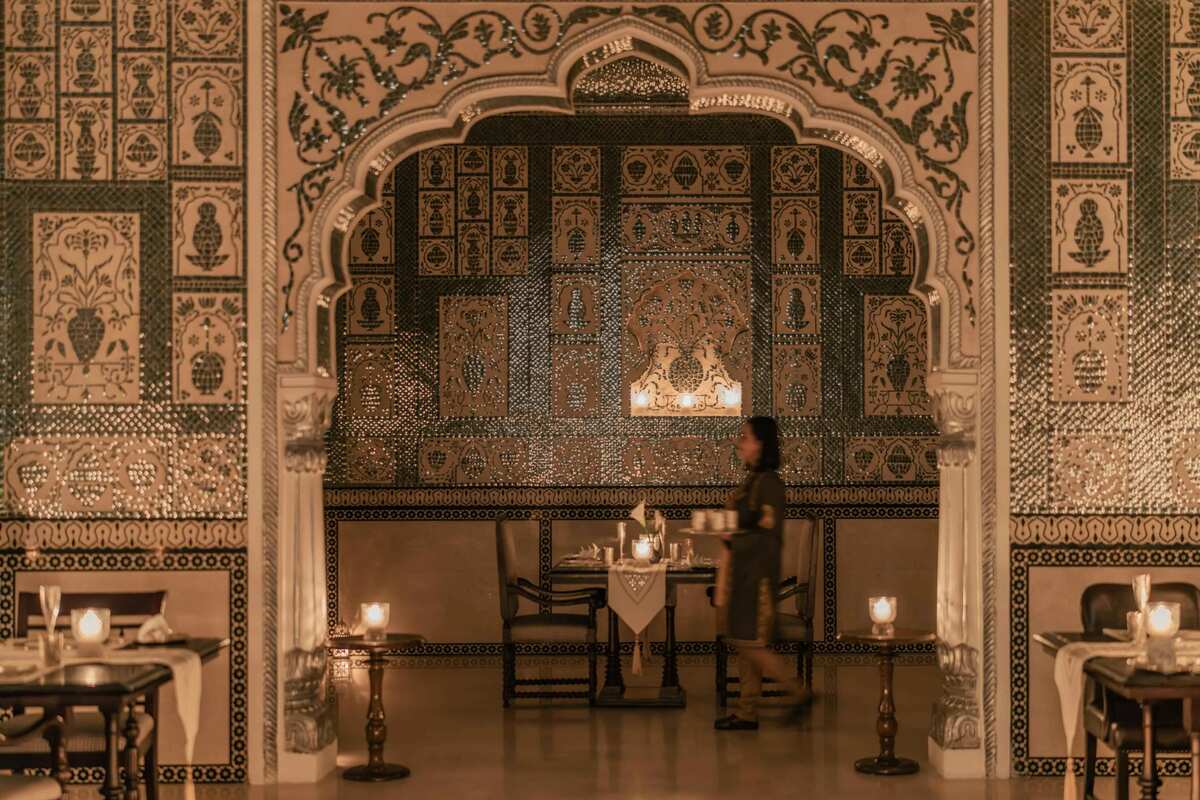
Drawing its name from the sixteenth-century Jamavar shawls of Kashmir, celebrated for their intricate weaves and timeless beauty, the restaurant embodies a philosophy of craftsmanship and elegance that is reflected in both its cuisine and design. The transformation of Mohan Mahal into Jamavar is part of The Leela’s unified brand strategy, bringing its renowned signature Indian dining experience to Jaipur. Jamavar is an ode to the royal kitchens of India, where culinary heritage meets modern luxury. While Mohan Mahal was celebrated for its Rajasthani charm and royal ambience, Jamavar, the place only lit by candles, elevates the space with signature North and South Indian delicacies, iconic design elements, and a globally recognised Leela dining brand. The reimagination preserves the architectural splendour of Mohan Mahal, resplendent with over 3,50,000 hand-cut Thikri mirrors inspired by Jaipur’s Sheesh Mahal and crowned with 18-carat gold-leaf work, while infusing the space with a renewed identity that blends heritage with contemporary finesse. Each evening, the restaurant comes alive with live instrumental performances, that evoke the grandeur and spirit of Rajasthan’s royal courts.
The Menu
Inspired by the intricate artistry of Jamavar weaves and Jaipur’s royal legacy, these creations blend spice, freshness, and depth. Every glass is designed to heighten the flavours and aromas of your meal. For a curated cocktail experience, it offers:
The Maharani’s Veil: As delicate as the folds of a Jamavar shawl. This spritz unites tequila’s warmth with cucumber’s cool grace and basil’s gentle note. Sparkling wine crowns it in brilliance, a veil shimmering with the elegance of queens who graced Jaipur’s palaces.
The Gulab Mahal: A jewel-toned tribute to Jaipur’s Pink City, where artistry and grandeur meet. Vodka brings clarity, Campari unfurls in regal vermilion, and rosemary recalls the fragrance of royal gardens. Each sip reflects Jaipur’s timeless splendour.
The Golden Courtyard: Glowing in the light of sunset, Jaipur’s courtyards come alive in this spiced creation. Rum lends depth, falernum layers citrus and warmth, lime offers a spirited spark, and ginger ale lifts it into radiance. A golden tapestry of flavour honouring royal evenings.
At Jamavar, every course is accompanied by wines, Red, White and Dessert, thoughtfully chosen to enrich and elevate your dining experience.
Each pour is curated to harmonise with the flavours, textures, and aromas of our royal Indian cuisine, creating a journey of refinement and grace at every sip.
The culinary narrative at Jamavar Jaipur celebrates both signature favourites such as Gucchi Mutter Masala, Kofta-e-Jamavar, Dal-e-Jamavar, and Gosht ki Galouti alongside dishes inspired by the regal kitchens of Rajasthan. Crafted with the finest locally sourced ingredients and presented with contemporary artistry, the menu itself becomes a canvas, drawing inspiration from Parchinkari, the intricate Mughal inlay craft, where every detail reflects meticulous precision and elegance.
How Did It Go?
The five-course meal began with a unique service ritual that draws from 16th-century royal dining traditions: a symbolic hand wash. A gesture once reserved for nobility before grand feasts. That moment of stillness and reverence sets the tone for the meal, blending timeless hospitality with royal gastronomy to create a memorable beginning to every dining experience.
For the first course, an appetiser, our palates were delighted with the Palak Patta Chaat, a delicate, soft yet crunchy Delhi-style papdi chaat made with spinach leaves, garnished with curd, pomegranate kernels, and sev. It was nothing short of a flavour bomb inside your mouth and prepared for the rest of the courses. Next came the platter with a symphony of flavours. This tasting selection included Jheenga Sultani, jumbo prawns marinated with spiced yoghurt, a hint of saffron, and smoked with star anise. Murgh Banjara Tikka, a succulent chicken marinated with chilli, garlic and yoghurt, flavoured with hand-picked Indian spices, and Gosht ki Galouti, an exquisite lamb patty, crafted with finely minced boneless lamb and signature chef's spices, served with a crispy ulta tawa paratha. For the vegetarians, the platter included Jodhpuri Paneer, a cottage cheese filled with raw mango, flavoured with hand-pounded Indian spices. Khumb ki Gilawat, mushrooms infused with aromatic spices, served with a crispy, skillet-seared ulta tawa paratha and Kosugadde Bezule, a crispy, spiced broccoli marinated with housemade Jamavar masala.
Then came the Dhaniya Tamatar Shorba, a tomato and green coriander soup, followed by a palate cleanser, Jamun Kulfi. The homemade Indian blackberry-flavoured ice cream gives you a tingling sensation on your tongue, cleaning your palate and preparing for the following courses.
The fourth course featured a royal-style Indian thali, combining the flavours from the North and South of India. The feast included dishes such as Dhungaar Maas, a smoked lamb simmered with onion and yoghurt flavoured with Mathania chilli. Jodhpuri Murgh, a boneless juliennes of succulent chicken braised with yoghurt and garlic tempered with chilli. Alleppey Fish Curry, a locally sourced fish simmered in coconut milk flavoured with raw mango. Palak Mangodi ki Subzi, sundried lentil dumplings cooked with spinach flavoured with garlic. Dal-e-Jamavar, a slow-simmered black lentil cooked with butter, fresh cream, and kasoori methi.
In Rajasthan, a meal is never complete without a Masala Baati, a Charcoal-baked whole wheat bread ball, flavoured with hand-pounded Indian spices and doused in ghee. Churma, ground wheat cooked with ghee and sugar, flavoured with nuts.
For vegetarians, non-vegetarian dishes and fish were replaced with Gucchi Mutter Masala, a dish featuring morel mushrooms with green peas sautéed in light gravy. Kofta-e-Jamavar, cottage cheese dumplings stuffed with crunchy dry nuts, served in a saffron-infused gravy. Urulai Roast, baby potato slow-cooked with Chettinad spices, and Gatta Curry, gram flour dumplings, cooked in yoghurt gravy flavoured with fenugreek. While the rest of the dishes remain the same for both vegetarian and non-vegetarian thali, along with the handcrafted bread varieties like Bina Pani ki Roti, thoughtfully paired with regional chutneys and pickles, including Ker from Jaisalmer.
The experience culminated on a sweeter note with a Dessert plate comprising Badam Halwa, a rich, slow-cooked dessert made from roasted almonds, ghee, and dry fruits. Seviyan ka Muzaffar, ghee-roasted vermicelli with nuts and cardamom, and the pride of Rajasthan, Ghewar, Jodhpur speciality, honeycomb disk flavoured with condensed milk and nuts.
Every dish speaks of its uniqueness and the story behind it, through its taste and texture. This does not end the story of Jamavar here; Jamavar Jaipur is helmed by an all-women service team, epitomising The Leela’s commitment to gracious hospitality and gender diversity.
Slurrp also got a chance to have an exclusive opportunity to speak with the Executive Chef, Varun Parashar, about his thoughts on the culinary scene at Jamavar. Here’s a peek into the conversation:
Slurrp: What inspired you to blend the North and the South culinary traditions, and how do you ensure harmony between their distinct flavour profiles?
Chef Varun: India’s culinary heritage is incredibly diverse, yet it shares a common soul, balance, depth, and warmth. The idea of blending the North and the South came from a desire to present a truly pan-Indian experience that celebrates contrast and connection.
At Jamavar, we bring together the bold gravies and robust spices of the North with the subtle, spice-layered, coconut and curry leaf notes of the South. Harmony comes from restraint, respecting the authenticity of each region while creating natural bridges through complementary ingredients, techniques, and plating.
Slurrp: Jamavar’s dishes feature premium ingredients like gucchi, Alleppey fish, and urulai roast. What guided your ingredient selection, and how do you adapt these classics to resonate with Rajasthan’s royal dining ethos?
Chef Varun: Our ingredient philosophy is rooted in purity, provenance, and storytelling. Each ingredient, whether the Kashmiri morel or the coastal fish, carries its own geography and history.
In Jaipur, we’ve paired these premium ingredients with the grandeur and warmth of Rajasthani hospitality. The adaptation comes through texture, visual appeal, and subtle royal accents, a touch of saffron, a hint of smoked ghee, or plating inspired by traditional thalis, so the dishes feel both elevated and connected to the local royal palate.
Slurrp: Consistency and quality are the soul of fine dining. How do you maintain the same level of precision and excellence across every plate served at Jamavar Jaipur?
Chef Varun: Discipline and attention to detail form the backbone of our kitchen. We invest heavily in training, not just in recipes, but in understanding the philosophy behind each dish.
Every plate goes through a tasting and visual check, ensuring it meets our standards of balance, temperature, and presentation. Systems, daily briefings, and a culture of pride among chefs help us achieve consistency, so every guest experiences the same Jamavar excellence, no matter when they dine.
Slurrp: Rajasthan has a strong culinary identity of its own. How have you woven local Rajasthani influences into the Jamavar experience while staying true to its national signature?
Chef Varun: Rajasthan’s cuisine is deeply rooted in tradition, resilience, and regal elegance, qualities that align beautifully with Jamavar’s ethos.
We’ve integrated local nuances through ingredients and techniques, such as kachri for tenderization, ker-sangri for native texture, and regional pickles or chutneys for brightness. These local touches appear as subtle layers within the larger Jamavar narrative, adding authenticity without altering its national signature.
Slurrp: Presentation at Jamavar reflects both art and storytelling. Can you share how the design philosophy, drawing from royal craftsmanship, inspires the way each dish is plated?
Chef Varun: Presentation at Jamavar goes beyond aesthetics, it’s about evoking emotion and heritage. Our plating draws inspiration from royal artistry, the symmetry of meenakari work, the finesse of miniature paintings, and the opulence of thalis once served in royal courts.
Each dish tells a story, from the region it hails from to the journey of its ingredients. The plating reflects this narrative, with textures, colours, and garnishes arranged thoughtfully to create visual poetry on the plate.
This 5-course dinner was a wholesome and royal experience, made even more memorable by The Leela Jaipur’s impeccable hospitality and the hard work of all the chefs involved.