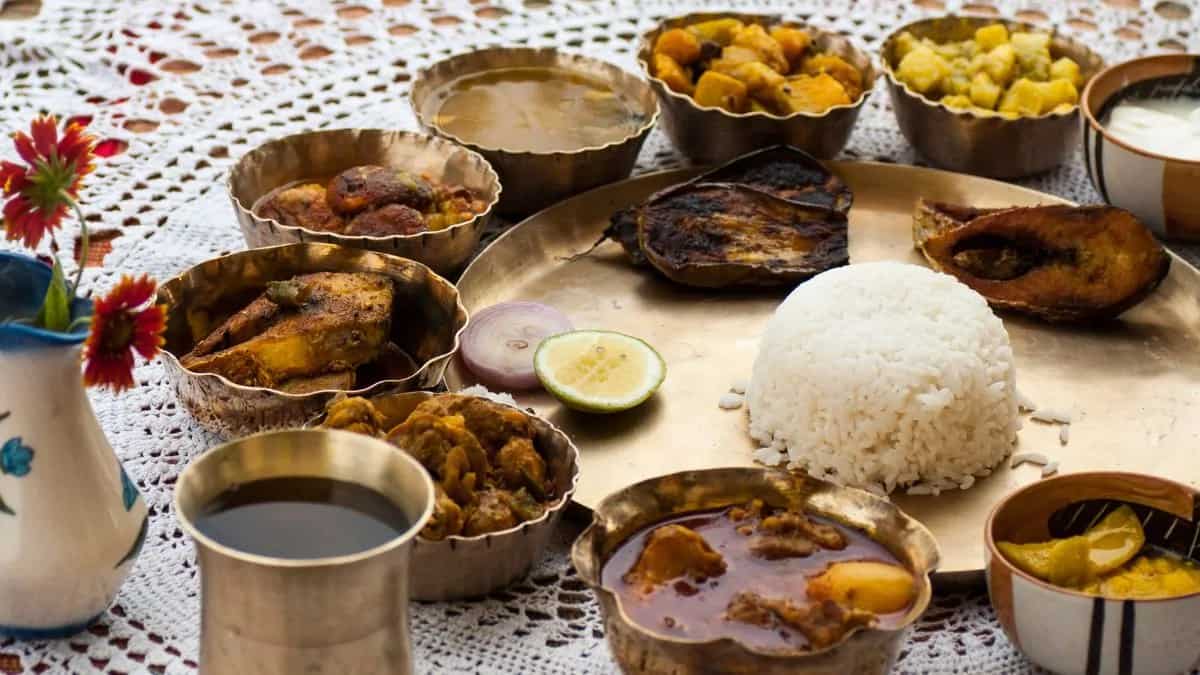
“Baro maashey, Taro parbon,” in Bengali translates to “13 festivals in twelve months,” which basically makes you see that, as a community, if one were to celebrate everything around them, this is where it comes to life. A major part of all these Bengali celebrations is around a lavish spread of food, be it Durga Puja or Poila Boishakh and beyond. Then some culturally specific festivities have so much significance that the food map or plate of food becomes the core symbol of it all.
Image Credit: Wikimedia Commons
One of them is Jamai Shasthi, a celebration of the son-in-law, which has been practised for years in the Bengali community. Jamai Shasthi is one of West Bengal's most important celebrations. It is observed annually on the Shashthi Tithi of the Shukla Paksha in the month of Jyeshtha. On this day, the son-in-law visits his in-laws, where he is greeted warmly. The mother-in-law places a tilak on her son-in-law's forehead, wraps a yellow thread around his wrist, and prays for his happiness, prosperity, and success.
Bengali families commemorate this day with tremendous fervour and follow ancient practices. The daughter and son-in-law get gifts, clothing, sarees, and, on occasion, jewellery. But the food is to really die for and if you’re aware Bengalis and their affair with food is like asking a music lover if they love music. Yet in today’s world, many modern recipes have taken shape on the Jamai Shashthi plate due to the modern-urban lifestyle everyone’s used to. “The menu has evolved, but the philosophy hasn't. Earlier, Jamai Shashti meant days of preparation and tables filled with dishes cooked entirely at home,” says Mr Indrajit Lahiri, Founder of Foodka, Cultural Storyteller & Entrepreneur.
Mr Lahiri also shares, “One of the most fascinating aspects of Bengali cuisine is that it's built around a sequence of courses rather than individual dishes. In that sense, it resembles classical French dining, where every course prepares you for the next, although Bengal developed this philosophy independently through its own culinary traditions.” Bengali hospitality has never been measured by the size of a serving, it has always been measured by the diversity of the table. A Jamai Shashti meal brings together seasonal ingredients, different cooking techniques and multiple flavours.
Image Credit: Wikimedia Commons
The variety isn't about excess, it's about showing care, effort and the richness of the household's culinary traditions. And keeping this in mind, if you’re celebrating or your family is gearing up for Jamai Shashthi 2026, try these creative yet traditional Bengali dishes for a festive spread that lingers and impresses your son-in-law!
Ucche Bhaja
Uchhe bhaja is a simple yet delightful fried bitter gourd dish. To make Uchhe Bhaja, slice the bitter gourd into thin rounds and soak them in water for 10 minutes. Heat the mustard oil until it smokes, then fry the slices on a high flame for two minutes. Reduce the heat and continue frying until they turn dark brown. The next step is to incorporate the spices (salt, turmeric, and red chilli powder), stir thoroughly, and heat until the spices are cooked through. Don't forget to serve immediately with rice and lentils.
Shukto
A must-have in the vegetarian Bengali plate, shukto is a bittersweet medley of vegetables. This humble Bengali vegetarian dish has bitter gourd, eggplant, green banana, potato, sweet potato, drumsticks, white radish, and tampering with randhuni. Often served with rice, this simple vegetarian dish is a must-have.
Image Credit: Wikimedia Commons
Moong Dal
The delicate moong dal is tempered with flavourful seasonings including red chillies and mustard oil. Radhuni, a particular ingredient that is quite special and connected to Bengal, is the star of this spread sometimes. Radhuni is the Bengali term for ajmod and is frequently mistaken for ajwain. It is a strong spice with a celery-like flavour and an aroma reminiscent of parsley, which is used in this dish.
Aloo Bhaja
Aloo bhaja is a popular Bengali dish made with thinly sliced potatoes that are deep-fried until crispy. It is a simple yet flavorful side dish that pairs well with rice or roti. The potatoes are seasoned with spices like turmeric, red chilli powder, and cumin, giving them a delicious spicy and aromatic flavour. Aloo bhaja is a quick and easy recipe that can be enjoyed as a snack or as part of a meal.
Mishti Pulao
If you don't have traditional Gobindobhog rice on hand, jasmine rice is an excellent substitute for mishti pulao. Its naturally flowery perfume enhances the dish's sweetness, resulting in a fragrant and festive rice preparation with a slightly lighter texture. While the grains are longer and less starchy than Gobindobhog, they absorb the richness of ghee, entire spices, raisins, and cashews well. The end product is a golden, delicately sweet pulao that goes well with Bengali favourites like kosha mangsho, chicken curry, and paneer dishes, providing a contemporary spin on a traditional celebration food.
Gochujang Kosha Chicken
Gochujang kosha chicken is a daring fusion of Bengali and Korean cuisine, combining the slow-cooked richness of traditional chicken kosha with the sweet, spicy, and umami-packed tastes of Korean gochujang. The chicken is marinated in yoghurt, ginger-garlic paste, and a teaspoon of gochujang before being cooked with caramelised onions and warming spices. As the stew thickens, the fermented chilli paste provides depth and a slight smokiness to balance the powerful Bengali-style masala. This fusion meal, garnished with spring onions and sesame seeds, works well with steamed rice, lachha paratha, or even Korean-style sticky rice for a truly cross-cultural feast.
Image Credit: Wikimedia Commons
Kochu Patai Ilish
‘Kochu’ or taro or Colocasia esculenta is a tropical plant similar to yams that is infamous for its edible leaves, underground roots and stalks. It is highly celebrated in South Asian cuisines, and in Bengal, it is no different, given how the region has wetlands, which are the perfect breeding ground for this plant. Taro leaves can often be itchy upon consumption, but to the trained eye, it is not so difficult to spot ‘kochu paata’ that can be sweet and not irritable. It serves as the perfect vessel for the fish to get steamed in and also acts as the commendable leafy green in the dish, adding a pinch of extravagance to the already festive spirit of Jamai Shasthi 2026.
Mishti Doi
Traditionally, mishti doi is made by slowly reducing sweetened milk until it thickens and develops a beautiful caramel colour. The milk is then mixed with a culture of curd or yoghurt, which ferments and adds a tangy note to the overall sweetness. This process allows the flavours to intensify, resulting in a dessert that is bursting with richness. While mishti doi is traditionally served in earthen pots known as "kuler chhota in Bengali, you can use any small, individual serving bowls or ramekins. The earthiness of the earthen pots is said to enhance the flavours of the dessert, but it's not essential.
Image Credit: Wikimedia Commons
Rasmalai Cheesecake
Bringing together the creamy indulgence of a classic cheesecake and the beloved flavours of rasmalai, this fusion dessert is a celebration of East meeting West. A buttery biscuit base is topped with a rich cheesecake filling infused with cardamom, saffron, and hints of rose water, echoing the flavours of the traditional Bengali sweet. Once chilled, the cheesecake is garnished with pieces of rasmalai, chopped pistachios, almonds, and a drizzle of saffron milk.