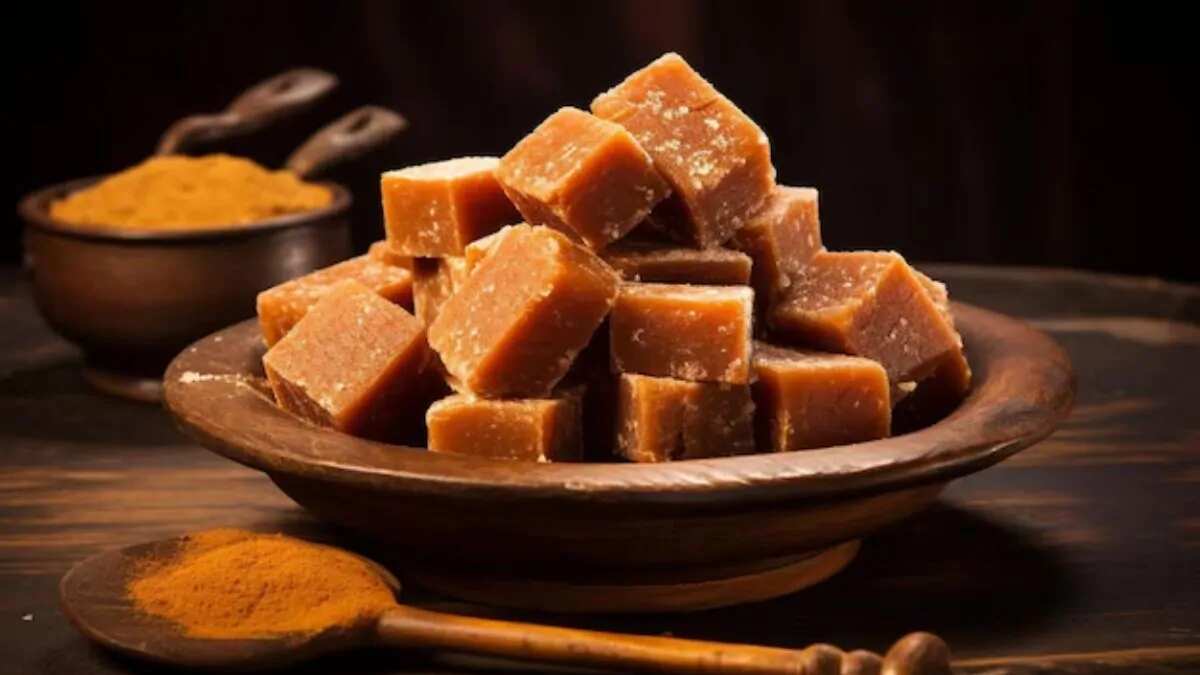
For ages, jaggery has quietly worn a health halo. Passed down through generations, recommended after meals, and known as desi and natural, jaggery is often seen as the “good” version in place of sugar. Many people switch to jaggery without thinking much about it, believing the diet is instantly made healthier. But this is exactly where the myth begins. Familiarity and tradition often blur the line between conscious eating and overconfidence. Just because something is traditional and old-school does not mean it is harmless.
Jaggery does have benefits, agreed, but it also acts like sugar in the body, raising blood glucose, adding calories, and affecting metabolism when overconsumed. The problem is not jaggery alone; it is how casually one consumes it. Understanding what jaggery truly has to offer, and what it doesn’t, can help in enjoying its flavour, cultural value, and moderation, rather than misunderstanding it for free access to sweetness.
Belief: Jaggery Is "Much Healthier” Than Sugar
Jaggery does have trace minerals like iron, potassium, and magnesium, but only "trace"; focus on that. You would require consuming a large quantity of jaggery to get a significant amount of nutrition, which also means consuming a lot of sugar. Jaggery is not better than sugar; they are all sugars, say Dr. Anjali Hooda, M.D., Internal Medicine. In terms of calories, jaggery and sugar are almost identical. Both boost blood sugar levels similarly. The health halo around jaggery is often derived from tradition, not the quantity-based nutrition. While jaggery is less processed, it still has a form of added sugar to it. It can be slightly better, but not nutritionally best.
(Image credit: Freepik)
Belief: Jaggery Is Safe For Diabetics
This is one of the most common misunderstandings, and bursting this myth, Dr Anjali Hooda says, they are as unsafe in diabetics as any other sugar. It’s also an empty calorie. Jaggery has almost the identical glycaemic effect as sugar because it is largely sucrose. The body breaks both down into glucose just as quickly. Many diabetics switch to jaggery, believing it is safer, only to spike their sugar levels. Doctors usually advise limiting the intake of jaggery just as precisely as sugar. The difference lies in processing, not in how the blood sugar responds. The term “natural” does not automatically refer to “diabetes-friendly.”
Belief: Jaggery Helps In Digestion
Yes, jaggery is traditionally eaten after meals because it prompts digestive enzymes and helps bowel movement. It does not improve any digestion. But that does not mean unlimited consumption is helpful. If you consume excess jaggery, it can lead to bloating, weight gain, and sugar crashes. Have it post-meal in small portions, not in large quantities throughout the day. Like ghee or saunf, jaggery is best as a finisher, not a replacement for moderation.
(Image credit: Freepik)
Belief: Sugar Is ‘Empty Calories’ While Jaggery Isn’t
Sugar is often marked as “empty calories,” but jaggery is not nutrient-dense either. While jaggery has micronutrients, they do not offset its high sugar content. Both provide quick energy with minimal satiety. Dr Anjali says, It may be classified as organic and unprocessed depending on the origin of the sugar cane and whether it is factory-processed or not. From a nutritional point of view, fruits, nuts, and whole grains still win. Jaggery is better considered as a traditional sweetener with flavour and cultural value, and not as a health complement. Swapping sugar for jaggery does not cancel out excess sweet consumption.
Belief: Jaggery Is Always Cleaner
Not all jaggery is made more cleanly. It can be cleaner than white crystallised sugar, again depending on the factory processes, says Dr Anjali. The jaggery you get from the grocery store has chemical clarifiers, artificial colours, or even added sugar syrup to improve its appearance. Some blocks are darker or shinier due to the added additives and not purity. Artisanal jaggery from the trusted sources is much cleaner, but those produced in bulk can be just as exploited as white sugar. Reading labels and sourcing matters. Remember, "brown” does not always mean “better, it is just better marketed.
(Image credit: Freepik)