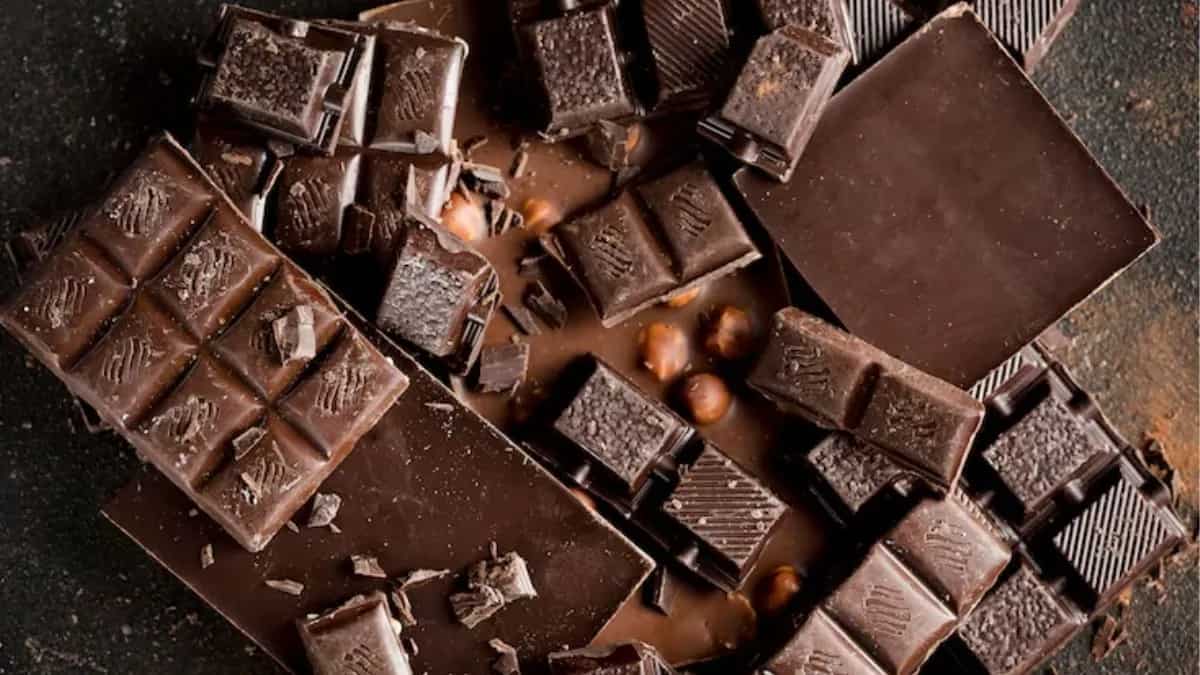
International Chocolate Day is celebrated on September 13, giving chocolate lovers another excuse to reach for their favourite bar. But choosing one can get surprisingly confusing once you look beyond just the usual milk, dark or white chocolate. You might have seen numbers such as 20%, 30%, 40%, 55%, 70% or even 90% cocoa appear on the wrapper, yet they do not just mean “more cocoa equals better chocolate.”
The percentage typically refers to the share of cocoa-derived ingredients, which include cocoa solids and cocoa butter, in the bar, while the rest may have sugar, milk ingredients and other components. Comprehending what these numbers actually mean can make it much easier to pick a chocolate that actually fits your taste.
20% Cocoa: Mild, Sweet And Far From Dark Chocolate
A chocolate that has around 20% cocoa is likely to taste much sweeter and creamier than a high-cocoa bar, especially when it has milk ingredients. The cocoa flavour is present but usually does not overpower, making this kind of chocolate appropriate for people who find dark chocolate too bitter.
It is also useful when you want chocolate especially for sweetness and creaminess rather than noticeable cocoa intensity. However, do not judge the bar by the number alone; also look at whether the percentage refers to total cocoa ingredients and look at the ingredient list to understand what else makes up the remaining portion.
(Credits: Freepik)
30% Cocoa: A Gentle Step Towards More Cocoa Flavour
At around 30%, the chocolate begins to add a more noticeable cocoa essence while still staying fairly sweet. Milk chocolates are the ones that usually fall under this category. In the 30% cocoa range, you may notice a little more roasted cocoa taste, but sugar and milk can still be evident.
This is a good range for people who are shifting from very sweet chocolate towards something that is more cocoa-based, but not bitter. If you are using this in baking, the percentage alone still does not tell you if the chocolate is appropriate to use; the amount of sugar, cocoa butter and milk ingredients also influences how it behaves when it is melted.
40% Cocoa: Creamy With A More Defined Cocoa Note
A 40% bar is a middle ground, especially in milk or dark-milk chocolates. The cocoa flavour is more evident here than in a very sweet bar, but milk and sugar soften the bitterness. Dark-milk chocolates often use higher cocoa levels while preserving dairy ingredients, which makes the chocolate bar taste deeper without turning too bitter.
If you want chocolate for snacking purposes but do not want the sharpness of very dark bars, this range can be tried once. However, compare ingredient lists because two 40% bars can still taste noticeably different.
(Credits: Freepik)
50–55% Cocoa: A Good Bridge To Dark Chocolate
Around 50–55%, you cannot ignore the cocoa. You can expect less sweetness here than a traditional milk chocolate, with roasted, a bit bitter cocoa notes taking centre stage. This range is suited for someone who wants to shift towards dark chocolate without immediately choosing a 70% bar.
It is also adjustable in desserts, as there is still enough sweetness that goes well with the fruit, nuts, caramel and also the dairy. If you are buying your first darker bar, a 50–55% can be a suitable starting point, especially if you prefer sweeter chocolate.
60–70% Cocoa: Dark, Balanced and More Cocoa-Forward
For many chocolate lovers, 60–70% offers a good balance between sweetness and the depth of cocoa. The cocoa flavour becomes more intense, while the bar still has enough sugar to support the bitterness without becoming overbearing. Within this range, the source and processing of the cocoa are much easier to catch, with some bars tasting fruity, nutty and roasted.
It is important to keep in mind that a 70% bar does not mean “more good” than a 55% one. The percentage only tells you the proportion of cocoa-derived ingredients, and not the quality, flavour profile or the sourcing of the cocoa beans.
80–85% Cocoa: Less Sweet, More Intense
In the 80–85% range, chocolate becomes a very different experience. There is very little space for sugar, so cocoa, bitterness and roasted notes become much more evident. Some bars also have a dry finish, although this varies greatly with the cocoa and also the manufacturing process. This range is good for people who already enjoy dark chocolate and enjoy the cocoa flavour to overpower.
90% Cocoa: For People Who Really Want The Cocoa
A 90% bar leaves very little room for sugar and other ingredients, so you can expect an intense, bitter and remaining cocoa experience in this. It can have roasted, earthy, nutty or fruity notes depending on the beans, but the cocoa here takes them in charge.
If you like a sweeter, creamier chocolate, 90% may taste a bit too plain, with only cocoa dominating. For experienced dark-chocolate lovers, however, it can show tastes that are generally hidden in other ranges due to the addition of larger amounts of sugar.
(Credits: Freepik)
So, Which Cocoa Percentage Should You Buy?
Think of the percentage as a taste manual and not a quality score. If you like creamy and sweet chocolate, stick to the lower ranges; if you want a perfect balance of sweetness as well as the taste of cocoa, 50–70% would be reasonable; and if you enjoy bitterness and a stronger cocoa element, move towards 80–90%. Apart from this, reading the ingredient list is equally essential. Two bars with the same cocoa percentage can taste different because the percentage does not tell you the exact split between cocoa mass and cocoa butter or the amount of sugar and other ingredients that are used.
The easiest way to find your best number is to taste across a few percentages instead of assuming that the biggest number on the wrapper is automatically the best one.