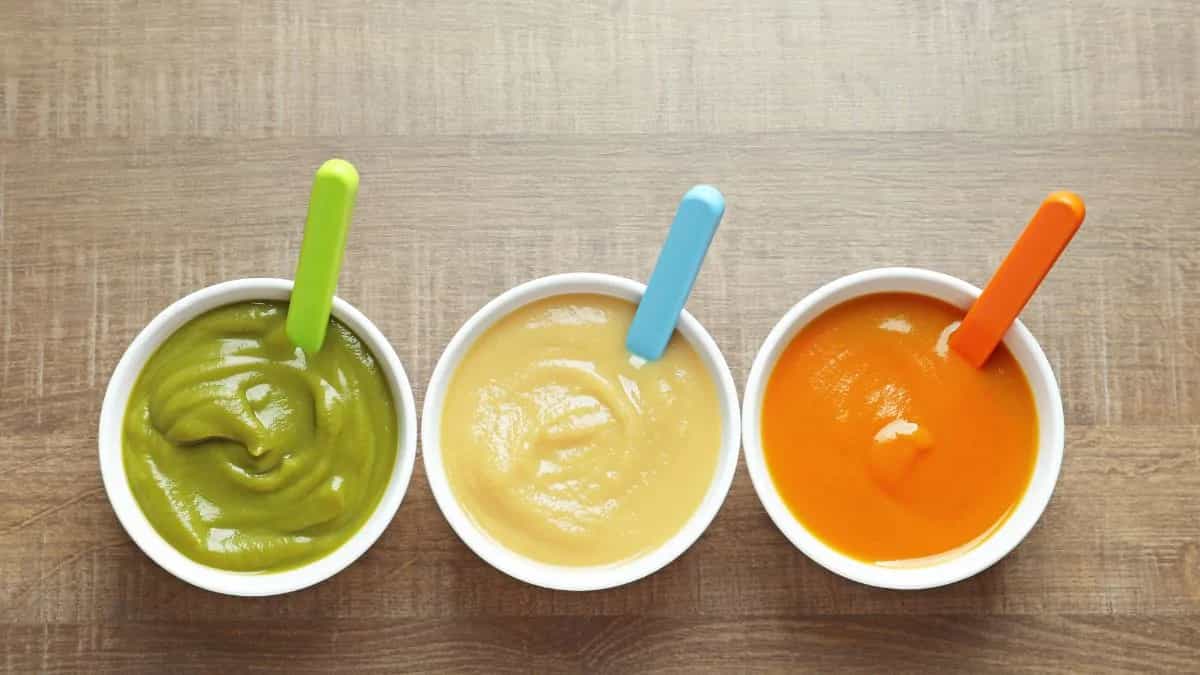
Once your baby is ready to eat solid food for the first time, it can be a confusing time, picking between different ingredients and preparation methods. Do you puree it all? Or do you first steam, then transfer, and mash? The simple answer is you want to do the best for your child. And using handy and adaptable equipment like the Usha Blender Heater allows you to focus more on the ingredients, while the machine takes over grunt work. Since the blender heater combines cooking and blending into a single, automated process, it works exceptionally well for baby food recipes. Instead of boiling vegetables in a pot and transferring them for blending, the blender heater handles everything from raw ingredients to a smooth, warm puree inside one jar. This not only saves effort but also prevents the loss of vital water-soluble nutrients that can happen when transferring boiled vegetables.
Image Credit: Canva
Why Start With Basic Fruit Or Vegetable Mash
A fruit or vegetable mash is an excellent dish when starting your baby on solid food because it mimics the smooth consistency of breast milk or formula. The familiar texture makes it easier for the baby, while also delivering essential vitamins, fibre, and hydration. Additionally, babies need to start solids around six months, but develop teeth anywhere between 6 and 12 months. Fruit or vegetable mash, with its soft texture, eliminates choking hazards, allowing babies without teeth to safely consume food. A powerful blender heater with a 1000W motor can blend even the toughest ingredients into a smooth consistency. Some good fruits and vegetables to start with are apples, pears, pumpkin, peas, or broccoli.
Image Credit: Canva
Apple Pear Puree
Peel, core and chop one apple and one pear into small pieces, then add them to the blender heater with a splash of water. With the pureeing function, the blender heater will automatically heat the fruit to soften it, and then periodically pulse the blades to pulverise it into a perfectly smooth texture. Once the cycle is complete, pour the puree into a bowl and allow it to cool to a safe feeding temperature. Always test it on your wrist before serving your baby. You can follow the process for other ingredients too, like a broccoli and potato mash, or a banana-berry mix.
Chickpea And Vegetable Mash
When you feel your baby is ready for more variety and chunkier textures, you can introduce multi-ingredient mashes like this chickpea and vegetable mash. To make this, add half a cup each of water, cooked chickpeas and chopped carrot into the blender heater along with a quarter cup each of peas and sweet potato. Use the pureeing function on the blender heater to gently heat the vegetables until tender before blending everything into a smooth, creamy mash. The superior steel blades in the blender heater thoroughly break down the chickpeas and vegetables into a fine, even consistency, helping eliminate coarse bits that can make baby food harder to eat. If needed, add a little more water to adjust the consistency for your baby's age.
Image Credit: Canva
Carrot Rice Puree
Rice is one of the easiest first grains for babies to digest and pairs well with naturally sweet vegetables like carrots. To make this puree, add half a cup each of cooked rice, chopped carrot and water to the blender heater. Use the pureeing function to gently blend the ingredients into a smooth, lump-free consistency, adjusting the texture with a little extra water if needed. The blender heater's powerful motor and precision blades ensure the rice is evenly blended without turning gummy, creating a silky puree that's easy for babies to swallow. As always, let the puree cool down to a safe feeding temperature.