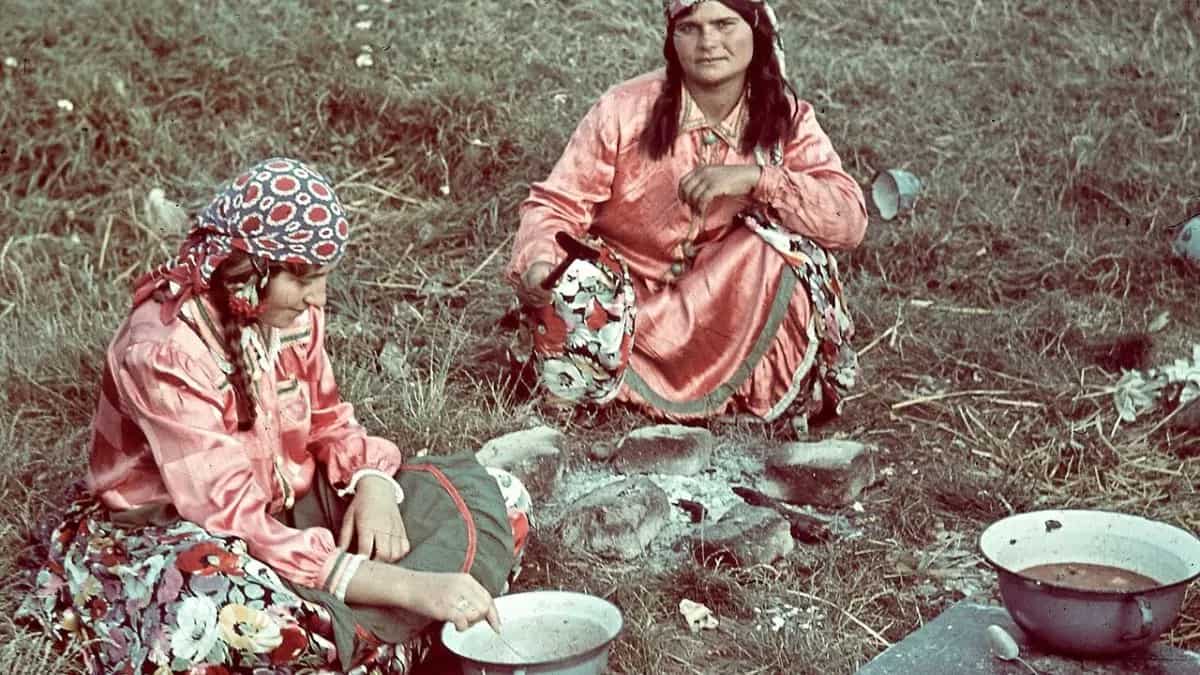
The Roma people trace their roots back to the northern part of the Indian subcontinent. Genetic studies and linguistic research point strongly to regions corresponding to present-day Rajasthan, Punjab and Sindh as the ancestral homeland of Roma ancestors. Linguistic evidence is particularly compelling. The vocabulary and grammar of the Roma’s native tongue, Romani, share many features with Indo-Aryan languages of northern India such as Hindi, Punjabi, Marwari, and Rajasthani. Based on this, scholars generally agree that the Roma began migrating westward between roughly the 5th and 10th centuries CE, possibly driven by regional upheavals and changing political climates in their homeland. Their migration took them through Persia and Armenia, then into Anatolia, and eventually into the Byzantine Empire. From there, over centuries, different groups spread across the Balkans, Central Europe and later Western Europe. By the 15th–16th centuries, European records note Roma presence in many countries; in Britain, for instance, there are records of “Gypsies” in the early 1500s. In their diaspora, Roma culture remained layered: a core identity with Indian-derived language roots and sensibilities, overlaid with Balkan, Middle Eastern, and European influences. Their food culture, too, reflects this layered history, using local ingredients and influences, but often retaining cooking instincts that resonate with their ancestral Indian past. This long and winding history, from India across continents and centuries, forms the backdrop against which one can begin to see the echoes of Indian culinary logic in some Roma dishes and recipes.
Image credit: Wikipedia
Pirogo (Sweet Noodle Or Baked Pudding)
Pirogo (often described in English-language sources as a Romani sweet noodle casserole or baked pudding) is typically made from egg noodles or a grain base, eggs or dairy (cottage cheese/curd), butter, sugar or dried fruit such as raisins, and occasionally nuts. It is a celebratory sweet, served at feasts and family gatherings. Sources that catalogue Romani foods identify pirogo as a common Romani dessert, similar in form to other European egg-and-noodle puddings (and sometimes compared to Jewish kugel). India has a broad tradition of milk- and grain-based sweets and puddings (think kheer, seviyan/semiyan kheer made with vermicelli, or baked/semi-baked milk puddings). The parallel is structural rather than identical: both traditions convert a grain/noodle and dairy base into a sweet, bakeable or simmered pudding for festivals and family tables.
Image credit: Wikimedia Commons
Sarma / Sarmi (Stuffed Leaves)
“Sarma” (also called sarmi or similar names in Balkan contexts) refers to leaves (cabbage, vine leaves) wrapped around a stuffing of rice, minced meat (or sometimes vegetarian mix), onions and herbs, then simmered until tender. This kind of stuffed-leaf roll appears across Balkan, Middle Eastern and Romani tables and is well documented as part of Roma culinary practices. India contains many wrapped/steamed stuffed-leaf traditions, for example patra/patrode (colocasia/taro leaves smeared with a spicy gram-flour or rice paste and steamed) and various stuffed cabbage or stuffed vegetable recipes found regionally. The similarity lies in method and function, using leaves as vessels for rice/legume/meat stuffing, slow cooking them to meld flavours, even if spice profiles differ.
Bodag / Romani Flatbreads (Simple, Portable Breads)
In some Romani communities (notably Hungarian Romani traditions) breads such as bodag (also spelled vakáro/gypsy bread in regional descriptions) are simple unleavened or quick breads made from flour, water, salt and baking soda, cooked or baked simply and eaten with stews. Roma use many quick breads and fried breads; bread is a central, portable staple. The basic logic, a fast, non-fermented wheat or grain bread cooked on a hot surface, maps directly to Indian staples like roti/chapati and baati. These are minimal-ingredient unleavened breads designed to be made quickly and eaten with stews or lentils, serving the same dietary and practical role.
Image credit: Adobe Stock
Paprikash And Romani Stews
In several Balkan and Central European contexts (and in Romani cooking within those regions) a paprika-forward stew such as chicken or meat paprikash is common: you sweat onions, add paprika and peppers/tomato, then simmer meat until tender; variants might finish with sour cream. Paprika, garlic and peppers are characteristic seasonings in many Romani stews in the Balkans. The technical pattern, browning/sweating a bed of onions and aromatics, adding a principal spice or spice mix, then simmering meat slowly so the base thickens and flavours concentrate, is central to countless Indian home curries. Where Indian kitchens may use turmeric, chilli and garam masala, Romani cooks in Europe use paprika and local herbs; the shared point is the layered, patient building of flavour rather than a direct one-to-one spice match.
Image credit: Wikipedia
One-pot Mixed Meals
Romani people frequently prepare hearty one-pot stews combining grains, pulses (where available), vegetables and small pieces of meat. Across Roma communities in Europe, such mixed pots were practical for feeding families and travellers and are commonly referenced in ethnographies and cuisine overviews. Khichdi (rice + lentils) and other Indian mixed-pot dishes (daliya, pulao variants, khichuri) follow the same logic: economical, nourishing, and suitable for large groups or travel.
Image credit: Wikipedia
Fried Festival Breads And Dough Sweets
Fried or baked sweet breads and pastries (examples in Romani/related regional traditions include various fried doughs, poppy-seed cakes and cheese-filled doughs) are widely reported across Romani communities and among neighbouring populations; pirogo (sweet noodle pudding) also appears on festival tables. These items can be fried, baked or pan-cooked and commonly use flour, eggs, dairy/cheese, sugar and dried fruits. Indian festivals likewise centre on special fried and sweet breads (malpua, gujiya, jalebi, balushahi, etc.), where a simple dough plus oil and sugar becomes a treat preserved for celebrations.
Image credit: Adobe Stock
Rice Dishes And Stuffed Vegetables
Romani households in various regions prepare rice baked or simmered with meat, vegetables, raisins or nuts; stuffed vegetables (like peppers) filled with rice/herbs/meat are also noted in Roma cuisine accounts. These practices appear repeatedly in surveys of Romani food across the Balkans and Central Europe. Indian pulao, biryani-style layered rice, sweetened rice (zarda/meethe chawal), and the broad tradition of bharwan (stuffed) vegetables employ the same principle: using rice or a grain to carry flavours and using vegetables as vessels for seasoned fillings.
Image credit: Wikipedia
Echoes Of Ayurveda And Rajput Food Wisdom
Across many Roma communities, traditional beliefs about food often mirror everyday Ayurvedic principles, the idea that certain ingredients warm or cool the body, and that herbs, spices and natural remedies help maintain balance. These habits reflect the kind of practical folk knowledge common in north-west India rather than formal Ayurvedic study. The region they originally came from also shaped Rajput cooking, which relied on ghee, grains, lentils, clarified fats and slow-cooked meats suited to an arid landscape. Some Roma food instincts, simple unleavened breads, the use of fat for strength, slow-simmered meat, and a focus on easily digestible spices, echo these older Rajput traditions. The flavours changed as they moved across continents, yet the underlying food logic still hints at their ancestral roots.