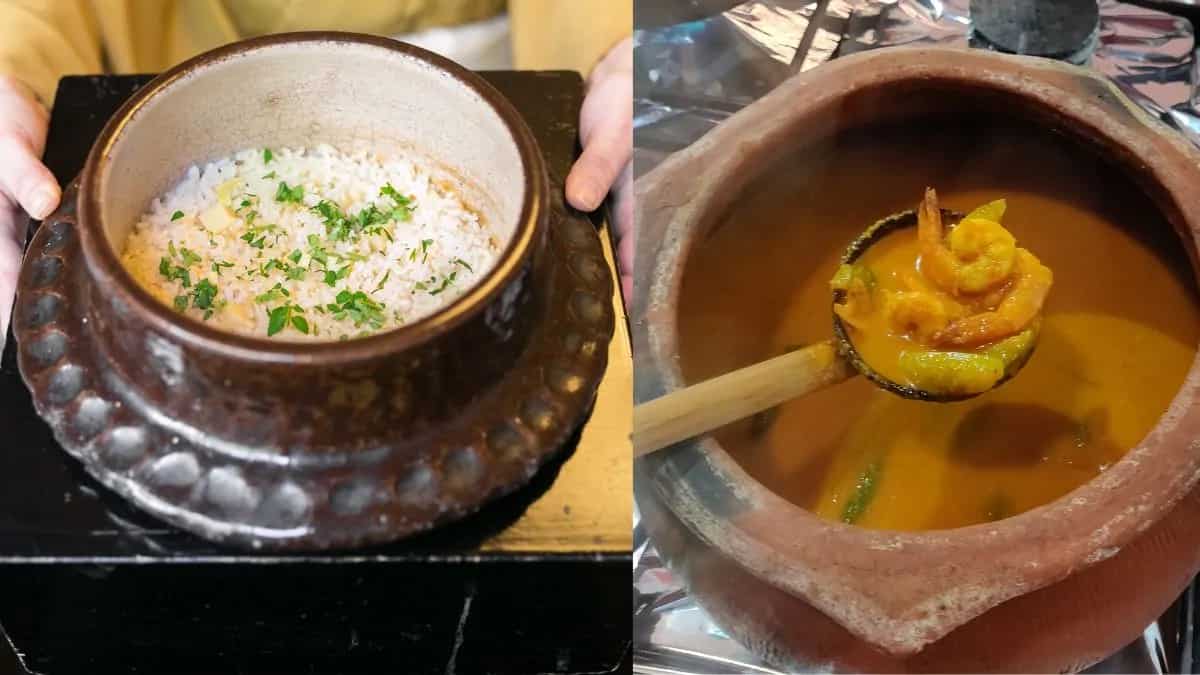
Most cultures across the world have dedicated cook pots which are traditionally used to prepare food using the process of retaining heat or slow-cooking, using a low heat source, as well as being able to trap moisture within. Amongst the widely known cooking techniques across the world, the donabe and the technique of tandoori cooking from India have often been labelled as great. Despite coming from very different cultures, Japan and India, donabe and tandoori cooking have a lot in common in terms of both technique and attitude. Fundamentally, both techniques use age-old clay pots that evenly store and disperse heat, enabling food to simmer and acquire complex tastes. Both the Indian tandoor and the Japanese donabe pot have their roots in slow, heat-driven cooking, when patience and temperature control are more important than complex technology.
Image Credit: Wikimedia Commons and Flickr
In Japan, everyday donabe trends focus on one-pot meals like hot pots, rice, stews, and seasonal vegetables, reflecting a growing preference for simple, nourishing home cooking. Similarly, in Indian kitchens, tandoori-style cooking has moved beyond restaurants into daily life, with people recreating smoky flavours at home using clay ovens, gas tandoors, or even grills and ovens. Both cultures now emphasise wholesome, minimal-ingredient cooking that highlights natural taste rather than heavy sauces. Let’s dig into the comparisons and similarities that make these two cooking styles uniquely connected.
Use Of The Japaense Techique Of Donabe Cooking In Daily Life
Known to be one of Japan’s oldest cooking vessels, donabes are designed for broth-based hot pots, soups and cooking fluffy rice. The dome-shaped lid of the ceramic cooking pot has a tiny hole on its narrowest circumference in order to regulate the moisture and make space for steam to escape. It is important to understand that the donabe builds heat slowly but retains it for a longer time than usual. What one must also be careful about while cooking with a donabe is to never place it on a direct source of heat, empty. Ideally, adding a spoonful of oil or the food itself is highly recommended.
Its roots can be found in the Kofun period (c. 300–538 AD), when the first earthenware cooking vessels appeared in Japan. These early pots gradually adapted to local materials and culinary requirements after being influenced by Chinese and Korean ceramic techniques. Donabe-like containers were widely used in rural families by the Heian period (794–1185), particularly for cooking grains, vegetables, and broths over wood fires. During the Edo period (1603–1868), the technique advanced further as local pottery centres like Iga and Banko started creating more sophisticated, long-lasting clay pots that were especially made for even cooking and heat retention. Donabe became officially recognised as a mainstay of Japanese domestic life during this time.
Donabe has been more popular in contemporary Japan, particularly during the 2000s, because of movements toward home-centred cooking, seasonal eating, and slow living. In modern kitchens, donabe is being utilised for rice, fusion stews, no-knead bread, and even desserts, moving beyond the use of conventional hot pots. Donabe is a return to tactile, thoughtful cooking where heat, time, and material matter in a world where fast meals and smart appliances rule. Its lasting appeal stems from the way it unites traditional craftsmanship with contemporary lifestyles, providing sustainability, emotional solace, and a profoundly cultural approach to eating that is both classic and completely in line with wellness-driven culinary trends.
The Art Of Tandoori Cooking In India
Tandoori cooking in India has ancient roots and, like donabe, does not have a single known creator, as it evolved organically from early methods of clay-oven cooking. Its origins can be traced back to the Indus Valley Civilisation (around 2600–1900 BC), where archaeological evidence shows the use of cylindrical clay ovens for baking bread and roasting food. These early ovens were the precursors to what we now know as the tandoor. Over centuries, the technique evolved across North India, Central Asia, and the Middle East, shaped by nomadic and agrarian communities who needed efficient, high-heat cooking methods.
Image Credit: Flickr
During the Mughal period (16th–18th century), tandoori cooking became more refined and prominent, especially in royal kitchens, where meats were marinated with spices and yoghurt and cooked in intense heat for flavour and tenderness. The modern timeline of tandoori cooking took a major turn in the 1940s, when Kundan Lal Gujral popularised dishes like tandoori chicken and naan in Delhi, bringing the style into mainstream restaurant culture. Traditionally, the tandoor is used to make recipes such as naan, roti, kulcha, tandoori chicken, seekh kebabs, paneer tikka, fish tikka, and roasted vegetables.
In the modern world, tandoori cooking has moved far beyond roadside dhabas and fine-dining restaurants into everyday homes, with people using gas tandoors, OTGs, air fryers, and grills to recreate smoky flavours. Today, it represents a blend of tradition and innovation where ancient clay-oven techniques meet contemporary lifestyles, global flavours, and healthier, oven-based adaptations, making tandoori cooking both timeless and continuously evolving.