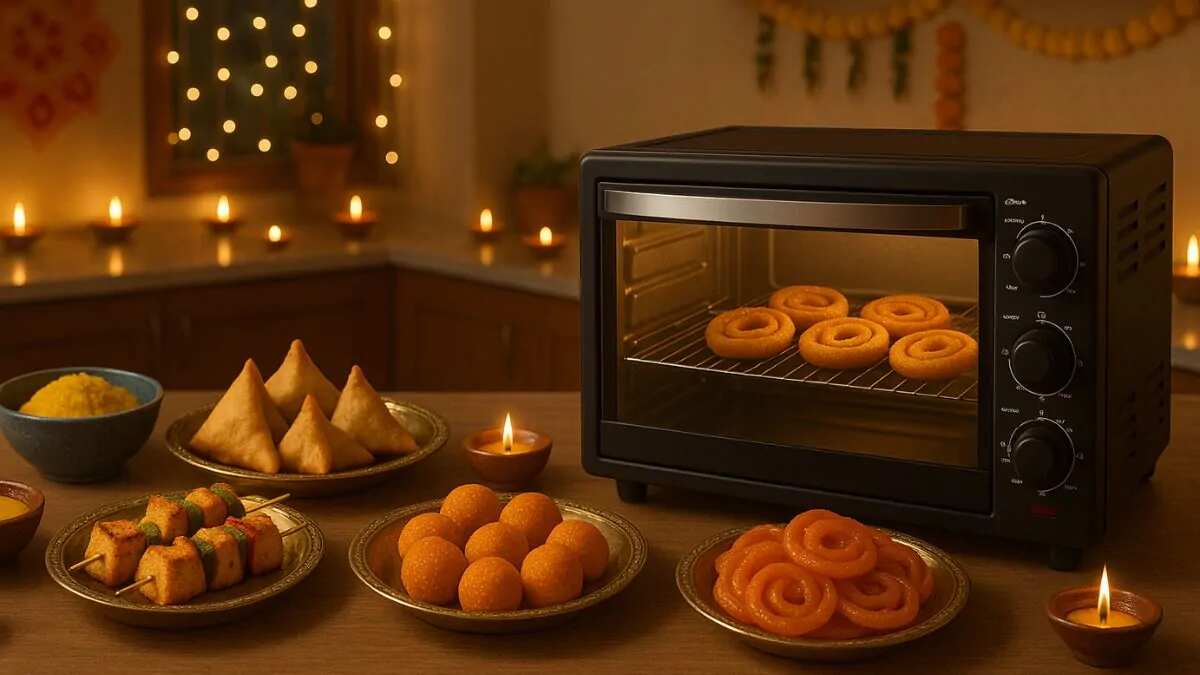
Preparing for Diwali often involves more than decorations and lighting diyas. The centre of every celebration lies in the kitchen, where guests gather around plates filled with homemade treats. Planning a menu that balances traditional dishes with easy-to-make recipes can be overwhelming, especially when managing multiple cooking tasks at once. An OTG, or oven-toaster-grill, offers a practical solution for hosting. It brings flexibility and control, allowing you to bake, toast, and grill without switching between different appliances. For those planning a festive get-together at home, an OTG, like one from Usha, can turn Diwali cooking into a smoother, more enjoyable process while ensuring food tastes fresh and evenly cooked.
Image credit: Meta
1. Baking Fresh Snacks Ahead Of Time
Diwali gatherings usually start with a spread of appetisers and snacks that guests can enjoy before the main meal. With an OTG, you can prepare these in advance and store them, saving time on the day of the party. Dishes such as baked samosas, cheese-stuffed bread rolls, paneer tikka, and masala corn cups turn out crisp and golden without needing deep frying. Using the baking function helps achieve even browning, and the temperature control ensures the texture remains consistent. You can also try baked mathris or savoury crackers made with ajwain and atta. These snacks stay crunchy for days when stored properly. This makes it easier to serve guests without spending all evening in the kitchen. Preparing in batches using an OTG helps you manage portions better and reduce food waste.
Image credit: Freepik
2. Simplifying Festive Main Courses
Main courses during Diwali often involve elaborate cooking, which can take hours on a gas stove. An OTG helps reduce that effort. You can roast marinated vegetables or meats for kebabs, or bake casseroles that combine flavours in one dish. For example, a tray of baked vegetable pulao or roasted paneer with spiced yoghurt can serve several guests at once. The heat distribution in an OTG ensures that the flavours blend evenly without constant stirring or supervision. The grilling mode is also useful for finishing touches such as roasting papads or reheating rotis before serving. Having one appliance that handles multiple parts of your menu allows you to keep the meal warm while you focus on other preparations.
Image credit: Freepik
Also read: Fusion Desserts For Diwali Using An OTG
3. Preparing Healthier Versions Of Traditional Sweets
No Diwali celebration is complete without mithai. The challenge is often the heavy use of ghee and sugar in traditional recipes. With an OTG, you can create lighter versions that retain the festive flavour. You can bake coconut laddoos, atta barfi, or besan nankhatai instead of frying. The controlled temperature helps achieve the right texture without burning the edges. Some hosts prefer making baked gulab jamun, which requires minimal oil yet turns out soft and golden. The oven setting allows caramelisation without deep-frying. You can also toast dry fruits to use in toppings or fillings. Having the ability to roast or bake at specific temperatures gives you consistency across batches. This ensures your mithai plate looks impressive and tastes balanced.
Image credit: Freepik
4. Reheating And Serving Efficiently
One of the main difficulties in hosting large gatherings is keeping food warm without drying it out. Reheating on the stove can make fried items soggy and reduce freshness. An OTG maintains crispness when you reheat snacks or breads. The heat circulation revives dishes evenly without affecting their taste. You can preheat serving plates or bake small portions just before guests arrive. The grill function also allows a quick reheat of kebabs, stuffed vegetables, or rotis, which helps save time during the final rush before serving. Instead of relying on multiple pans or microwaves, an OTG keeps your workflow smooth. It can handle different dishes together if placed on separate trays, which helps when serving several guests at once.
Image credit: Freepik
5. Planning A Balanced Menu Around The OTG
When planning a Diwali menu, it helps to include dishes that can be prepared using the same appliance to streamline cooking. An OTG allows you to plan dishes that bake, grill, and roast well without compromising on flavour. You can divide your menu into categories such as appetisers, mains, and desserts, and assign specific temperature settings for each. For instance, plan an appetiser like baked tikki, followed by a grilled paneer or vegetable platter, and end with a baked dessert. You can also use the oven to toast nuts or roast seeds for garnishing. This approach keeps your menu cohesive and manageable, especially if you are cooking for a larger group. Menu planning around an OTG also helps control timing since you can pre-cook and reheat without affecting taste.