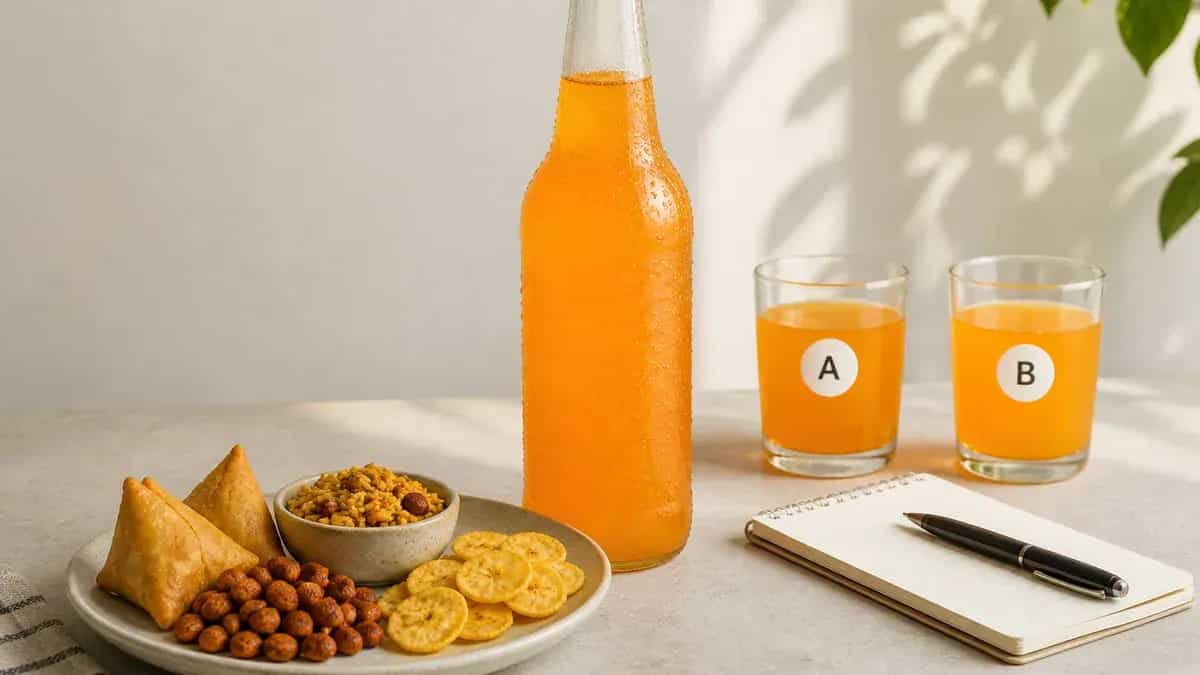
The first sip always arrives with baggage.
A cold glass can trigger a whole childhood before it triggers your tongue: the canteen counter, the orange stain on fingertips, the particular candy-perfume you could identify blind from three seats away. That’s why “Does the new Gold Spot taste like the original?” is a dangerous question—nostalgia is a loud tasting note.
So we did the next best thing to time travel: a transparent blind taste of what’s currently being sold as Gold Spot, and a method you can repeat.
What We’re Testing: Relaunch Vs Memory
“Same taste” sounds like a yes/no problem. It isn’t—because the reference point is rarely the liquid; it’s your memory of the liquid.
- Memory drifts. Sweetness tolerance shifts as you grow older, and what once read as “zesty” can land as “candy” today.
- Context edits flavour. The same orange soda behaves differently next to a spicy samosa than it does at a desk, half-distracted.
- Relaunches can legitimately change. Even with the best intentions, brands may adjust inputs (flavourings, sweeteners, sourcing, process) across decades.
- Brand cues bias perception. Bottle shape, label colour, even the sound of the cap can prime you to “taste” what you expect.
So here’s what this article does instead: we blind-taste the current product on shelves, score it on a simple rubric, then give you a one-line verdict, structured tasting notes, and a ranked list of Indian snack pairings that make this style of orange soda work harder.
A note on the “Gold Spot is back” claim: availability can be patchy and time-bound across cities and retail channels. Treat this as a tasting of the currently sold pack we bought (details below), not a promise that every format in every region will match.
Blind Taste Test Setup
This wasn’t a lab. It was controlled enough that you can replicate it—and disagree with us for good reasons, not guesswork.
- What we tasted: Gold Spot currently on sale, PET bottle (600 ml), purchased in Mumbai (local retail) in 2025.
- Bottle condition: Unopened until tasting, then poured immediately.
- Panel size: 7 tasters
- 4 grew up drinking Gold Spot (strong nostalgia)
- 3 either barely remember it or never had it (fresh palate)
- Blind conditions: Soda decanted into identical, unmarked glasses out of sight; no bottle on the table.
- Palate reset: Tasters rinsed with plain water between attributes/rounds.
Temperature target (and why it matters)
We tasted at two temperatures because orange soda changes dramatically with chill:
- Very cold (5–7°C): cold mutes aroma and slightly suppresses perceived sweetness; fizz feels sharper.
- Lightly chilled (10–12°C): warmer makes orange aroma and aftertaste easier to detect—useful for spotting what you might notice as the drink sits.
Glassware + pour rules (to control carbonation loss)
- Glass: small, straight-sided tumblers (easy to compare bubble behaviour)
- Pour size: ~80–90 ml per taster per round
- Timing: everyone tasted within 2 minutes of pouring (to limit “it went flat” noise)
Scoring rubric (1–5)
Each attribute was scored 1 (low/poor) to 5 (high/excellent):
- Aroma (orange candy vs fresher citrus cues; intensity)
- Sweetness balance (cloying vs controlled)
- Citrus pop / acidity (lift, pithy bite, “orange oil” impression)
- Carbonation / mouthfeel (prickliness, bubble size, fade speed)
- Finish / aftertaste (peel vs candy, cleanliness, linger)
What counts as “match” vs “partial” vs “different”
Because we can’t legally or practically pour an original-era bottle next to it, “close enough” had to be a panel-consensus standard, not a fake equation.
- Match: most nostalgia tasters independently say “this is it,” with no major disagreement on sweetness/finish.
- Partial match: the Gold Spot signature is identifiable, but 1–2 noticeable shifts show up consistently.
- Different: panel struggles to find the signature; it reads like a generic orange soda.
Blind taste scorecard (panel averages; current product only)
| Attribute (1–5) | Panel avg | What that means in the glass |
|---|---|---|
| Aroma | 3.6 | Orange-candy lead; a little peel-like lift when less cold |
| Sweetness balance | 3.1 | Sweet-leaning; reads cleaner when served colder |
| Citrus pop / acidity | 3.3 | Gentle tang; more “orange essence” than fresh citrus |
| Carbonation / mouthfeel | 3.8 | Brisk initial fizz; softens fairly quickly |
| Finish / aftertaste | 3.0 | Candy-orange linger; can feel a touch sticky as it warms |
| Panel closeness-to-memory verdict | Partial match | Consensus label (not a measured distance) |
Tasting Notes: What The New Gold Spot Tastes Like
Aroma: The first smell leans unmistakably toward orange candy—like an orange lozenge opened near your face—rather than the leafy brightness of peeled citrus. At very cold temperature, the nose is quieter; as it warms slightly, a faint peel/oil suggestion becomes easier to pick up.
Palate (sweetness vs acidity): The opening is sweet-first, then a modest citric lift arrives to keep it from feeling flat. The acidity is present but not sharp; a few tasters described a small pith-like edge (that gentle bitterness you get when citrus oils meet sugar), which helps the sip feel more “orange” than merely “sweet.”
Carbonation / mouthfeel: Fine-to-medium bubbles hit quickly, giving that immediate canteen-style “first gulp” satisfaction. The texture is more prickly than creamy, and it’s most convincing in the first few minutes after pouring.
Finish: The aftertaste stays in the candy-orange lane with a lingering sweetness that becomes more noticeable if you drink slowly or let the glass warm.
Best serving temp (based on tasting): Very cold (5–7°C)—it keeps the sweetness tighter and lets fizz carry the mid-palate.
Verdict: Does It Taste Like The Original
What felt closest to memory:
- The orange-candy top note still reads as the primary signature.
- The first-hit fizz is the most “classic” moment—especially in the very cold pour.
- A brief peel/oil echo shows up once the drink isn’t ice-muted.
What felt different from memory:
- The drink comes across as sweeter in the back half for several nostalgia tasters.
- The acidity snap is softer, so it relies more on carbonation for lift.
Who will notice most:
- Strong-memory drinkers (who had it often, and can describe it) are more likely to call out the finish and balance.
- If you’re sensitive to lingering sweetness or you sip slowly, you’ll notice the difference sooner.
- Casual rememberers/first-timers will mostly read it as a distinct, candy-orange soda—clearly not “orange juice,” and not trying to be.
Batch/format caveat: carbonated soft drinks vary with pack type (PET vs can), storage heat, and time since bottling. This verdict reflects a Mumbai 600 ml PET bottle bought locally in 2025.
Tell us if your memory agrees: ask the Slurrp community with your city, pack type, and whether you got “match,” “partial,” or “different.”
What To Pair It With: Snacks That Make Gold Spot Taste Better
Gold Spot’s best tools are straightforward—sweetness, fizz, and orange-candy aroma—which means it shines when food brings heat, tang, crunch, and oil. Serve it very cold, and let it act like a palate reset.
Spicy + fried (best friends)
- Samosa — Fizz lifts the crust’s oil while the sweet-orange profile cools chilli and echoes cumin warmth.
- Onion pakora/bhaji — Carbonation scrubs fried batter; the soda’s sweetness blunts heat without flattening the onion’s savouriness.
- Bread pakoda — Starchy, heavy bites need a bright interruption; the drink’s bubbles keep chutney and spice from feeling dense.
Chaat (where the citrus illusion improves)
- Aloo chaat — Amchur/chaat masala create a sour-salty bridge that makes the soda’s orange note read more like zest.
- Pani puri (pudina-teekha pani) — Mint, black salt, and chilli get “reset” between puris; sweet fizz restores balance after the burn.
- Bhel puri — Tamarind sweetness aligns with the soda while puffed rice keeps the pairing light and snackable.
If you want to plan the occasion (not just the snack): try Slurrp’s Indian street food trails for neighbourhood-wise chaat and canteen classics.
Canteen-style bites (nostalgia-compatible)
- Veg burger (canteen-style) — The soda cuts through mayo/cheese heaviness and clears the tongue for the next bite.
- Masala peanuts — Crunch + chilli + roasted nuttiness love a sweet, cold counter; fizz stops the peanuts’ spice-salt from piling up.
One pairing to avoid (if you want it to taste cleaner): very chocolate-forward snacks. Cocoa tends to make orange soda feel thinner and pushes the finish toward syrupy.
Cook along with the pairings: open snack recipes that pair with Gold Spot for samosa, pakora, chaats, and canteen-style bites.
Optional: Two Quick Ways To Level It Up
Salt-and-lime serve (fixes sweetness, boosts citrus lift)
- Pour Gold Spot very cold over ice.
- Add one small pinch of salt.
- Squeeze in 1 lime wedge, stir once.
- Why it works: salt heightens perceived citrus and trims the impression of lingering sweetness; lime tightens the finish.
Mint-lime spritz (keeps it recognisably Gold Spot)
- In a tall glass: ice + 6–8 mint leaves (clap once between palms).
- Add juice of ½ lime.
- Top with Gold Spot (about 200–250 ml) and stir gently.
For more minimal variations, try quick Gold Spot mocktail ideas.
Conclusion
Plain-language verdict: the Gold Spot relaunch tastes close enough to recognise, not identical—a partial match that nails the candy-orange opening and first fizz, but can read sweeter as it sits.
Top pairings to try first:
- Samosa
- Pani puri
- Bread pakoda
If you’re on the fence, chill it harder before judging; temperature changes this soda more than you’d expect. Then take the debate where it belongs: ask the Slurrp community what it tasted like in your city and format.
Some parts of this article were created with AI assistance.