Gangaur is one of the most renowned festivals of Rajasthan, celebrated by both married and unmarried women. Dedicated to Maa Gauri, the festival is celebrated for a span of sixteen days. This festival starts right after Holi, and this year, Gangaur started on March 4, 2026 and will end on March 21, 2026. What makes Gangaur special is how closely food, ritual, and everyday life are linked. From early morning prayers to beautifully embellished idols, every element is etched in meaning, and food plays a prominent role in it.
Dishes prepared during this time are not just about the festive treats but also offerings that are prepared using ghee, jaggery, and seasonal ingredients. Over time, these foods have evolved as an important part of the celebration, carrying the cultural memory and flavour.
Why Is Gangaur Celebrated?
The festival of Gangaur marks the union of Goddess Gauri and Lord Shiva, representing love, devotion, and marital harmony. On this day, married women pray for the well-being and longevity of their husbands, while unmarried girls keep the fast, in the hope of a good partner and prosperity in the married life ahead. Food offerings are an important part of this devotion, which is prepared with purity.
Traditional Foods To Try During Gangaur
Listed below are the traditional foods that are prepared during the festival of Gangaur and also offered as bhog to Maa Gauri:
Guna / Gune
Guna, also known as gune, is one of the most symbolic foods that is prepared on Gangaur. These are deep-fried golden brown mathris, which are made by mixing jaggery in wheat. Slightly crisp from the outside and soft from within, they are lightly sweet and feel rich in every bite due to the use of ghee. What makes them unique is not just their taste but the ritual behind their preparation. They are offered as bhog to the goddess and later distributed among the family members as prasad.
Ghevar
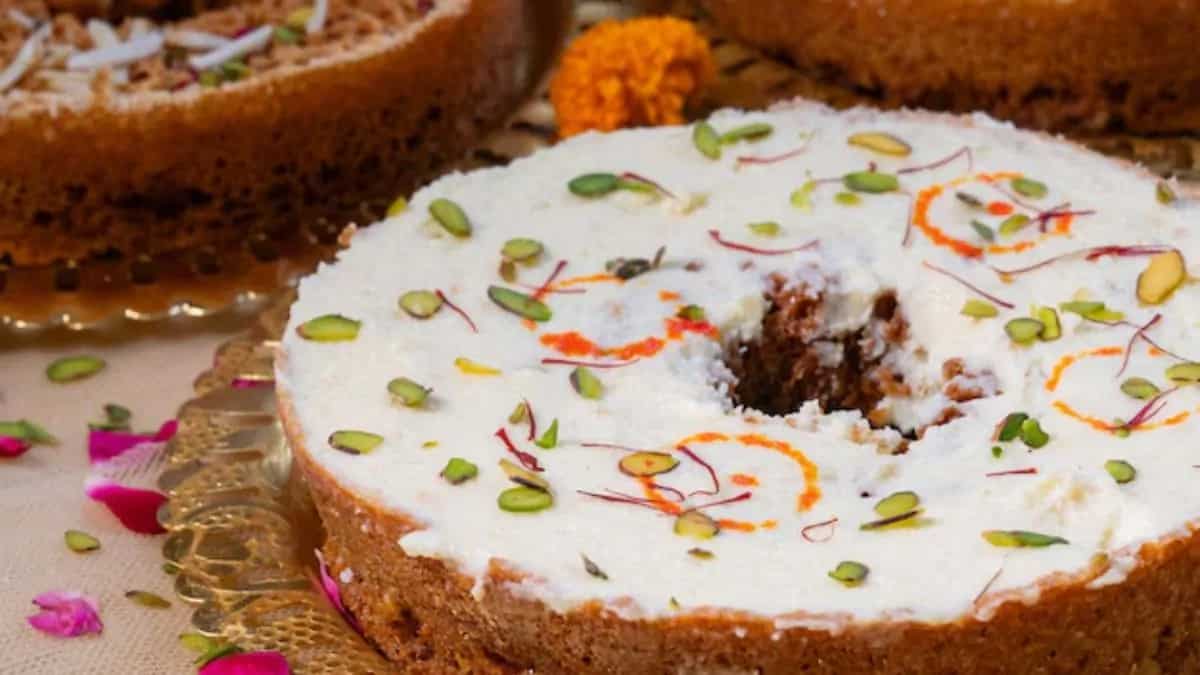
Talk of Rajasthan and you will possibly find ghevar in every festival and tradition. With its honeycomb-like texture and crisp edges, ghevar soaks up sugar syrup while still maintaining a light crunch. Traditionally, it is prepared in ghee and is often topped with rabri or malai. During Gangaur, it is not just made at home but also gifted as a token of love to daughters and loved ones. Its presence on the table instantly signals celebration and festivity.
(Image credit: Freepik)
Gangaur Special Thali
A Gangaur thali is a full festive meal that brings together a mix of flavours as well as textures. The thali often includes puri, aate ka halwa, hing kachori, Jodhpuri pulao, bhindi ki sabzi, etc. Each dish adds a different meaning to it - puri is comfort, halwa adds sweetness, and kachori adds spice. The thali is prepared not just to fill the plate but to have a scrumptious meal after long fasting rituals. Every dish is prepared in ghee and with basic everyday spices, which makes the meal even more satisfying.
Besan Gune
Besan gune is a variety of the sweet gune, where gram flour is used in place of wheat. This gives the dish a little nuttier flavour and a more crumbly texture. Similar to the original one, these are shaped into flat discs and then fried in ghee. Besan gune is particularly prepared during the fasting period and offered as bhog. The use of besan adds variety to the festive spread while still maintaining the essence of the dish unchanged. It’s a subtle twist to the classic savoury version.
Aate Ka Halwa
Aate ka halwa is an easy but deeply satisfying sweet that is prepared by mixing whole wheat flour, ghee, and sugar. The wheat flour is slow-roasted in ghee until it turns aromatic, and it develops a rich, nutty flavour. During Gangaur, it is often included in the bhog thali and served as part of the festive meal. The simplicity is what makes the atte ka halwa so special, as it requires no complicated technique, just mindful cooking and balanced flavours.
(Image credit: Freepik)