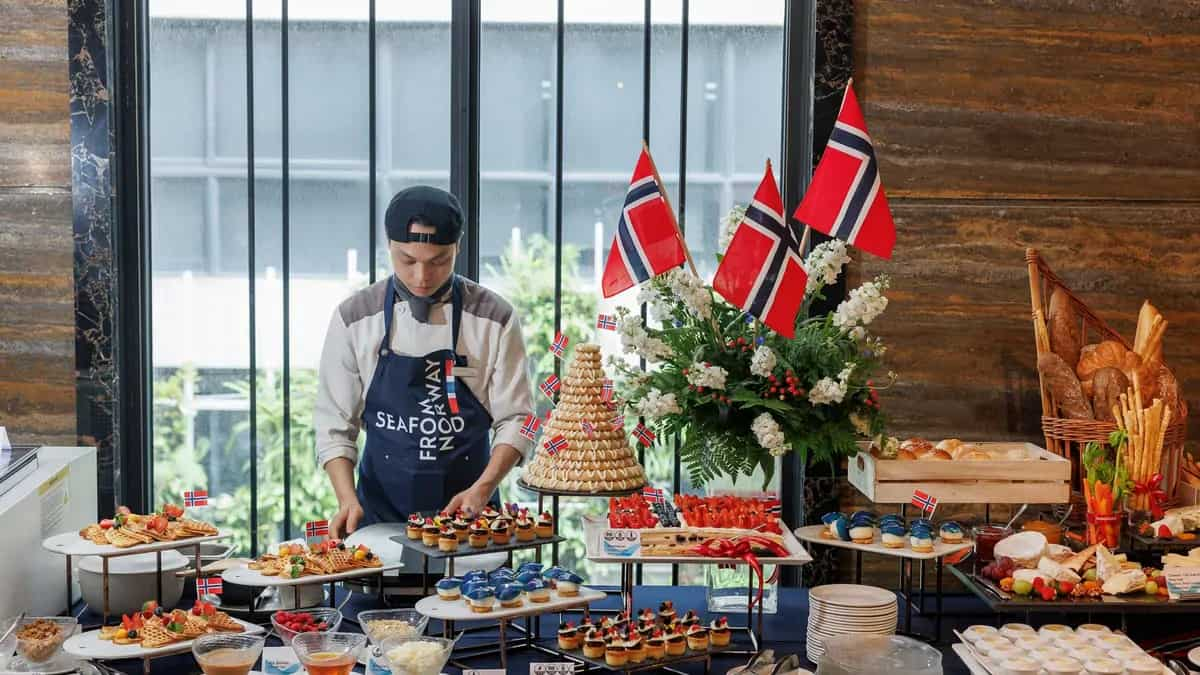
The first thing you notice isn’t the food—it’s the pace. Coats land in a soft heap by the door. Someone sets a kettle on without asking. The room warms in small increments: a lamp angled down instead of ceiling glare; a pot lid ticking gently; the low murmur of people arriving with the day still on their shoulders. In Nordic communal dining, the table isn’t a performance. It’s everyday infrastructure—built to hold people, and then, almost incidentally, dinner.
Nordic Communal Dining: Togetherness With A Lighter Footprint
In a Nordic context, communal dining culture is less “special occasion” and more repeatable ritual: simple meals eaten together often, served in shared dishes, with the expectation that everyone helps themselves and conversation has as much value as the food. Think weeknight soup with bread, weekend open-faced sandwiches, a standing coffee break with something sweet—habits designed to be easy enough to return to.
It resonates right now for blunt, modern reasons: many of us eat alone between fragmented schedules; groceries feel expensive; and climate awareness has turned “what’s for dinner?” into “what does dinner cost the planet?” Nordic routines offer a useful answer because they’re meaning-led, not consumption-led.
Thesis to keep: Design for connection first, then build the menu to match. When the goal is togetherness, the most sustainable meal is often the one you can cook calmly, serve family-style, and gladly eat again tomorrow.
Hygge, Fika, Lagom: A Simple Cultural Map
These words get flattened into décor trends. They’re more useful as behaviour cues—ways to host that reduce stress, spending, and waste.
- Hygge is atmosphere + presence. Not “buy candles,” but choose comfort and an unhurried pace: softer light, warm drinks, fewer interruptions.
- Use it like this: turn off overhead lights, put one warm pot (soup/stew) at the centre, and serve it without rushing or plating.
- Fika is a repeatable social pause. In Sweden especially, it’s a culturally understood break—often coffee or tea with something small—where the point is talking together.
- Use it like this: build a 20-minute “fika moment” after the main—refill mugs, slice one simple cake, and sit down.
- Lagom means “just enough.” In hosting, it’s the quiet skill of right-sizing: fewer dishes, sensible portions, multipurpose ingredients, and a plan for what remains.
- Use it like this: decide portions up front and set a leftovers station with containers—so food becomes tomorrow’s lunch, not tonight’s bin.
A note on cultural respect: you don’t need Nordic costumes, clichés, or borrowed “vibes.” Borrow the principles—repeatability, shared responsibility, and restraint as generosity—not stereotypes.
Sustainability Lessons You Can Borrow Immediately
Nordic-inspired sustainability is less about rare ingredients and more about architecture: how you shop, cook, serve, and finish the meal.
1) Shop seasonal, local-by-default with a simple “basket”
Build a Nordic-style seasonal basket anywhere by choosing:
- 1 protein or legume (beans, lentils, eggs, chicken thighs, tinned fish)
- 2 hardy veg (carrots, cabbage, squash, beets—what holds well)
- 1 green (kale, spinach, herbs—whatever looks alive)
- 1 starch (potatoes, barley, rye bread, oats)
- 1 fruit/berry (apples, pears, citrus, frozen berries)
This basket limits impulse buys and makes menus easier to repeat.
Example (outside the Nordics, autumn): brown lentils + carrots + cabbage + potatoes + a bunch of hardy greens + apples. Turn it into lentil-cabbage soup, a roasted carrot tray, smashed potatoes, and apples baked with oats.
2) Serve communally to cut packaging and food waste
Communal serving isn’t just pleasant; it’s materially lower-waste.
- Put food on one or two large platters instead of single-serve portions.
- Serve water, tea, or cordial in jugs; skip individually packaged drinks.
- Add a simple line to the invite: “If you’d like leftovers, bring a small container—there will be plenty.”
Consumer food waste is a major global issue, and household habits—planning, portioning, storing—are among the most practical places to reduce it (see UN Environment Programme’s Food Waste Index reporting).
3) Cook once, share many: choose meals that scale without extra effort
Nordic everyday cooking often leans on low-attention heat and forgiving formats:
- Soups and stews: easy to stretch with beans, root veg, or grains.
- Tray bakes / one-pan roasts: one oven cycle feeds many.
- Open-faced boards (smørrebrød-style): a “compose-your-own” table that looks abundant without overcooking.
Keep it efficient: lid on while simmering; roast two trays at once; use residual oven heat to crisp bread or finish a crumble.
4) Plan leftovers on purpose (portion, label, repurpose)
The most useful sustainability move is ending the night with calm, not chaos.
- Portion: set aside one “tomorrow box” before the second round of serving.
- Label: masking tape + date + quick note (“lentil soup—add water when reheating”).
- Repurpose:
- stew + grains + greens → next-day lunch bowls
- roast veg → toast topping with yogurt/mustard or a fried egg
- extra potatoes → frittata/omelette filling
- soup leftovers → thicken with blended beans/potatoes; turn into a sauce
How To Host A Nordic-Inspired Communal Meal
Use this repeatable template: one warm main + bread/potatoes + two sides + something sweet. The warm main does the heavy lifting, starch makes it filling, sides add crunch/acid, and a small sweet gives the meal a natural landing.
The structure (what to cook)
- Warm main (centrepiece): soup, stew, or bake that can sit happily on low heat.
- Starch: rye bread, boiled/smashed potatoes, barley, or a simple loaf.
- Two sides: one roasted (hands-off), one fresh (crunch/acid).
- Something sweet: one easy cake, buns, or baked fruit—plus fruit/berries if you can.
Build in one ritual (what to do)
Choose one—simple, repeatable, not precious:
- Welcome warm drink: tea, coffee, or spiced apple water in a pot so guests can serve themselves.
- Shared toast: one sentence each (or just the host): “To showing up for each other.”
- Mid-meal fika pause: clear plates, refill mugs, bring out the sweet, and stop “hosting” long enough to sit.
Set the table for sharing (what to arrange)
- Use one stack of plates, one stack of bowls, shared serving spoons—fewer items, less washing.
- Put platters within reach; let guests pass dishes instead of the host hovering.
- Add one “help-yourself” cue: bread with a knife already there; napkins in an open bowl; water jugs at both ends.
Nordic-style contribution prompts (what to ask guests to bring)
Reduce host burden and waste by assigning specific, flexible items:
- “Bring a crunchy salad (cabbage, cucumber, or anything with bite).”
- “Bring bread—whatever you love from your neighbourhood bakery.”
- “Bring fruit/berries (fresh or frozen is fine).”
- “Bring something pickled (store-bought is perfect).”
Accessibility, quietly handled: aim for one veg-friendly main or side, and label common allergens with small notes (“contains nuts/dairy/gluten”).
Common Mistakes
Mistake: over-styling hygge. If “cosy” becomes a shopping list, you’ve already lost the plot.
- Fix: use what you have—lamps instead of overhead light, one playlist, one warm pot. Spend money on good bread or decent vegetables, not props.
Mistake: doing too many dishes. More recipes don’t equal more generosity; they often equal more waste.
- Fix: cap hot items at one centrepiece + one hot side. Make the rest boards, salads, and condiments. If you’re tempted to add another dish, add pickles or herbs instead.
Mistake: sustainability guilt. “Perfect” can be the enemy of repeatable.
- Fix: aim for one or two changes per gathering (family-style serving; planned leftovers; seasonal basket shopping). Keep what works, drop what doesn’t.
If hosting makes you anxious, give yourself permission to repeat the same menu and ritual. Tradition is just a successful idea you didn’t abandon.
Sample ‘From Hygge To Fika’ Gathering Plan
A ready-to-run plan you can host in a small apartment without turning dinner into a production.
Timeline flow
- Arrival (0–20 min): welcome drink (coffee/tea/spiced apple water) + one small bite (rye crisps with butter, a bowl of olives/pickles, or sliced apples with cheese).
- Main table (20–70 min): serve the warm main family-style; put bread/potatoes and sides out at the same time so nobody waits for “courses.”
- Fika moment (70–90 min): clear the main plates, refill mugs, bring the sweet and fruit/berries; linger.
- Wrap-up (last 10 min): leftovers station, quick labels, divide fairly.
Sample flexible seasonal menu
- Soup/stew (centrepiece): lentil-and-vegetable stew (or chicken barley soup if you prefer non-veg)
- Open-faced board: rye bread + butter + two toppings (smoked/tinned fish or smashed beans; plus cucumber, herbs, mustard)
- Roasted veg: tray of carrots/beets/squash with oil, salt, and a sharp finish (lemon, vinegar, or yoghurt)
- Simple sweet + fruit/berries: oat crumble with apples (or any cake you can slice), plus a bowl of berries (fresh or frozen, thawed)
Make-it-your-own swaps without doubling work: keep the stew veg-based and offer fish/meat as an optional topping; use gluten-free crispbread; put dairy (butter/yogurt) on the side.
Leftovers protocol (do this while the kettle boils)
- Put out containers (or ask guests to bring one), plus tape and a pen.
- Pack one host box first (tomorrow’s lunch is part of the plan).
- Label and divide the rest: “stew,” “roast veg,” “bread.”
- Say one remix out loud: “Roast veg goes on toast; stew thickens into a sauce.”
If you want help balancing the fika treat with a nourishing main—without moralising—use /nutrimeter as a planning tool.
Conclusion
Start with what’s easiest to repeat. Pick one: a 20-minute fika pause with a neighbour, or a one-pot dinner where the pot goes straight on the table and everyone serves themselves. Keep the room comfortable, keep the menu tight, and let the conversation do the work.
Then make the last habit non-negotiable: before anyone leaves, set out containers, label what’s left, and send food home with a next-day purpose. Connection first, consumption second—and leftovers as tomorrow’s plan.
Some parts of this article were created with AI assistance.