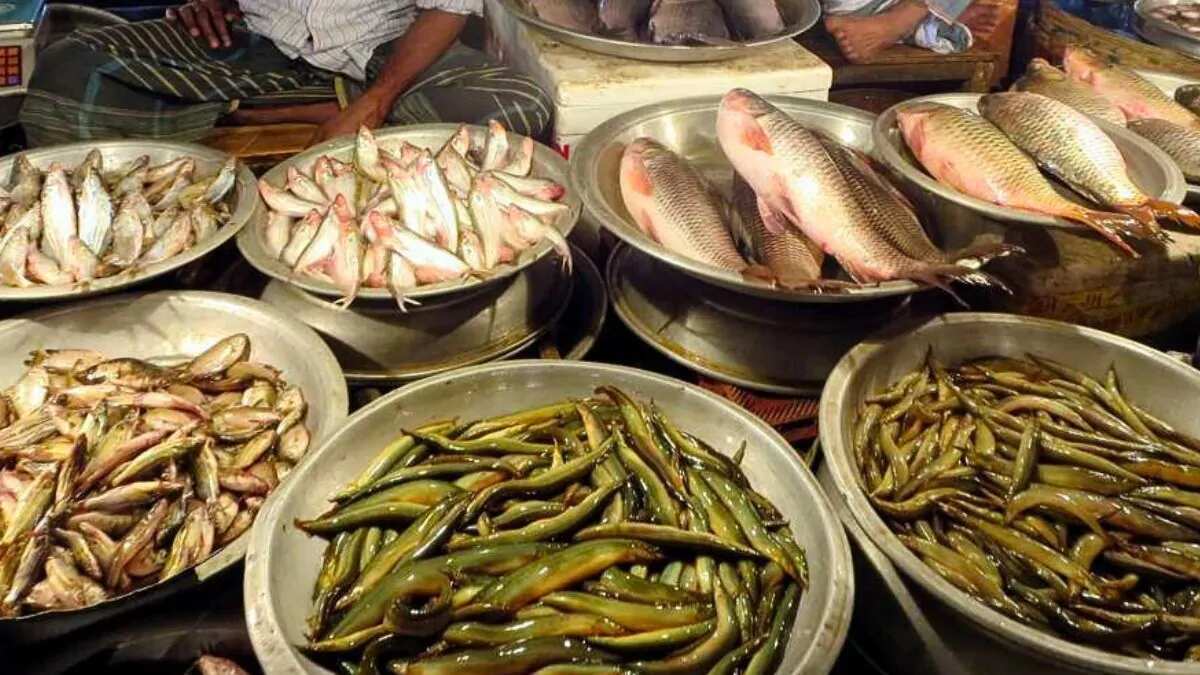
For every Bengali child, Maach Bhaat is not a phrase; it’s practically a prophecy. If you grew up in Bengal, fish was never “just food,” it was the family’s love language. And if you were me, it would be an unmissable part of every meal. I don’t remember a single week in my childhood when fewer than four or five different types of fish didn’t parade onto our dining table. Monday could mean mourola fried crisp, Tuesday brought a tangra jhol, Wednesday koi in mustard, and by Friday, my mother’s kajli chorchori would make its appearance. Not a single recipe ever repeated itself, and that was the magic of growing up in a Bengali household.
Weekends and school vacations were even better. Visiting my aunt’s home in Nadia was like stepping into a parallel universe of fishy abundance. She had ponds so alive that the monsoon rains often turned them into playgrounds for us cousins — armed with makeshift nets and tin buckets, we would chase after koi fish darting in the overflowing water. The thrill of catching a Gangetic koi with our own hands, and then watching it turn into a steaming Tel Koi on my aunt’s kitchen top is a memory that still smells of mustard oil and wet earth.
That’s why I feel people need to know the treasure Bengal has in its fish business. Monsoon in Bengal is all about hilsa, they say. But is that are there is? Yes, the ilish may be royalty, but the kingdom is far larger — full of fish that only Bengali households know, cherish, and cook with unmatched love.
Not Just Hilsa — A Monsoon Comedy of Fish
Image Credit: Pexels
If Hilsa were a Bollywood superstar, the others are the seasoned character actors — never hogging the limelight but always making the story richer. Hilsa could be the flashy silver saree at the pujo pandal, but kajli, koi, tangra, and mourola are the soft, worn cotton dhotis — familiar, comforting, and indispensable.
Bengalis don’t just eat fish; they rotate their cast of piscine delights with the finesse of a Michelin chef and the stubbornness of a grandmother who won’t accept that you are full. In fact, a Bengali market in monsoon is a comedy in itself: the seller shouting “Loite! Loite! Fresh Loite!” while elbowing space against another screaming “Tyangra, dim bhorti Tyangra, jol er daam e (too affordable to buy)!” Add to that the aunties haggling over koi’s freshness and the cousins already dreaming of mourola fry, and you know — fish isn’t a food here; it’s a community theatre. Whether you are Piscean or not, it really doesn’t matter at the dining table.
So, let’s give hilsa a polite bow and focus on Bengal’s other monsoon love — alphabetically, of course, because why should the tangra fight with the koi about who comes first?
Boal Machh Er Dim (Wallago Attu / Helicopter Catfish Eggs)
Boal fish eggs appear only for a short window during monsoon — blink, and you miss them at the market. East Bengali households swear by their versatility. From spicy jhol to rich chorchori, boal machher dim carries an earthy taste that instantly reminds one of overflowing rivers and muddy banks. The eggs are sautéed in mustard oil with jackfruit seeds (Kanthal Beej), green chillies, and kalonji, creating a robust, slightly grainy texture. The dish pairs best with plain rice and a piece of kagji lebu, and the taste lingers long after the meal is done.
Chapila
The modest chapila is silvery, quick to cook, and a staple in many homes. What makes it special is its balance — firm flesh, easy bones, and rich nutrients like calcium and phosphorus. A steaming plate of shorshe chapila can easily rival any big-ticket fish dish. For simpler days, families fry them crisp till golden brown, serving them hot with plain rice and a wedge of lime. The beauty of chapila lies in its adaptability: equally delicious in mustard curry or light tomato-based jhol.
Foli
Think of foli as the cousin of the famed chitol. It may not be as grand, but it makes up with its delicate flavour. A foli curry, simmered with turmeric, cumin, coriander, potatoes, and snow peas, transforms into a hearty dish that warms the stomach. Often paired with crunchy bori (fried lentil dumplings), foli becomes a perfect rainy-day meal. The fish’s bones might need patience, but Bengalis never mind that extra work — after all, good things require slow savouring.
Khoira
Khoira is best known for its spicy curries. The star preparation is Khoira Macher Jhal — a semi-gravy dish with mustard paste, onions, and slitted green chillies, tempered in mustard oil. For those who love smoky, subtle flavours, khoira can also be steamed in banana leaves with mustard paste (bhapa style). Some homes simply fry khoira crisp for an easy side dish that disappears faster than it’s served.
Koi (Gangetic Koi)
Koi mach is Bengal’s climbing perch — a fish so resilient it can survive out of water for hours. Bengalis treasure it for its firm flesh and ability to hold flavours. The iconic Tel Koi simmers the fish in mustard oil with minimal spices, creating a fragrant, oily broth perfect with rice. For spice-lovers, Koi Macher Jhal uses mustard paste, turmeric, and tomatoes. Variants like Mouri Bata Koi (with fennel paste) or Begun Diye Koi Shorshe Jhol (with eggplant) present how inventive Bengali kitchens can be with this humble fish.
Kajli
Small, silver, and shaped like a bamboo leaf, kajli is a monsoon specialty. Though children often avoid them (too many bones!), adults relish their delicate flavour. Kajli works beautifully in kalo jeere jhol, flavoured with nigella seeds, green chillies, and coriander leaves. Fried crisp, they make a fantastic side dish with dal and rice. For the more adventurous, kajli chorchori — dry sauté with onions, garlic, and seasonal veggies — is a family favourite.
Loite
Loite, or Bombay duck, is a curious fish. Soft and slippery, it needs care to cook. The dish that wins hearts is Loite Maacher Jhuri — shredded loite sautéed patiently with turmeric, cumin, and red chilli until it dries into a spicy, crunchy mass. Served with rice, it’s proof that patience in the kitchen always pays off. Loite chop, deep-fried fritters, are another monsoon delight, especially for evening adda with cha.
Mourola
Tiny mourola fish are a monsoon classic. Often fried whole till crisp, they become irresistible nibbles alongside rice. Mourolar tok jhol — a light sour curry with tamarind or raw mango — is equally popular, especially during humid rainy afternoons. In some homes, mourola finds its way into shuktor jhol, a therapeutic vegetable stew. Though small in size, mourola packs in nostalgia — reminding many Bengalis of grandmother’s kitchen, where nothing ever went to waste.
Shrimps (Chapra Chingri)
Chapra chingri, fondly called “jol er poka” (water bugs) by some, are actually freshwater shrimps with a sweet, delicate taste. Monsoon markets teem with them, and Bengalis waste no time turning them into sorshe bhapa, chingri malai curry, or even quirky fusions like shrimp stir-fried with seasonal vegetables. A rustic favourite is chingri diye lau, where shrimps are slow-cooked with bottle gourd. Whether humble or regal, chapra chingri adapts to every Bengali kitchen with ease.
Tyangra
Tyangra is a catfish loved for its bold flavour. The most famous dish is Tyangra Macher Jhol — a spicy curry of onions, nigella seeds, turmeric, and mustard oil. On fancier days, households add fried bori and coriander leaves for an aromatic finish. Tyangra shines because of its balance — firm yet juicy, mildly sweet but strong enough to hold masalas. A steaming bowl of tyangra jhol with rice is proof that comfort food doesn’t have to be complicated.
Monsoon in Bengal is never just about the hilsa. Yes, ilish holds the crown, but its glory does not eclipse the everyday heroes of Bengali kitchens — koi, tangra, mourola, loite, chapila, and so many more. Each of these fish brings its own character, recipes, and memories to the table. From pondside adventures in Nadia to bustling Kolkata markets, from light tok jhols to fiery mustard curries, these fishes carry with them not only taste but tradition.
The truth is simple: to a Bengali, fish is not an ingredient — it’s an identity. And monsoon, with all its overflow of rivers and ponds, brings in so much variety. So next time you think of Bengal in the rains, remember: hilsa may headline the season, but the story is far richer, tastier, and much more delightfully fishy.