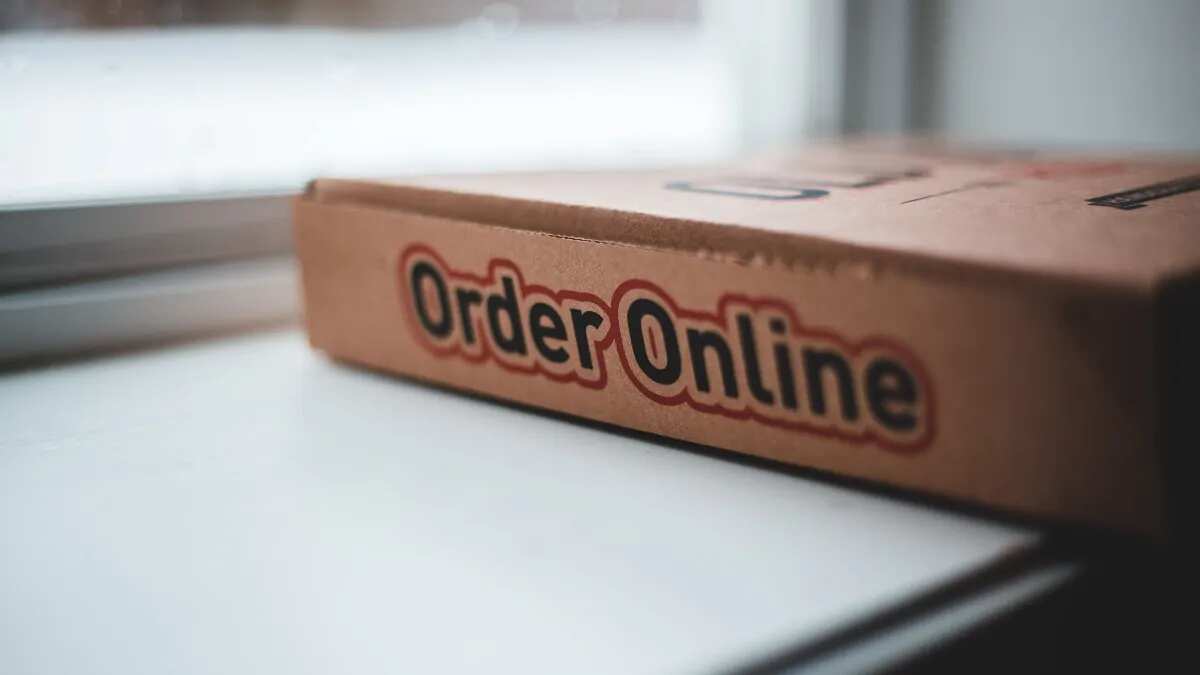
There was a time when choosing cash on delivery felt like the most normal thing in the world. Now, on Zomato, it might cost you extra. The food-delivery platform has recently started adding a separate 'Pay on Delivery Fee' to cash-on-delivery orders in certain regions. Recent social media posts and anecdotes found the charge varying by customer and order, with reported amounts ranging from around ₹5 to ₹20 or more in some cases. The fee is added on top of the existing charges, whereas customers who pay online do not incur this levy.
Zomato has not publicly explained the exact formula behind this charge. On the surface, this may look like another small fee in the increasingly complicated mathematics of ordering a biryani online. But the interesting part is not the ₹5, ₹13, or ₹20 itself. It is why Zomato wants you to stop paying cash. Because the story is not just about currency notes; it is about behaviour, margins, customer retention, and the increasingly sophisticated business of getting humans in line with a food delivery platform’s goals.
Cash Is Suddenly The Inconvenient Option
Zomato already charges a platform fee, along with other applicable delivery, packaging, and other related charges. But the new COD charge is different because it attaches a price to a personal payment choice. And that distinction matters. If Zomato simply wanted to collect a few extra rupees from every customer, it could raise its platform fee again. Instead, it has chosen to make one particular behaviour more expensive while leaving the others, such as online payment, untouched. Now that looks much more than a gentle nudge. And it is hardly a secret what direction that nudge points towards: paying online.
Image credit: Pexels
Zomato Has Always Wanted More Of Your Ordering Life Online
There is a larger irony here. Zomato's entire business model is built around moving your restaurant experience onto a digital platform. Its app does far more than simply take an order or deliver food at home: it controls discovery, restaurant selection, payment, offers, and loyalty programmes, while enhancing the relationship between the consumer and the restaurant.
The company's own public-facing messaging describes Zomato as an online food ordering platform that connects customers with the right restaurants, while its app promotes a broad digital ecosystem of ordering in, special offers, scheduling meals or events, dining, and brand loyalty benefits.
Image credit: Pexels
And in their eyes, cash on delivery sits rather awkwardly inside their beautifully digital machine. The order may begin digitally, but the final transaction is completed outside the platform's payment rails. From a company's perspective, getting the customer to pay online means keeping the entire transaction within the digital ecosystem. And that is useful for more than just convenience. It makes payment immediate, reduces cash handling at the doorstep, and gives the platform a cleaner digital record of the transaction. More importantly, it reinforces the habit Zomato has spent years building: open the app, choose a restaurant, pay in-app, order again. The more habitual that sequence becomes, the harder it is for a customer to leave.
But Is This Really About Profit?
Yes. But not necessarily in the simplistic way of 'Zomato wants ₹5 more'. The company operates at an enormous scale. Eternal's own investor material shows the sheer size of its food-delivery business, with its food-delivery gross order value running into thousands of crores every quarter. That makes their small per-order monetisation mechanisms worth paying attention to. Plus, it is worth keeping in mind that even a hypothetical ₹5 charge applied across a large enough number of orders could translate into substantial annual revenue, although the actual financial impact depends on how many orders are COD and how much charge is applied.
But revenue and profit are not interchangeable. And a ₹5 fee is part of the revenue. Whether it becomes profitable depends on the costs associated with processing the order and running the wider delivery operation. That is why the more revealing question is not, 'How much money will Zomato make from the COD extra fee?' It is: How much more valuable is an online-paying customer to Zomato than a cash-paying one? But the pricing decision itself tells us that the company sees enough value in changing payment behaviour to experiment with a charge.
There Is Another Possibility: The Cancelled Order
A customer who sees an extra COD fee is not bereft of choices. They can choose to pay it. They can decide to switch to online payment. They can take a resolution to order less frequently. Or they can abandon placing the order altogether. And the last two possibilities are precisely why platforms have to be careful with fee increases. Food delivery is not a game of Monopoly. Swiggy remains a major competitor, while newer challengers are entering the market.
Rapido's Ownly is slowly gaining favour and market share in the cities they have launched in, while Flipkart is testing Eat In, and Swish is raising capital to expand its own food-delivery operation. So Zomato cannot add charges endlessly without considering the possibility that customers may simply move away. And that is where the idea of customer retention becomes important. Zomato should go about it more smartly. Charging a small COD fee should make consumers simply switch from cash to UPI, not abandon Zomato altogether. Only then will Zomato be able to achieve exactly what it wanted.
Also read: FDA Suspends Blinkit's Malad Warehouse Licence: What To Check While Ordering Online Grocery
The Real Battle Is Habit-Formation, Not The Next Order
This is perhaps the most important point. Zomato's future is not built around persuading someone to order at least one meal tonight. It is about making itself the default go-to place for you whenever the thought of ordering food strikes. That makes frequency and, more importantly, brand loyalty enormously important. Deepinder Goyal has recently spoken about the opportunity to deepen engagement with existing customers, rather than relying only on geographical expansion.
Image credit: Pexels
The company's own public positioning similarly centres on connecting customers with restaurants and building a broader food and lifestyle ecosystem. When seen through that lens, a COD fee looks less like an isolated surcharge and more like one small piece of a larger monetisation strategy: get the customer onto the platform, make them comfortable paying digitally, ensure they keep ordering, increase the value generated from each customer, and, ultimately, improve the economics of the business.