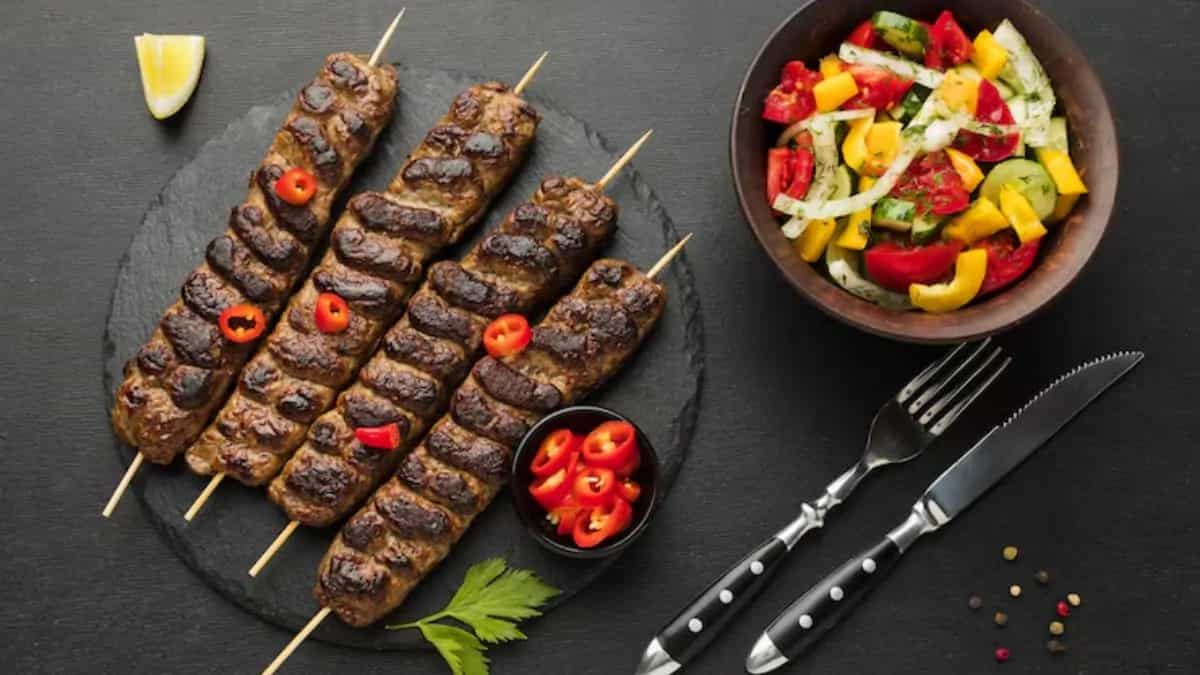
Think of hosting an Eid lunch, and the first thing that comes to mind is kebabs, which are served hot and straight off the grill or the tawa. But what truly makes a kebab worth remembering is not just the blend of spices or the type of meat you use, but the texture it has. That perfect bite that feels juicy, delicate, and full of flavour is derived from a series of small but crucial decisions taken while preparing them.
Kebabs are often treated with care, right from selecting the right amount of meat to perfectly balancing the fat, moisture, and spices. It is a process that depends more on tactics than on complexity. Whether you are making veg or a non-veg kebabs on Eid, making them right often comes down to knowing how ingredients will behave when they are mixed, shaped, and then cooked.
5 Tips To Make Juicy, Perfect Kebabs
Listed below are tips that focus on practical, tested methods that will let you know you have those dry, crumbly kebabs every time, so that you can serve something that feels tender and perfectly cooked for your Eid spread.
Choose The Right Meat With Enough Fat
One of the most noteworthy factors behind making a juicy kebab is the fat range in the meat. Thin meat may sound healthier, but it often results in dry, hard kebabs. Traditionally, cuts such as shoulders or a mix of meat and fat are used because they remain moist while cooking. Fat melts slowly, keeping the kebabs soft from within. If you are using lean mince, adding a small amount of fat or even grated butter would also help. This balance guarantees that kebabs do not just hold shape but also give that soft, melt-in-the-mouth texture every time.
(Image credit: Freepik)
Don’t Skip The Binding Ingredients
A good kebab mixture should hold everything together without becoming thick. That is where binding ingredients play an important role. Elements such as soaked chana dal, bread crumbs, or even a small amount of gram flour (besan) help in absorbing the moisture and keep the mixture stable. If you do not use binding agents properly, kebabs will break while shaping or when you cook them. At the same time, overdoing it can also make them heavy. The idea is to use just enough amount to support the mixture while keeping the texture light. The balance here is the whole game.
Rest The Mixture Before Shaping
Once the kebab mixture is ready, keep the mixture to rest. This step is often overlooked, but it makes a noticeable difference. Resting lets the spices settle, and the moisture spreads evenly throughout the mixture. It also allows the binding ingredients to do their job nicely, which makes the shaping more effortless. Ideally, the mixture should be kept in the refrigerator for at least 30 minutes. This not only improves the flavour but also guarantees that the kebabs do not fall apart while cooking.
(Image credit: Freepik)
Control Heat, Don’t Rush Cooking
Cooking kebabs on very high heat may sound like a good way to get that char, too soon, but the fact is, it often dries them out from the outside while leaving the inside undercooked. A medium, constant heat works better, which lets the kebabs cook evenly. This way, the juices remain locked within, and the texture stays soft. Whether you are using a tawa, grill, or oven, patience is essential. Turning the kababs gently and not pressing too hard also helps in maintaining the moisture. Proper heat control is what divides dry kebabs from the juicy ones.
Add Moisture Through Marinade Or Mix-ins
Juicy kebabs often have an essence of moisture that is added directly into the mixture. Ingredients such as yoghurt, fried onions, or even finely chopped herbs contribute both flavour and softness. Yoghurt, particularly, helps soften the meat while also giving a slight tang. Fried onions release their natural sweetness and moisture, enriching the mixture. These additions make sure that kebabs remain soft even after cooking. Instead of depending solely on spices, focusing on moisture-rich ingredients will help make a more balanced kebab that tastes as good as it feels.
(Image credit: Freepik)