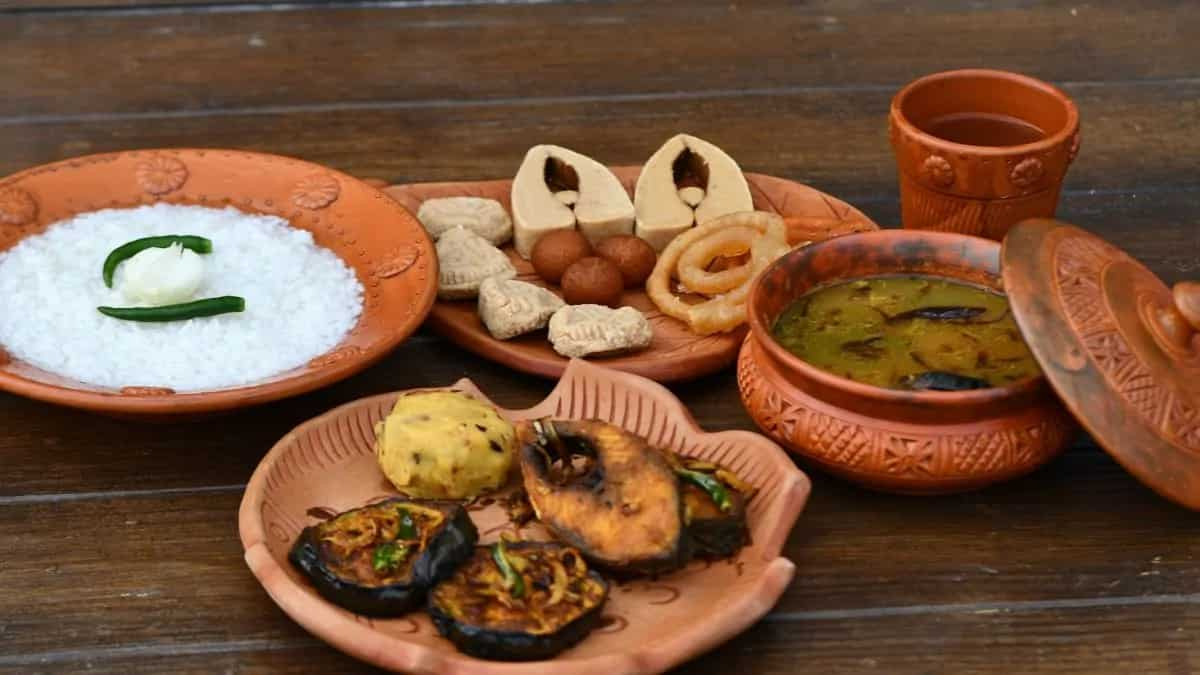
It's not just that Bengalis swear by fish. From a Malayali to a Goan to a Mizo, you will hear the same devotion. They can build lunch, dinner, or any meal around it in different forms without hesitation. In India, fish tends to be a way of life rather than a food item. Be it from the eastern region to the spice-scented western coast, or in the southern backwaters, fish has earned a separate space in their food habits. Across these regions, fish is cooked in coconut milk, steamed in leaves, charred over fire, smoked over hay, fermented in earthen jars, or boiled into clear broths; the techniques differ, but the emotion remains the same.
Image Credit: Pexels
As World Fisheries Day 2026 arrives on November 21, Slurrp spoke to chefs and business owners about how their regions eat fish. Chef Palak Chatterjee of Anglo Bongs Cafe shares a Lau Patay Bhapa Chingri from Bengal, while Chef Samita Gopal Halder revisits Barisal patapora. Chef Oneal Sabu speaks for Kerala, Sherap Siling for the Northeast with a Mizo Sangha Lu Chhum, and Chef Avinash Martins for Goa.
Image Credit: Pexels
The day marks the founding meeting of the World Fisheries Forum, held in New Delhi on November 21, 1997, where fish harvesters and workers from 18 countries signed a declaration on sustainable fishing. This Saturday's edition is the 29th.
Chef Palak Chatterjee: Every Bengali Meal Holds A Fishy Story
Image Credit: Chef Palak Chatterjee
Chef Palak Chatterjee, owner of Anglo Bongs Cafe, shares his perspective on how fish connects to Bengali identity. His visual artistry also extends to screen productions, bringing stories to life on screen as seen in the film Prajapati 2 and the recently concluded series Radhuni na Kaduni. Raised in a traditional Bangal family, he learned, "Fish isn't just an ingredient in Bengal; it’s the heartbeat of our culinary identity. For us, a meal without fish feels incomplete."
Image Credit: Pexels
Every fish, he explains, has a role. "Staples like Rui and Katla are the daily bedrock, prized for their dependable, accessible flavour and versatility in family curries." The smaller catches follow a different logic: "Everyday pond dwellers like Koi, tyangra, Puti, and Mourola are loved for their adaptability in light, pungent jhol, Jhal, chorchori or macher tok."
Image Credit: Pexels
Then come the fish with a healing reputation. "Meanwhile, nutrient-dense bottom feeders like Magur and Singhi are cherished for their traditional restorative properties, often recommended to boost haemoglobin and address low blood count." Festive tables belong to others. "When celebrating, we turn to the rich, ceremonial elegance of Chingri, the delicate sweetness of river Pabda, and the undisputed royalty of Hilsa; following its bhapa or curry is deeply rooted in Bengalis’ food culture."
His own technique traces back to the family kitchen. "Coming from a traditional Bangal family, my culinary foundation was built watching my mother, aunts, and Pishis." He speaks fondly of Bhapa, where the fish is gently steamed in sealed containers, and Kacha-Meetha preparations built on emulsified mustard oil.
Image Credit: Pexels
As for the younger crowd, he sees promise rather than decline. "Rather than a binary split, I see a revival where heritage methods—like gentle steaming or mustard emulsification—are being embraced alongside contemporary presentations."
Traditional Recipe: Lau Patay Bhapa Chingri
Prep: 20 mins | Cook: 30 mins | Serves: 4
Ingredients
- Chingri (small or medium prawns): 250g, shelled and deveined
- Lau Pata (bottle gourd leaves): 10-12 large, fresh
- Sorshe Bata (mustard paste): 3 tbsp
- Posto Bata (poppy seed paste): 1 tbsp
- Cashew paste: 2 tbsp
- Lau Pata paste: 3 tbsp (made from 6-8 leaves)
- Narkel Kora (grated coconut): 2 tbsp
- Kacha Lonka Bata (green chilli paste): 2-3 pcs
- Holud Guro (turmeric powder): 1/2 tsp
- Salt: to taste
- Kacha Sorsher Tel (raw mustard oil): 4 tbsp
Method
- Prep the leaves: Wash the bottle gourd leaves thoroughly. Blanch them in warm water for 10 seconds to soften, then drain well. Trim the thick stems. Make a thick, smooth paste with 6-8 leaves and keep the remaining whole leaves aside for wrapping.
- Make the marinade: In a mixing bowl, combine the prawns with mustard paste, lau pata paste, poppy seed paste, cashew paste, grated coconut, green chilli paste, turmeric, salt and 2 tbsp raw mustard oil. Mix gently and let it marinate for 10 mins.
- Assemble: Grease a steel tiffin box with a little mustard oil. Line the bottom and sides with the blanched whole leaves. Pour the prawn mixture inside and drizzle the remaining 2 tbsp mustard oil on top. Cover completely with the remaining leaves to seal it like a parcel.
- Steam: Pour water into a steamer or large dekchi. Place the covered tiffin box inside, cover tightly and steam on medium heat for 20-25 minutes until the prawns are cooked and aromatic.
- Serve: Rest for 10 minutes after steaming. Open the box and serve hot with steamed white rice.
Chef's tip: Don't over-blanch the leaves or they will tear. The cashew paste gives a beautiful creamy balance to the pungency of mustard.
Chef Samita Gopal Halder: Maach-E-Bhaate Bangali is The Eternal Truth That Connects With The Folks
Image Credit: Samita Gopal Halder | Instagram
Chef Samita Gopal Halder comes from a Barisal family, and her stories lean on fieldwork in Nabadwip and the memory of her grandmother Mahamaya Makhanbala's kitchen, which carried a Jessore-Khulna background.
She begins with the bigger picture. "So fish is definitely a cultural identity of ours, and it's our... what can I say, our philosophy of life's identity too." The proof, she says, is hiding in everyday speech. "We say have some fish and rice, have some dal and rice." Weddings, Annaprashan and Shaadh all carry fish with them, which is why she concludes, "a Bengali without fish, that probably doesn't exist."
Image Credit: Pexels
Her winter favourite is cooked in banana leaf. The fish comes from tiny local baskets, a mix of puti, kholse, chang, lata and taki, tossed with crushed tomato, coriander, garlic, ginger and green chilli. "We have an iron pan with a broken handle, that is only used for paturi all year round." Once the parcel is covered, the verdict is simple: "We love eating this burnt-leaf fish very much."
Image Credit: Unsplash
Barisal cooking, she adds, has its own accent. "So what I have seen is among us Barisal people, there's a lot of use of coconut." Even now, the coconut milk for her prawn malaikari is made at home, never from a tetra pack. "So this making chital fish in coconut milk, I have seen very few people make this." It is reserved for moments like a son-in-law's visit or a function.
Image Credit: Pexels
Daily life, however, belongs to two fishes. "In everyday life, since it's easy to cook and blends well with anything, we prefer rui and katla the most." Price and supply help: the freshwater kind sells for "200 to 250 rupees per kilo" and, as she puts it, "it is very easily farmed."
The younger crowd is a harder sell. "I mean if you take a percentage, almost 80% of kids do not want to eat fish. At Bengali homes, they have an incredible fondness for chicken, and for that, we parents are somehow responsible for the detachment shown from fish these days."
Her workaround for her own son is practical. She fries mourola with masoor dal, makes fritters from fresh tiny shrimp, and finds that a fish curry thickened with mustard paste or yoghurt, "if it's a bit visually appealing, kids actually eat it."
Avinash Martins: Goa's Sea, Smoke and Spirited Balance
Image Credit: Avinash Martins
Chef Avinash Martins speaks for Goa and the wider western coast, painting the coastline in broad strokes. "The western coast is surrounded by the Arabian Sea, and it is home to different varieties of seafood and livelihoods for a lot of families." The sea stays generous from August till about April and May, before the spawning season begins. Large-scale fishing and small fishermen share the waters, and surplus catch is sun-dried to see families through the rains as pickles and other preserved dishes.
Goa's own catch is a short, loved list. "The most popular ones is mackerel, pomfret, kingfish, Chonak or Indian sea bass and very local variety called shevto (Mullet)." Shellfish, from clams and mussels to lobsters and crabs, are a delicacy on the coast too.
Image Credit: Pexels
Methods are just as varied. Curries and gravies dominate, but smoke and the pan play their part. "We do a lot of smoking of our fish. An example would be the hay-smoked mackerel." Shallow-fried fish with fresh masala and a few steamed preparations round things out, and he is quick to add, "Pickles are a big part of our cuisine."
On how tastes are shifting, he is open-minded. "The newer generation is more innovative and wants to try different sources." Air frying, baking and grilling now sit beside the traditional curries, fries and smoking, and a lighter hand with flavour is gaining ground. His own stance is clear: "I personally believe that creativity must be used. There has to be a balance of tradition and innovation in any good community".
Traditional Recipe: Goan Prawn Curry
Image Credit: Pexels
Ingredients
For the prawns
- 500 g medium or large prawns, peeled and deveined (tails on for extra flavour)
- 1/2 tsp turmeric powder
- 1/2 tsp salt
- 1 tbsp lime juice
- For the coconut masala paste
- 1 cup freshly grated coconut
- 6-8 dried Kashmiri red chillies, soaked in warm water for 15 minutes
- 1 tbsp coriander seeds
- 1/2 tsp cumin seeds
- 5-6 black peppercorns
- 4-5 garlic cloves
- 1/2 inch piece of ginger
- 1/2 tsp turmeric powder
- 1 marble-sized ball of tamarind, soaked in 2 tbsp warm water with the pulp extracted (or use kokum in the simmer)
- 1/2 cup water, for blending
For the curry base
- 2 tbsp coconut oil (or neutral vegetable oil)
- 1 medium onion, finely chopped
- 1 medium tomato, finely chopped
- 2 green chillies, slit lengthwise
- 4-5 petals of kokum (omit if using the tamarind pulp above)
- 1 cup warm water, adjusted to desired consistency
- Salt to taste
- Fresh coriander leaves, chopped, for garnish
Method
- Marinate the prawns: Toss the cleaned prawns with turmeric, salt and lime juice. Set aside for 15 minutes while you make the masala.
- Grind the masala: Drain the soaked chillies and blend them with the coconut, coriander seeds, cumin, peppercorns, garlic, ginger, turmeric, tamarind pulp (if using) and 1/2 cup water until completely smooth.
- Sauté the aromatics: Heat the coconut oil in a wide, heavy-bottomed pan or clay pot over medium heat. Cook the onions for 5-6 minutes until translucent and lightly golden, then add the tomatoes and green chillies for 3-4 minutes until soft.
- Simmer the base: Add the ground masala, then rinse the blender with 1 cup warm water and pour that in. Add the kokum (if using) and salt, and simmer gently for 5 minutes to mellow the raw spices.
- Cook the prawns: Slide in the marinated prawns and cook on medium-low heat for just 3-4 minutes, until opaque, pink and curled into a loose C shape. Overcooking makes them rubbery.
- Rest and serve: Turn off the heat, garnish with coriander and let the curry rest, covered, for 5 minutes. Serve hot with steamed Goan red rice (ukde tandul) or plain basmati rice.
Sherap Siling: The Northeast's Smoky, Fermented And Brothy Fish Story
Image Credit: Pexels
Sherap Siling runs a homestay in Sikkim, and his family has been in the fish farming business for almost two decades. That vantage point gives him a front-row view of how the Northeast eats.
His story begins with a journey. "My great-grandfather originally belonged to Mizoram. He moved to Sikkim in the 1980s, and since then, my family has been closely connected with the fishing business." The numbers he shares make the region's appetite plain: "More than 80% to 90% of the population in Northeast India consumes fish regularly, making it a dietary and cultural staple."
Image Credit: Pexels
Most of that fish is freshwater, from major carps to small indigenous species. It usually arrives in light, oil-free or herb-forward broths with local greens, bamboo shoots and indigenous herbs, rather than the heavy, spice-dense gravies found elsewhere.
Preservation is where the region gets inventive. Fermentation is a tradition that is followed, producing Ngari, a salt-free fermented fish popular in Manipur, along with Shidal, Berma and Tungtap. Smoking and sun-drying are equally common, particularly in hill states like Nagaland and Mizoram, where smoked fish meets akhuni (fermented soybean) or bamboo shoots in dishes such as the Smoked Fish Naga Curry.
Image Credit: Pexels
Then there are the dry fish chutneys. Small dried fish are roasted or charred over an open flame with red chillies, garlic and bamboo shoots, then pounded in a wooden mortar and pestle until pungent, smoky and tangy. Signature dishes such as Lukter and Bai round out the picture, blending fish with local vegetables, rice powder or ethnic spices.
Traditional Recipe: Sangha Lu Chhum
Prep: 10 mins | Cook: 30 mins | Serves: 2-3
Ingredients
- Sangha Lu (fresh river fish, or fish head pieces): 300-400g
- Sawhthing (ginger): a 1-inch knob, bruised or cut into thin strips
- Tomatoes: 1-2 medium, roughly chopped
- Onion: 1 small, thinly sliced
- Green chillies or Hmarchapui (chilli flakes): 1-2, split or crushed to taste
- Bahkhawr (long coriander): a small handful, chopped; it gives the broth its true Mizo fragrance
- Water: 3-4 cups
- Chi (salt): to taste
Method
- Rinse the fish or fish head well under running water and set aside.
- Pour 3-4 cups of water into a deep pot. Add the onion, tomatoes, ginger and chillies, and bring everything to a vigorous boil so the vegetables begin to soften into the water.
- Lower the fish gently into the bubbling broth and season with salt.
- Cover and cook on medium-low heat for 15-20 minutes, until the flesh turns tender and the broth tastes deeply of fish and ginger.
- Just before taking the pot off the heat, scatter in the bahkhawr. Ladle into bowls and serve piping hot with steamed white rice.
Oneal Sabu Talks About Kerala's Coast, Coconut And Traditional Recipes
Image Credit: Pexels
Chef Oneal Sabu, widely known as FCBoy (Fort Cochin Boy), wears many hats. He is a Kerala-based lawyer, chef, author and culinary anthropologist, and his answers carry all four.
He starts with geography, because on this coast geography decides the plate. "The Arabian Sea on the west and the Ghats in the East define what we eat on the western coast".
In his hometown, the catch goes well beyond the famous names. "In Kochi, we have the Grey Mullet, Reef Cod, Barramundi, Snappers and Breams in addition to the most touristy Karimeen and King Fish." One dish says it all for him: "Thirutha or Grey Mullet made with copious amounts of coconut paste is what defines my hometown Fort Cochin to me."
He is candid about what good coastal cooking should and should not be. Toddy shop curries, in his view, are "mostly overdone with chilli powder to make ppl drink more toddy". Locals, he says, "prefer to eat mildly spiced, coconut-rich curries that resemble a pattern throughout the western coast like the Malwani Style or the Mangalorean Style which have strikingly similar orangish hue like our "Thenga Aracha Thirutha" for the gravy rather than the dark fiery red appearance."
Image Credit: Pexels
The sea itself shapes another tradition. "The fisherman style curries that are often prepared by poaching the fish with very little spices since the fishermen don't carry too many things to the sea." Called Meen Thilapichathu, it is built on shallots, chillies, ginger and curry leaves, though he notes with a wink that curry leaves are "more a luxury on a boat to have curry leaves".
When it comes to feelings, he leaves no room for doubt. "I think Fish and Rice is an emotion for Keralites young or old - everyone is either a fish curry rice person or just plain and boring." What has changed, he says, is the variety on the plate.
Seasons and breeding time dictate what is caught, since seafood export is a major lifeline to the western coast, and demand and tourism have pushed fish farming into the backwaters. His verdict is blunt: "The farmed fish taste extremely different from the ones that aren't and this is why I avoid Karimeen, as the farmed ones taste funny, although not funky."
Image Credit: Pexels
Traditional Meen Mulakittathu recipe
Ingredients
- 600g firm-fleshed fish (like Kingfish, Seer fish, or Tilapia), cut into medium pieces
- 1¼ cups pearl onions, thinly sliced
- 4-5 cloves garlic, crushed
- 1-inch ginger, crushed
- 3 small green chillies (keep them slit lengthwise)
- 3-4 pieces Kudampuli (Malabar tamarind)
- 2½ tbsp Kashmiri chilli powder (yields vibrant color with moderate heat)
- 1½ tbsp coriander powder
- ¾ tsp turmeric powder
- ¾ tsp mustard seeds
- ½ tsp fenugreek seeds (or ¼ tsp roasted fenugreek powder)
- 4 sprigs fresh curry leaves
- 3 tbsp coconut oil
- 1¾ cups warm water
- Salt to taste
Method
- Wash the Kudampuli pieces well and soak them in ½ cup of warm water to soften and release their tanginess. Set aside.
- Heat the coconut oil over medium heat. Add the mustard seeds and let them splutter completely. Toss in the fenugreek seeds and 2 sprigs of curry leaves, frying for just a few seconds until fragrant.
- Add the crushed ginger and garlic, sautéing until the raw smell disappears (about 1 minute). Add the sliced pearl onions, green chillies, and a pinch of salt. Sauté on medium heat until the onions turn deeply translucent and soft.
- Reduce the flame to its lowest setting. Add the Kashmiri chilli powder, coriander powder, and turmeric powder. Stir continuously for 2 to 3 minutes until the oil separates slightly and the spices smell roasted.
- Pour in the remaining 1¼ cups of warm water along with the soaked Kudampuli and its soaking water. Increase the heat to high, season with salt, and bring the vibrant red gravy to a rolling boil.
- Gently slide the cleaned fish pieces into the boiling curry. Swirl the pot lightly by the handles to coat the fish. Cover with a lid, reduce the heat to medium-low, and let it cook undisturbed for 6 to 8 minutes until the fish is opaque and cooked through.
- Turn off the heat. Top the curry with the remaining 2 sprigs of fresh curry leaves and an optional drizzle of raw coconut oil. Keep the pot covered and let it rest for at least 30 minutes so the fish fully absorbs the spicy, tangy flavours. Serve warm with steamed rice.
Image Credit: Pexels
Whether you take it from Bengal's mustard-kissed parcels to Kerala's coconut-rich curries, Goa's smoked mackerel and the Northeast's fermented, brothy bowls, it’s no wonder that India's fish story is told in many dialects.