Chips have long been a common snack staple because they are convenient, crunchy, and easy to flavour. Traditional packaged chips are usually deep-fried at high temperatures, which gives them a crisp texture but also increases fat content. Over time, concerns about excess oil, sodium, and additives have led many people to look for lighter alternatives. This shift has brought baked and air-fried versions into focus.
The main difference between fried and baked chips lies in the cooking method. Deep frying immerses slices in hot oil, creating rapid dehydration and a uniform crunch. However, this method adds significant calories and can mask the natural flavour of the base ingredient. Baking, on the other hand, uses circulating heat to remove moisture gradually. It requires less oil, often just a light coating, which reduces overall fat. The texture may be slightly less intense in crunch, but it preserves more of the ingredient’s original taste.
Air-frying sits between the two methods, using hot air movement to mimic frying with minimal oil. The better option depends on preference, but for regular snacking, baked or air-fried versions offer more control over ingredients while still delivering crispness.
Healthy And Crunchy Chips Ideas Made From Produce
Cabbage Chips
Cabbage rarely comes to mind when thinking about chips, which is why it remains underrated as a snack base. The leaves look too soft and watery at first glance, yet when separated and dried properly, they crisp beautifully in the oven. To make cabbage chips, remove thick stems, tear the leaves into medium pieces, and pat them completely dry. A light coating of oil and salt is enough. Spread them in a single layer and bake at a low temperature until the edges curl and turn golden. Cabbage chips feel lighter and almost airy, with a delicate crunch rather than a hard snap.
Beetroot Chips
Beetroot chips stand out visually because of their deep ruby colour, yet they are not as commonly prepared at home due to their dense texture. Slicing them thinly is essential, ideally using a mandoline for even thickness. Once sliced, soak them briefly in cold water to remove surface starch, then dry thoroughly. Unlike cabbage, beetroot benefits from slightly higher heat, which helps caramelise natural sugars and enhance flavour. Their taste shifts from earthy to mildly sweet once roasted or air-fried.
Cauliflower Chips
Cauliflower chips require a different preparation approach because the vegetable is naturally thick and moist. Instead of slicing florets randomly, shave thin cross-sections from the head so each piece has a flat surface. Pat them dry thoroughly before seasoning. Cauliflower does not carry sweetness; its flavour becomes nutty when roasted. A moderate oven temperature allows moisture to escape slowly without scorching. Cauliflower chips remain less popular because achieving crispness takes patience. They are best served warm, straight from the tray, as they soften over time.
Carrot Chips
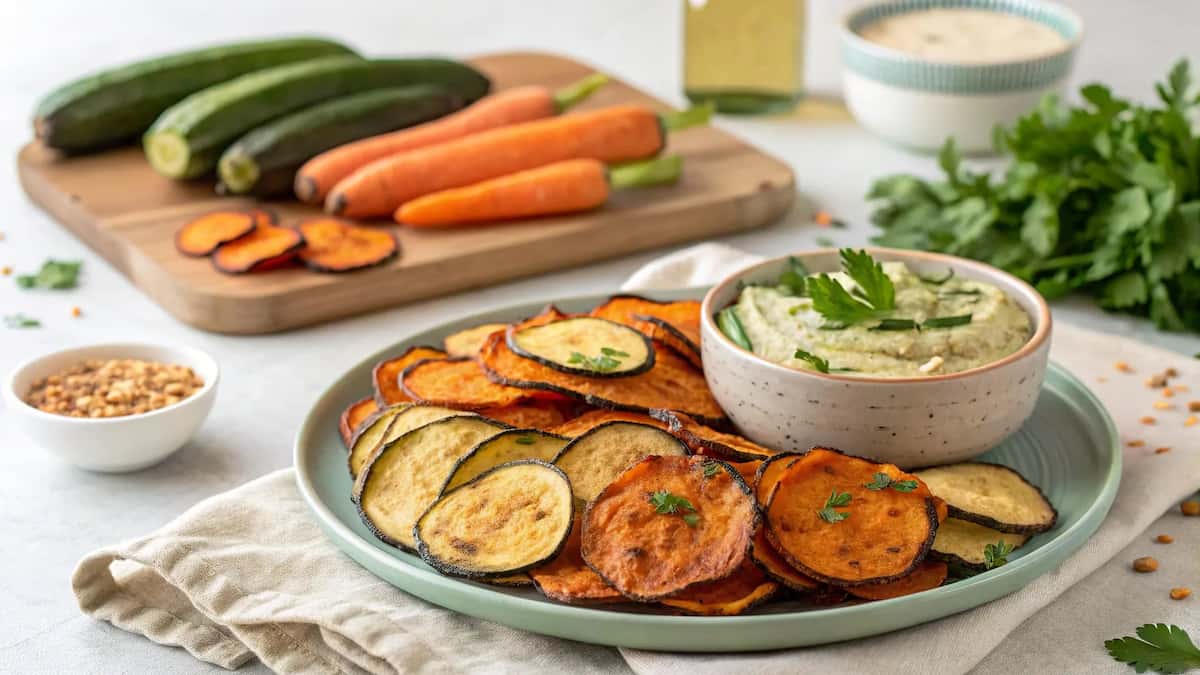
Carrot chips feel more familiar yet still remain overlooked as a true alternative to packaged snacks. Their natural sweetness intensifies during baking, creating a subtle caramel note. Peel and slice carrots thinly, keeping the thickness consistent. Toss lightly with oil and optional spices, then bake at medium heat. Carrot slices shrink slightly as they lose moisture, developing crisp edges with a slightly chewy centre. They differ from potato chips because they offer sweetness rather than salt-forward flavour. These chips pair well with simple dips or can be eaten plain.
Apple Chips
Apple chips feel more familiar than vegetable versions, yet making them properly requires attention to moisture control. Apples contain high natural water content, which means slow dehydration works better than aggressive heat. Slice them thinly and evenly, preferably with the peel intact for structure. Unlike beetroot or carrot, apples are not tossed in oil. Instead, they are baked at a low temperature for an extended time, allowing moisture to evaporate gradually. A light sprinkle of cinnamon can enhance flavour without adding sugar. Apple chips differ from fried snacks because they rely on dehydration rather than crisp frying. They become lightly curled and firm once cooled.
Zucchini Chips
Broccoli Chips
Broccoli is rarely associated with chips because its uneven florets and thick stems seem unsuitable for crisping. However, when prepared correctly, it transforms into a deeply flavoured, crunchy snack. The key lies in slicing the stems thinly into flat rounds and trimming florets into smaller, even pieces. Wash and dry thoroughly, as any leftover moisture will cause steaming instead of roasting. Lightly coat with oil and a pinch of salt, then spread in a single layer on a baking tray. Roast at moderate heat until the edges darken slightly and turn crisp.