IN EARLY FEBRUARY, along the Arctic Circle, thousands of cod are lifted onto wooden racks called hjell. They will hang there for months, exposed to sun and wind, cold and decay — the success of the year’s stockfish harvest determined in a matter of weeks. Too much frost, and the fibres rupture. Too much warmth, and flies and bacteria take over. This narrow window, from February to May, has governed life along Norway’s coast for nearly a thousand years.
This February, the ritual carries added urgency. As fish dry in the open air, an international coalition awaits a decision from UNESCO, where stockfish traditions are under evaluation for recognition as Intangible Cultural Heritage. At the same time, warming winters threaten the very conditions that make outdoor drying possible — not just in Scandinavia, but across the world.
From the fjords of Norway to the drying camps of the Sundarbans, from Catholic Lent to Lunar New Year feasts, dried fish has entered one of its most consequential moments in centuries. Once a technology of survival and empire, then a food of labour and shame, it is now being recast as both heritage artefact and sustainable “superfood”. The question is no longer how dried fish fed civilisation — but whether civilisation will still allow the conditions that let it exist.
I. BEFORE COLD STORAGE, THERE WAS WIND
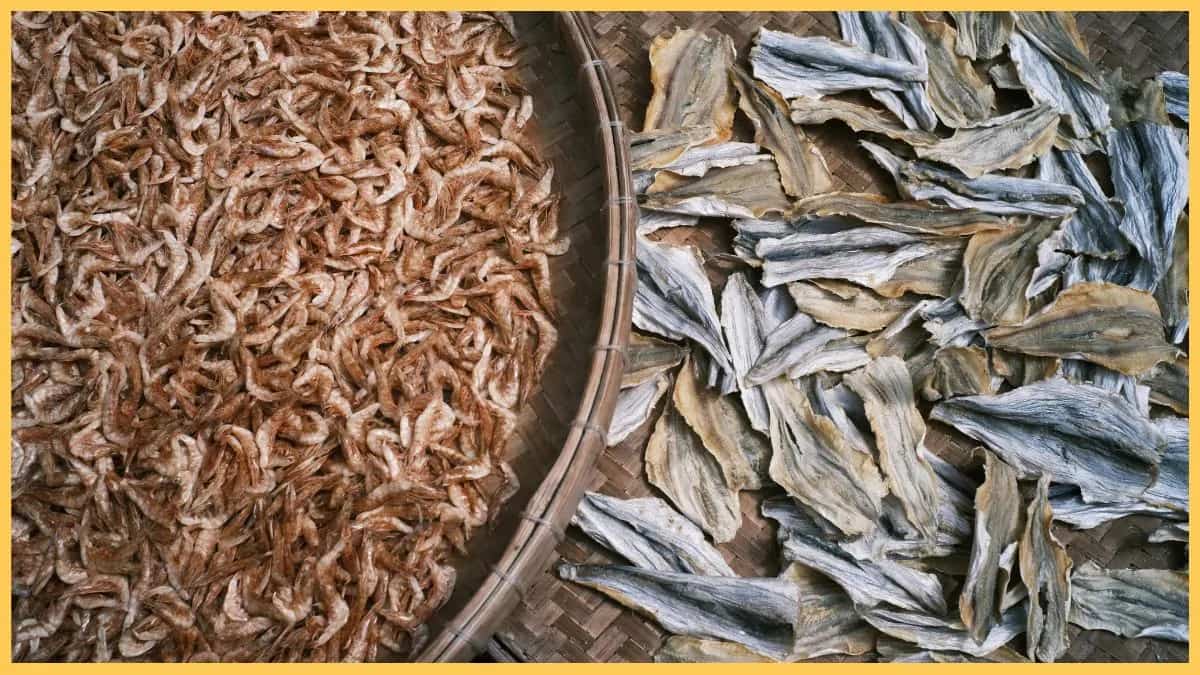
Drying is humanity’s oldest preservation technology. It works not through chemistry or machinery, but by removing water — the one thing bacteria cannot live without. Sun and wind do the rest. The result is food that cheats time.
Long before refrigeration, this mattered more than flavour. Dried fish allowed armies to march and sailors to cross oceans. Viking voyages were fuelled by stockfish so dense with protein it shrank to a fifth of its original weight without losing nutrition. Roman soldiers ate dried fish stews on campaign. In ancient Japan, dried fish appears in ritual offerings to the gods — sustenance transformed into something sacred.
Civilisation, in this sense, did not begin only with agriculture, but with preservation. The moment humans decided today’s food must survive tomorrow, they began planning for a future larger than appetite.
II. WHEN FISH BECAME CURRENCY
By the Middle Ages, dried fish was no longer just survival food. It was infrastructure.
Catholic fasting laws forbade meat for much of the year, turning fish into a religious necessity. Northern Europe, rich in cod and cold winds, exported vast quantities southward. Stockfish helped finance cities, monasteries, and merchant networks. Where salt was abundant, fish was cured rather than air-dried, giving rise to bacalhau in Portugal and klippfisk across the Atlantic world.
This trade reshaped geopolitics. Fishing fleets pushed into Newfoundland waters. Colonial supply chains formed to feed labourers and enslaved populations in the Caribbean. Salt cod became staple sustenance in places far removed from the sea — durable, cheap, and dependable.
Dried fish did not just follow the empire. It helped build it.
III. FROM NECESSITY TO STIGMA
As industrialisation brought ice, railways, and refrigeration, freshness became a status. Preservation, once ingenious, began to look like a compromise.
Dried fish acquired a smell — and with it, judgment. In many cultures, pungency became shorthand for poverty, migration, or backwardness. In eastern India, shutki is loved fiercely and apologised for just as intensely, wrapped in layers of newspaper, cooked behind closed windows, and blamed for offending neighbours. What you ate — and how loudly it announced itself — began to signal who you were allowed to be.
This hierarchy of smell maps neatly onto class. Foods associated with labour and survival were pushed out of polite spaces, even as they continued to anchor memory and identity. Migration carried dried fish in jars and suitcases, not just as sustenance but as reassurance — proof that home could be recreated, even temporarily.
IV. THE INVISIBLE LABOUR OF DRYING
Drying fish looks passive. It is not.
It requires intimate knowledge of weather, timing, and decay. Fish must be turned, protected, and watched. A sudden storm can undo weeks of work. Across much of South and Southeast Asia, this labour is overwhelmingly done by women — often informally, often precariously, paid only if the drying succeeds.
In the Sundarbans, drying seasons end with anxious glances at the sky. In the Philippines, women work in exposed coastal camps, balancing household survival against unpredictable weather. This is not artisanal nostalgia; it is skilled labour operating at the edge of risk.
Civilisation runs quietly on this kind of work. It rarely records it.
V. WHEN PEASANT FOOD BECOMES DELICACY
Some dried fish escaped stigma by moving upward.
In Japan, katsuobushi — bonito smoked, dried, and fermented until it becomes almost stone-hard — is shaved into flakes to make dashi, the base of Japanese cuisine. In Scandinavia, lutefisk, once a way to salvage spoiled stockfish using lye, is now a Christmas ritual. Across Southeast Asia, dried fish, once eaten because it was cheap, is now sought out as comfort food.
This transformation is selective. Foods are redeemed not because their history changes, but because who eats them does.
VI. THE MODERN RECKONING
Today, dried fish is being rediscovered under new language. It is marketed as high-protein, nutrient-dense, ancestral. Viking snacks. Paleo fuel. Sustainable superfood.
There is truth here. Dried fish concentrates micronutrients like calcium and zinc, making it vital in regions battling malnutrition. It requires no electricity, no plastic, no cold chain. In an age anxious about food security, it looks newly sensible.
But the conditions that made drying possible are slipping. Warming winters disrupt the delicate balance needed for outdoor racks. Pests thrive where cold once protected. Across hemispheres, traditional drying is being forced indoors, industrialised, stripped of place.
At the very moment dried fish is being celebrated as heritage, the climate is eroding the knowledge that sustains it.
WHAT DRIED FISH ASKS OF US
Dried fish has always been about patience — about trusting seasons, wind, and time. It fed empires, carried memory across borders, and sustained people history rarely named.
If civilisation began with the decision to preserve food for the future, then dried fish poses a quiet challenge. Not whether we can market it better, or brand it smarter — but whether we are willing to protect the fragile conditions that let ancient knowledge survive.
Because preservation, it turns out, is not just about food. It is about what we choose not to let disappear.