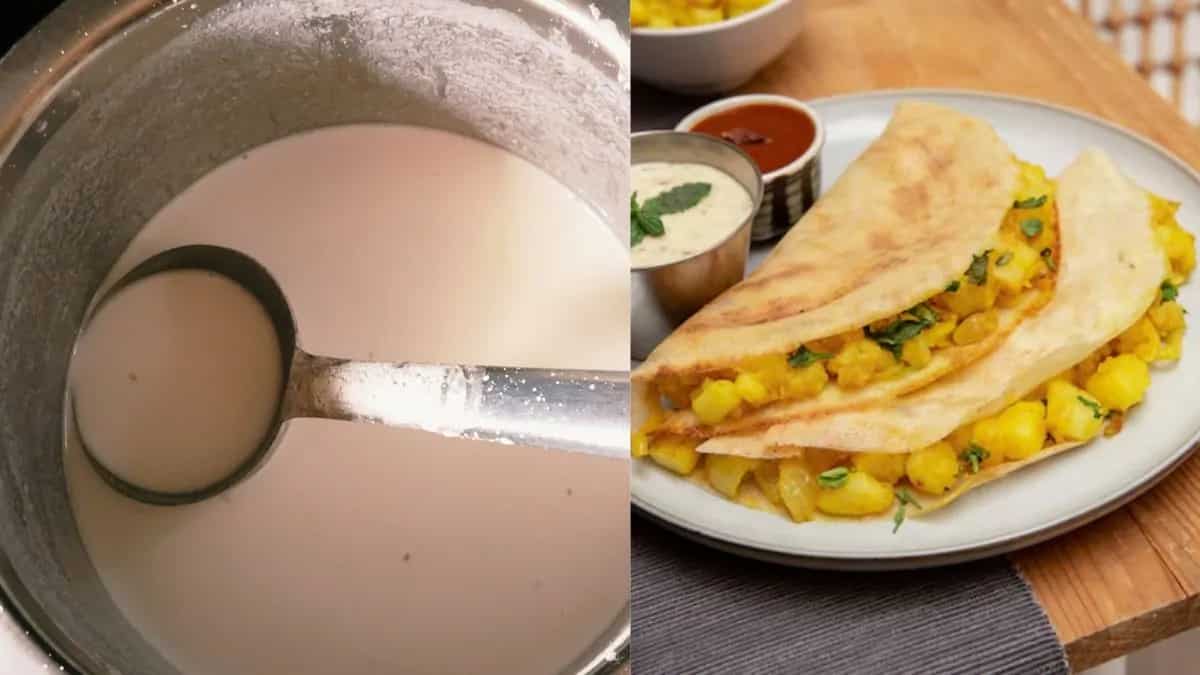
A recent incident in Ahmedabad has raised grave concerns around something as common as using store-bought dosa batter. As per the news, two young children reportedly died, while their parents were hospitalised after consuming dosas that they prepared from store-bought batter. While investigations are still underway, and the exact reason remains unclear, early reports suspect food poisoning and possible contamination.
What this incident underlines is not just fear of consuming store-bought batter, but also a need for awareness regarding the dangers fermented foods can pose. Fermented foods such as dosa batter are known to be very prone to spoilage and extremely temperature sensitive. They rely on controlled bacterial activity, which can go wrong easily if storage, handling, or temperature requirements are not adequate. During the summer, these risks multiply. Heat acceleration and fermentation encourage bacterial growth and drastically shorten the shelf life of the batter.
Store-bought idli-dosa batter is not hazardous by default, but it requires more attention than usual. A quick peek at the back of the packet is not just enough. From the smell and consistency to the storage history, small checks can make a huge difference and save you from having a safe meal and a dangerous one. A few mindful checks can guarantee that comfort does not come at the cost of your health.
Check The Pack Like You Would Check Milk
Dosa batter, even when packed, is still alive and is fermenting. So never treat it like a shelf-stable, long-lasting item you can store indefinitely. Always keep in mind to check for the manufacturing date, as well as not just the expiry. In the extreme summer season, even a packaged label as “valid” can spoil too quickly if refrigeration breaks down during transportation.
Look closely at the packet: if it seems to be bloated, puffed up, or a bit inflated, it is a pure red flag. This usually means over-fermentation, or there is gas buildup due to microbial activity. A fresh batter feels tight and stable, not swollen like a balloon.
Pro tip: If the packet feels warm rather than cold while buying, skip it; the cold chain has likely failed at some point.
Trust Your Senses
Fresh dosa batter has a light, and a bit tangy smell, something that feels pleasant as well as clean. But a spoiled batter smells too sour, almost alcoholic or rotten. That sharp, nose-hitting smell is usually the sign of over-fermentation or bacterial spoilage.
During the summer season, this shift happens faster than you can expect. Even if it is kept outside the fridge for a few hours, it can push the batter past its safe setting. Never ignore even the slightest of the changes; if you have a second thought after smelling it, trust your sense, as that could be your answer.
Pro tip: Never think that the smell can be hidden after adding spices, cooking will not fix the spoiled batter.
(Image credit: Wikimedia Commons)
Watch The Texture, Not Just The Taste
Texture is an indicator that is often overlooked. A good batter feels smooth, a bit thick, and also easily pourable. If it has turned too watery, split, or unusually bubbly, having too many bubbles, the possibilities are that it has gone bad.
Excess froth may appear like a sign of “good fermentation,” but unchecked fermentation can promote harmful bacteria like Bacillus cereus, which are known to cause food poisoning.
Pro tip: If the batter feels a bit sticky or slimy upon touching, throw it away; it is no longer safe to consume.
Storage Matters More Than You Think
The moment you get the batter home, keep it in the refrigerator immediately. Leaving it outside, even if it is for an hour, can destabilise it in peak heat.
Also, avoid keeping it in the same plastic pouch in which you bought it after opening. Move it to a clean, airtight box. Repeated exposure to the air introduces bacteria, which can lead to spoilage.
Pro tip: Always use a clean, dry spoon to take out the batter. Even a little water contamination can decrease its shelf life drastically.
Don’t Stretch Its Life Beyond 1–2 Days
Unlike the homemade batter, store-bought ones may already be a day or two fermented when you purchase them. Which means its usage window is shorter than you believe.
In the summer season, it is ideal to consume it within 24 hours after opening the packet. Keeping it for a long time can increase the risk of over-fermentation, which can lead to microbial growth, even if it still appears to be okay.
Pro tip: If you see dark spots or discolouration, don't go for a second-guess, discard it right away.
Cook It Thoroughly
Even a just-compromised batter becomes more dangerous when it is undercooked. Always cook the dosa properly until it turns crisp and golden. Soft, pale or undercooked batter can still have bacteria. High heat acts as a final protection layer, but it only works when cooking is done.
Pro tip: Avoid thick uttapams if you are not sure about the freshness of the batter, as the thin dosas cook more safely and thoroughly, unlike uttapams that are thick and can remain uncooked from within.