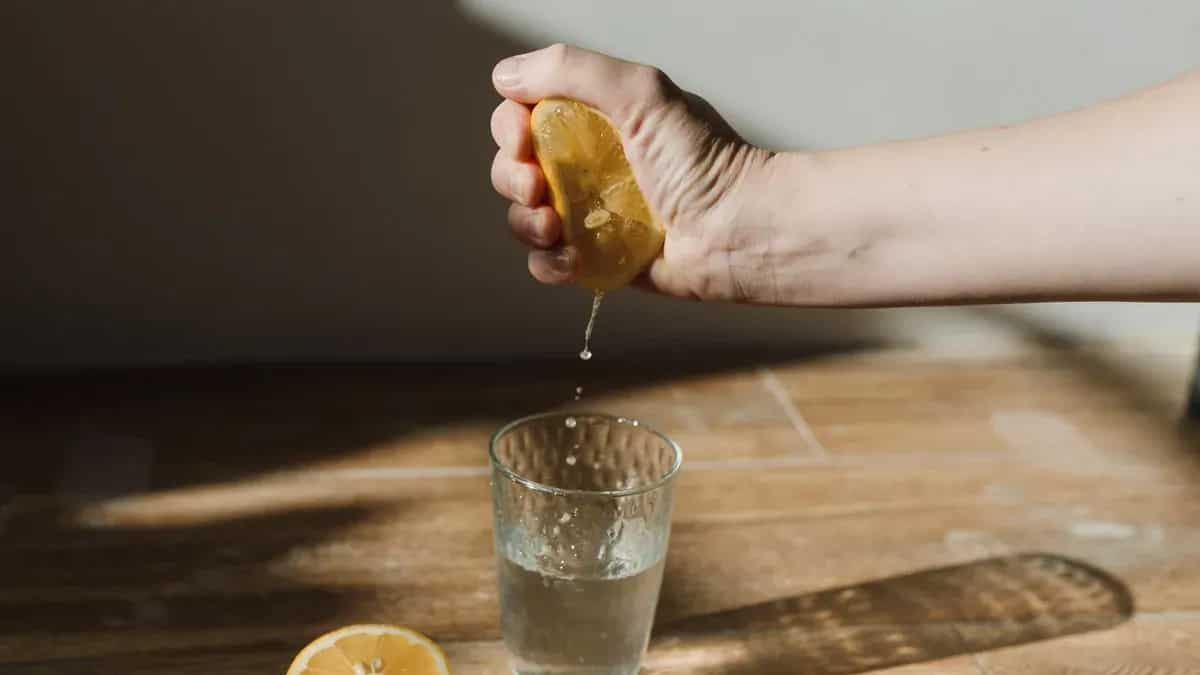
The microwave-lemon juice hack has the smug confidence of a bar trick: “Zap it and you’ll get way more juice.” I dislike the word way because it rarely survives contact with a scale.
The Claim And What We Measured
The claim (aka the microwave lemon juice hack): microwaving a lemon before juicing gives you more juice.
Let’s be precise about the question people actually type: does microwaving a lemon give more juice? It can—but “more” needs a definition that isn’t sponsored by optimism.
- “More juice” = higher extracted yield from the same lemon. Same fruit in, more grams of juice out.
- “Easier juicing” = less force/time to get that yield. Because a hack that adds a teaspoon but makes you wrestle a hot, slippery lemon is not a hack; it’s a kitchen-safety seminar.
What you’ll get here: a verdict backed by measured yields (grams, and at kitchen precision grams ≈ milliliters for lemon juice), plus a safe playbook.
Expectation-setting (and liability-setting): yield varies with variety, ripeness, and storage temperature. This is a controlled kitchen test, not a lab study. Also, note what we actually tested: room-temperature lemons vs microwaved room-temperature lemons. You’ll see plenty of advice online about fridge-cold fruit; that’s plausible, but it’s not the comparison measured here.
Test method
Materials
- 12 lemons (same type; standard supermarket Eureka lemons)
- Microwave (1000 W)
- Cutting board + chef’s knife
- Handheld citrus press (hinged “Mexican elbow” style)
- Bowl
- Kitchen scale (1 g resolution)
- Timer
Controls (the boring parts that make the result believable)
- Similar lemons: selected within a narrow weight band (about 140–160 g each) and similar firmness.
- Same cut, same tool: cut crosswise (equator) and used the same press for every lemon.
- Same pulp/seed rule: not strained; seeds removed only if they fell into the bowl—no excavations.
- Same operator: I juiced all lemons myself to keep hand strength, patience, and technique constant.
- Randomisation: lemons were randomly assigned to the room-temp or microwaved group (so the “naturally juicier” lemons weren’t accidentally all on one side).
Conditions compared
- Room temperature (control): 6 lemons held at ~21°C on the counter for 6+ hours.
- Microwaved: 6 room-temp lemons microwaved, then juiced immediately.
Microwave protocol
- Power: 70% power
- Time: 10–20 seconds total, depending on size
- Target warmth: warm to the touch—not hot, not steaming.
Measurement method
- Collected juice in a bowl on the scale.
- Recorded juice weight in grams (more precise than reading a meniscus through foam).
- Pulp/foam included consistently (no straining).
What we logged per lemon
- Whole lemon weight (g)
- Condition (room temp vs microwaved)
- Microwave time (s)
- Juice weight (g)
- Time to juice (s), from first squeeze to last drip
- Notes (ease, aroma, any steam/splatter)
Results: Yield, Ease, And Flavour Notes
Below is the payoff. Reminder for interpretation: juice grams are approximately millilitres at kitchen precision, and pulp/foam were included in every measurement.
| Condition (n=6 each) | Juice yield per lemon (g) | Average (g) | Range (g) | Avg time to juice (s) |
|---|---|---|---|---|
| Room temp | 44, 48, 50, 46, 52, 47 | 47.8 | 44–52 | 31 |
| Microwaved (70% power, 10–20 s) | 51, 55, 49, 56, 54, 52 | 52.8 | 49–56 | 22 |
Difference: +5.0 g per lemon on average (about +10%), and roughly 9 seconds faster to press.
Ease-of-juicing (what your hands notice)
Microwaved lemons gave up juice earlier in the squeeze—the press met less initial resistance. The “last drips” phase also shortened: fewer repeat squeezes to reach the emotional certainty of done.
If you juice one lemon for salad dressing, 9 seconds is trivia. If you’re batching a round of cocktails or squeezing several lemons for lemonade, it’s less about the clock and more about not having your forearm feel like it’s been audited.
Flavour and aroma check
At the target warmth (warm, not hot), I noticed no meaningful flavour change in the juice. The peel smelled a bit louder right after heating—pleasant, but also diagnostic: you’re warming aromatic oils as well as juice.
This is also where accuracy matters: “no difference” is true for these room-temp lemons under this protocol. It is not a universal guarantee that any microwaved lemon at any time/power will taste identical.
Overheating: what “too far” looks like
I intentionally overheated one lemon (30 seconds at full power) as a failure-mode demo, not as part of the measured comparison.
- Steam pressure built inside; it hissed when cut.
- The peel softened and turned slippery, making cutting less secure.
- A sharper, slightly bitter pith/oil smell appeared—exactly the kind of top note that can flatten a delicate drink.
Verdict (tied to the numbers): Yes—microwaving can get you more juice, but the gain is modest (~10% here), and the bigger win is easier/faster juicing.
Want to spend that extra juice on something that actually needs it? Find recipes that use fresh lemon juice.
Best Way To Do The Microwave Lemon Hack
This is the method that matched the best outcomes in the test: a little heat, then mechanical help (rolling), then immediate pressing.
Microwave briefly.
- Start conservative; add time in 5-second increments if needed.
Roll firmly on the counter (10–15 seconds).
- Use the heel of your palm to flex and rupture some internal structure before the press does the brute work.
Cut crosswise (equator).
- Stabilise the board with a damp towel. If the peel feels slick, wait 30–60 seconds.
Juice immediately.
- Warming is not a long-term relationship; it’s a short window where flow improves.
Timing guidance (ranges, not commandments)
Assuming a ~1000 W microwave.
- Small lemon (100–130 g): 8–12 s at 70% power
- Medium (130–170 g): 12–18 s at 70% power
- Large (170 g+): 18–25 s at 70% power
Starting temperature changes the risk of overshooting. This article didn’t measure fridge-cold lemons, but the physics doesn’t care: cold fruit heats unevenly in a microwave.
Micro-example (fridge-cold, medium lemon): try 15–20 seconds at 70% power, then rest 30 seconds if you notice hot spots, then roll and cut.
Safety checklist
- Stop at warm to the touch; no visible steam.
- If any area feels hot, rest the lemon before cutting.
- Hold with a towel if warm.
- Don’t microwave damaged/split fruit; pressure finds exits.
When to skip microwaving
- Lemon is already soft/very ripe (little to gain).
- Thin-skinned lemons that heat fast and unevenly.
- Any fruit with cracks or weak spots.
- Microwave is inconvenient: use a warm-water bath.
On piercing: don’t pierce before microwaving. A pinhole is an engineered failure point for hot juice.
Microwave Vs Rolling Vs Warm-Water Bath: Which Should You Use?
This is a tools question, not a personality test.
Cold-from-fridge lemon
Best default: warm-water bath + roll.
- Submerge in warm tap water (not boiling) for 5–10 minutes, then roll and juice.
- Rationale: water warms more evenly than a microwave, so you avoid hot spots (and the slippery-cutting phase).
If you need speed, a brief microwave can work—but since we didn’t measure a fridge-cold group here, treat that as practical extrapolation, not a data-backed guarantee.
Room-temp but firm lemon
Best default: roll first, then juice.
Microwave only if the lemon is unusually firm or you’re trying to maximise yield for something that punishes short pours—cocktails are the obvious example.
No-microwave option (still want more juice)
Do this: warm-water bath 5–10 minutes → roll 10–15 seconds → cut and press.
Practical takeaway: for most kitchens, rolling is the best default. Microwaving is most worth it when a lemon is very firm and you care about extracting that last ~5 g per fruit with less effort.
If your main use-case is drinks, try fresh lemon juice in cocktails and mocktails.
Why Warming Can Increase Juice Yield
A lemon is a set of juice-filled vesicles wrapped in plant architecture—cell walls, pectin-rich membranes, and a peel full of aromatic oils that would love to be the centre of attention.
- Gentle heat softens membranes so they rupture more readily under the same press force.
- Heat also lowers viscosity, so once the juice is freed, it flows out faster instead of clinging to pulp.
- Cold lemons resist extraction: stiffer structure + thicker flow means you stop sooner (or your grip does).
Why overheating backfires is less mysterious than it is theatrical:
- Internal water can create steam pressure, increasing splatter risk.
- More heat mobilises more peel/pith compounds; some read as bitter when they dominate.
- A hot lemon is riskier to cut because softened peel and condensation reduce friction—the one kitchen variable you’d like to keep.
For a deeper, sane discussion of plant cell walls, pectin, and why heat changes texture, Harold McGee’s On Food and Cooking remains the best single-volume reference.
Conclusion: In this measured test (room-temp fruit), microwaving increased extracted juice by about 5 g per lemon (~10%) and made pressing faster, with no noticeable cooked flavor at gentle warmth. The safest default is roll first, then add a brief microwave when you have a stubbornly firm lemon and want a little extra yield—without overheating or cutting it while hot.
If you replicate with different lemon varieties or microwave wattages, share your lemon-juice yield results with the community.
To quantify how extra lemon juice changes scaled recipes, check how lemon juice impacts nutrition—and for a quick look at where that extra squeeze matters in regional dishes, explore regional lemon-forward food trails.
Some parts of this article were created with AI assistance.