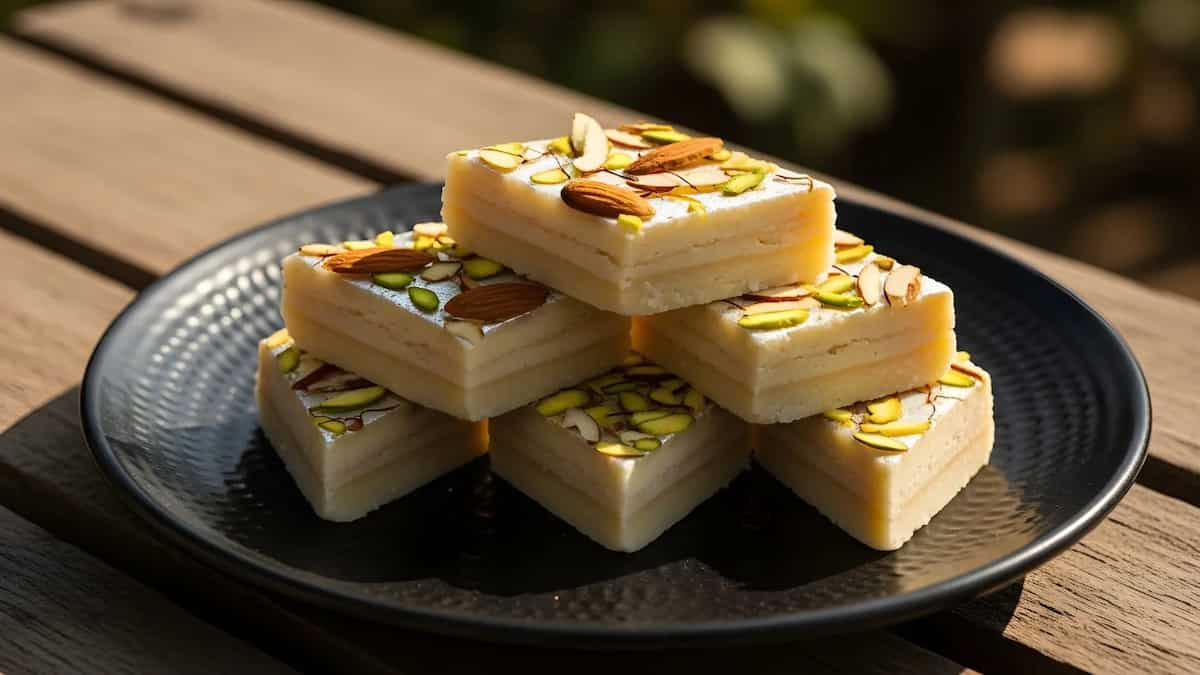
Barfi traces its roots to Persia, coming to India from Sikh origins, where milk-based sweets became central to festive cooking as dairy techniques developed over centuries. The name is believed to come from the Persian word barf, meaning snow, which reflects its pale colour and soft, dense appearance.
Read More: 5 Popular Types Of Barfi You Should Explore
Creative Barfi Variations Across Regions
Orange Barfi
Orange barfi introduces a citrus dimension to a sweet traditionally built on milk solids. Instead of relying only on cardamom or nuts for flavour, this version incorporates finely grated orange zest and a small amount of fresh juice into the thickened khoya base. The zest carries essential oils that release fragrance during cooking, giving the barfi a clean, aromatic lift. The slight acidity of the orange balances the richness of the milk, preventing the sweetness from feeling heavy. Its texture remains firm and sliceable, yet the flavour feels brighter and more refreshing.
Strawberry Barfi
Strawberry barfi reflects a more contemporary approach to Indian sweets, blending fresh fruit flavour with a classic dairy base. The strawberries are usually cooked down into a thick puree before being folded into reduced milk solids. This process concentrates flavour while reducing excess moisture. The fruit adds a natural pink tint and gentle tartness that softens the sweetness. Unlike artificial essences, real strawberry puree introduces slight variation in colour and taste, making each batch feel handmade. Because strawberries contain water, careful cooking is essential to prevent a sticky finish. When balanced properly, strawberry barfi is lighter and more approachable for those who prefer subtle fruit notes over intense sweetness.
Guava And Coconut Barfi
Guava and coconut barfi is an unexpected twist to serve. The sweetness of ripe guava blends naturally with the soft, nutty flavour of fresh coconut. Guava gives the barfi a gentle fruity taste and a light pink shade, while coconut adds texture and body. They create a sweet that is rich without feeling heavy. The slight tang from guava prevents the sweetness from becoming overpowering, which makes each bite feel balanced. Ripe guava is cooked down into a thick pulp after removing the seeds with fresh grated coconut, along with sugar.
Blueberry Barfi
Blueberry barfi brings a subtle sophistication through its deep hue and mild acidity. Fresh or frozen blueberries are simmered into a thick reduction before being incorporated into the milk base. This ensures that the fruit flavour remains concentrated without adding too much liquid. Blueberries provide gentle tartness rather than strong sweetness, allowing the dairy component to remain prominent. Because blueberries are not traditionally used in Indian sweets, this version is innovative while respecting the barfi structure. Blueberry barfi reflects experimentation that retains core technique while expanding flavour boundaries thoughtfully.
Oats Barfi
Oats barfi represents a shift toward texture and nourishment while maintaining the dense character of traditional barfi. Lightly roasted oats are ground coarsely and added to reduced milk solids, giving the sweet a subtle nutty flavour. The oats absorb some moisture, helping the mixture set firmly without becoming overly sticky. The sweetness remains moderate, allowing the nut-like quality of oats to stand out. Though not historically traditional, oats barfi appeals to modern preferences seeking a balance between indulgence and simplicity.