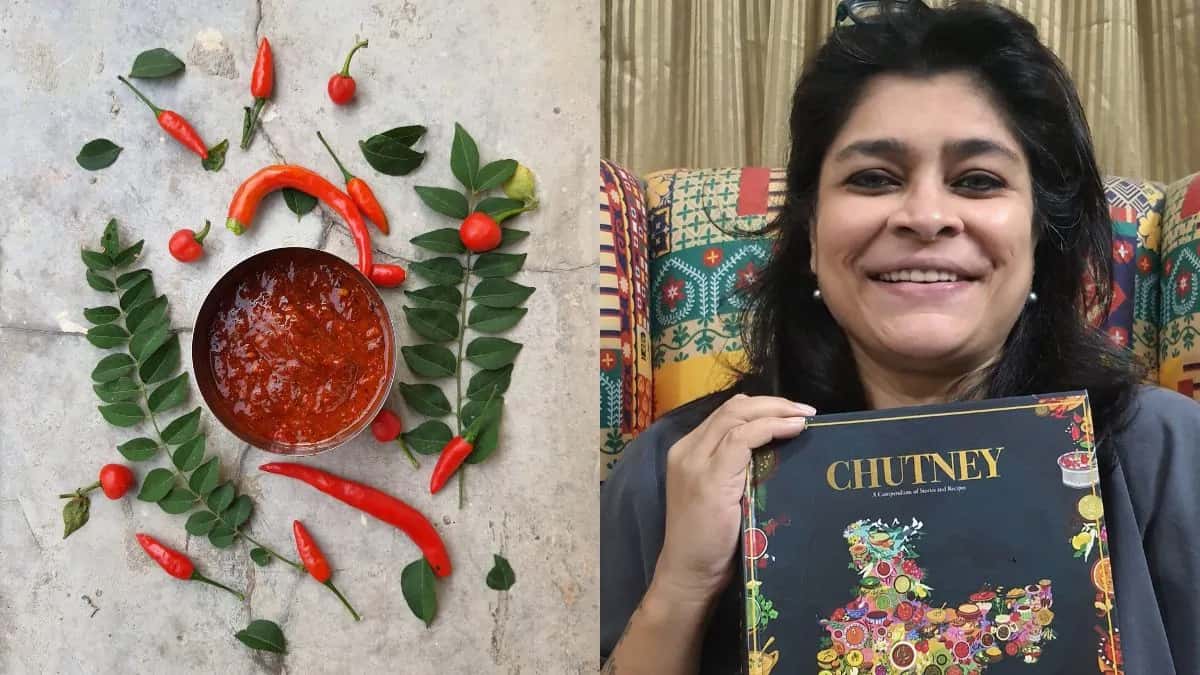
When chronicler of food legacies Rushina Munshaw Ghildiyal began documenting Indian Food Observance Days in 2018, she couldn't have predicted that a simple condiment would become the subject of a 504-page, 1.8-kilogramme tome featuring 230 recipes from 140 contributors across India. Yet her comprehensive chutney book reveals something profound: this humble accompaniment is not merely a side dish, but an anchor point in Indian cuisine that carries within it the untold stories of countless women whose culinary knowledge has, for generations, gone unrecorded.
An Everyday Marvel
"You don't have to have any skills to make a chutney," Rushina explains. "You just need two things, three things, mash them together, you have a chutney." This simplicity, however, belies a sophisticated culinary intelligence. The ability to create a chutney is a form of impromptu alchemy—taking whatever ingredients are available, understanding the balance of spicy, sour, salty and sweet, and producing something that elevates even the most basic meal.
What makes chutney so essential to Indian cuisine is its universality paired with extraordinary diversity. Whether you're eating street food or a home-cooked meal, at a wedding feast or a simple lunch, chutney will be present. Yet as Rushina discovered through years of research, no two chutneys need be the same. A dhaniya (coriander) chutney might use lemons as the souring agent one day, wild limes the next, and roasted tomatoes when they're in season. This fluid algorithm, this intuitive understanding of flavour balance, represents generations of culinary wisdom.
A Condiment Without Borders
The research revealed a surprising breadth. From ant chutneys in tribal communities to the skin of ridge gourds transformed into condiments, from dry powders to watery accompaniments for pani puri, from fresh coconut chutneys in the south to cooked preserves in the north—the category defies rigid definition. Even bhartas (mashed vegetables) and certain achars (pickles) blur into the chutney family, depending on region and usage.
"We as humans want to put everything in boxes," Rushina notes. "But the beauty of chutney, and possibly other things, is that they just don't testify to being put into boxes, and I think that's what makes it beautiful."
The word itself travelled remarkably far from its origins. In South India, chutneys were traditionally called "thogayals," whilst in ancient Ayurvedic texts, condiments were referred to as "lehya" - lickable things meant to provide the six tastes on one's plate. The British anglicised the word to "chutney" and spread their own version - a cooked, preserved condiment with vinegar and sugar - throughout their colonies. Meanwhile, indentured labourers from India carried their own fresh chutneys to the Caribbean and Africa, where in places like Mauritius and Réunion, they became known as "satni," a conversion of the South Indian "chatni."
"So if you actually see chutney that the British took around the world, and if you look at all the colonies, you will see that there's some form of this cooked chutney everywhere," Rushina observes. Yet what the world knows as chutney differs vastly from what the condiment means in Indian homes.
The Homogenisation Crisis
Despite - or perhaps because of - its ubiquity, chutney faces a crisis of recognition. In contemporary restaurants, menus typically offer only green coriander chutney and brown tamarind chutney. What professional kitchens produce doesn't begin to capture what chutney means in home cooking, where it changes with seasons, regions and individual taste memories.
"In today's day and age, the restaurant beyond the imli and the dhaniya has gone to a level where people are just putting anything together and serving it as a chutney," Rushina says. Meanwhile, traditional knowledge - of which ingredients complement which dishes, how to adjust recipes seasonally, the countless regional variations—risks being lost.
This homogenisation particularly concerned Rushina when she spoke to her nephew in Australia, who defined chutney simply as "that green spicy stuff you eat at Indian restaurants." For diaspora communities, the rich diversity of chutneys has been reduced to a single variant.
Invisible Labour, Lost Legacies
Perhaps the book's most important contribution lies in its documentation of women's culinary knowledge. Throughout India, families treasure legendary dishes with a vague origin like, "Nani's chutney," or a particular aunt's mutton curry, or a grandmother's special recipe. Yet these legends typically remain confined to family memory, unrecorded and uncredited.
"You'll have these legendary dishes that are associated with someone or the other," Rushina explains. "And usually, that legend aspect stays confined to the family. And, you know, it's never written down or documented or credited to that person."
The issue runs deeper than mere documentation. It touches on how women's domestic labour remains undervalued and unacknowledged. "Everybody says, you know, it's so cool to have a silbatta chutney. But do you know what goes into making a silbatta chutney, the pure labour that goes into making a chutney? And do you then appreciate that woman for taking the time out to make that chutney?"
In India, women's names often get erased from their birth families through marriage, and are insufficiently honoured in their marital homes. Outside urban centres where women build professional careers, domestic contributions go largely unrecognised. Rushina's book directly challenges this erasure by recording recipes with their creators' names attached, ensuring that these culinary legacies will endure.
One particularly moving example comes from Rushina's own family. Her husband's grandmother shared a recipe for Til Tamartar Ki Chutney years before she passed away. Rushina happened to write it down, then rediscovered the scribbled note years later whilst preparing for an Uttarakhand pop-up. When she made it, her husband "picked up a box of chutneys made for dinner, and he went through a lot with that chutney." All the grandmother's grandchildren responded the same way to that chutney - a taste memory connecting them to a beloved woman they can no longer see.
"So the recipe, thanks to this book, and thanks to them giving it to us, will live on long after we're all gone, fingers crossed. With their names," Rushina says. Recently, when a great-granddaughter married, that same chutney appeared on the wedding feast, creating a direct line between generations.
Real Voices, Real Stories
The book's 504 pages required extraordinary effort to compile. Rushina tracked down home cooks, not just professional chefs, to capture authentic regional variations. In this process, she unveiled how many people connected with chutney as a concept. She was regaled by an immigration officer en route to Lisbon who on learning they were writing a book about chutney proceeded to share a slew of recipes.
So many of the unique elements of the book came to her organically, but others were special moments from her own experiences. She chased down an Arunachali restaurant owner for recipes, contacted a blogger from the gaming world she'd met years earlier for Mizo chutneys, and spoke with cooks about details that would never appear in cookery books.
For instance, Chef Tanisha Phanbuh shared how, when making chutneys in a mortar and pestle, cooks take a small handful of rice and roll it in the mortar to capture every bit of flavour, then serve these rice balls to family members. "Those are the stories you don't get by doing research on Google. These are things you only hear when you actually talk to people," Rushina notes.
The project collected recipes in "pinches and handfuls," which had to be converted into measurable quantities. Some contributors wrote recipes themselves; for others, Rushina transcribed conversations into recipe form. The result is a repository of living culinary knowledge that might otherwise have disappeared.
A Living Tradition
The universal resonance of chutney became apparent throughout Rushina's research. At Delhi airport, an immigration officer spent 15 minutes sharing chutney recipes. On an aeroplane, a woman two seats ahead overheard Rushina discussing chutneys and turned round to request her grandmother's recipe be included. Strangers regularly approached with family recipes.
This enthusiasm reflects chutney's place in everyday life. As Rushina told her niece, who questioned why anyone needed 230 chutney recipes: "If you have just two, three chutneys in your fridge, you can make a meal out of anything. You can cook rice, you can make instant noodles, you can spice up something, or toss together a meal with just potatoes also."
At the book's Bombay launch, a chutney-themed menu at Aamchi demonstrated this versatility by "chutney-fying" dishes like ramen and mac and cheese - showing how this deeply Indian condiment can transform even international favourites.
Scratching The Surface
Despite its comprehensive nature, Rushina acknowledges that the book merely scratches the surface. "There are probably thousands of recipes that haven't even been created yet, because that's how impromptu it is," she admits.
The project began as part of celebrating Indian Food Observance Days—Dal Diwas, Sabzi Diwas, Chutney Diwas—which Rushina launched to celebrate Indian cuisine in all its diversity. Over the years, including throughout the pandemic, she collected stories, recipes, memories, anecdotes and pictures. What started as plans for a zine evolved, with encouragement from her husband, into a full-fledged book and the launch of a small publishing arm.
"From any sense of the word, any sense of what a good book should be from a marketing perspective, I think we've broken all the rules," Rushina laughs. The book's weight, length and multiplicity of voices make it commercially unconventional. But it serves a purpose that conventional publishing might miss—capturing the messy, beautiful, irreducible diversity of lived culinary experience.
Connecting Generations
Looking forward, Rushina hopes the book creates connections between generations separated by distance or time. Her nephew and niece in Australia might cook something from the book and learn about ancestors they'll never meet. The book becomes a bridge, a way for culinary knowledge to travel through time and space with proper attribution intact. "And really, that's how you kind of connect generations, no?" Rushina says.
Beyond the chutney book, she plans to continue the series with other Indian Food Observance Days topics - dal, sabzi and more. Each will follow the same philosophy: extensive research, real voices, proper credit to home cooks (especially women), and a refusal to oversimplify or homogenise.
The chutney book demonstrates that even the most commonplace elements of Indian cuisine contain multitudes. A condiment that takes minutes to prepare carries centuries of knowledge, regional identity, seasonal awareness and personal taste memory. It transforms basic meals into memorable ones. And through it all, the largely unrecognised labour and creativity of women sustains not just families, but an entire culinary tradition.