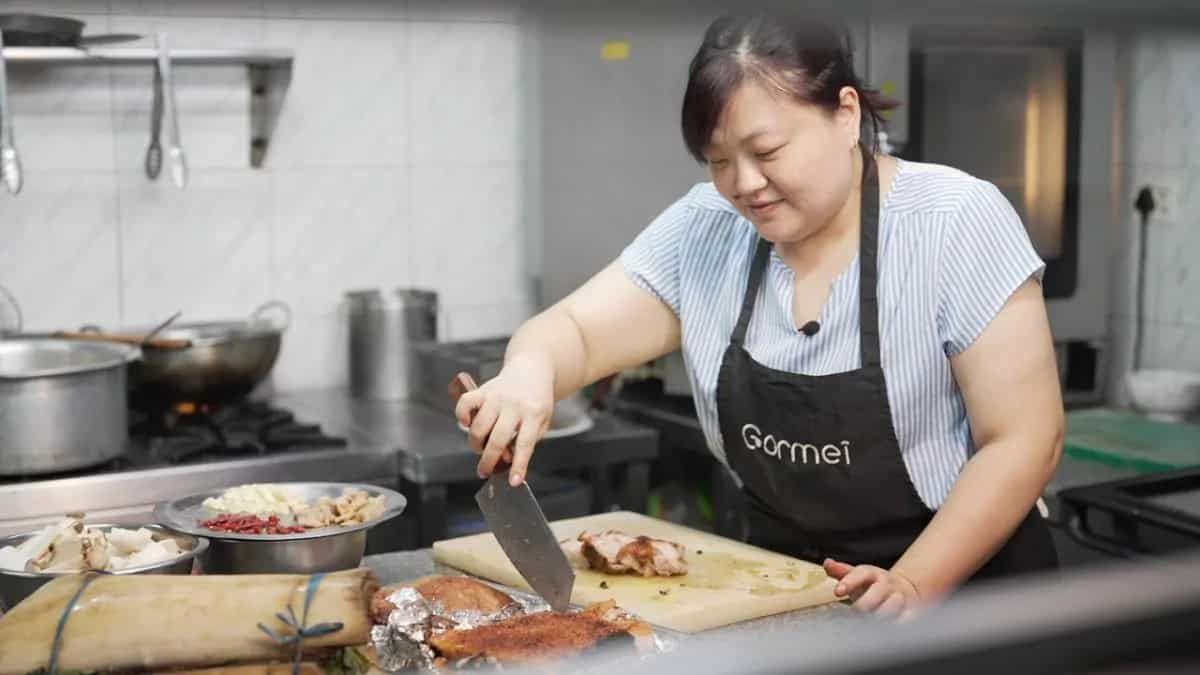
India as a whole is a melting pot of cultures, and within the winding lanes of Tangra, Kolkata's Chinatown, where the scent of soy sauce mingles with mustard oil, the clatter of woks tells stories of journeys spanning continents and centuries. The Hakka Chinese community found an unlikely sanctuary in this corner of Bengal over a century ago. Here, they didn't just settle; they wove themselves into the city's fabric, creating a cuisine that speaks in tongues both familiar and fantastically foreign. And come December, when carol singers wind through the neighbourhood, and Christmas cake mingles with the aroma of lap cheong sausages, the community's unique traditions become even more vivid.
Today, as a third-generation Hakka Chinese chef, Katherine Lim stands at the intersection of memory and innovation, honouring 2,000-year-old rice wine rituals whilst reimagining scallion pancakes as Swiss rolls. Her kitchen is a time machine where yam abacus beads promise prosperity, and every dish whispers of grandmothers who learned to make tofu from scratch because the alternative was forgetting who they were. As we approach Christmas 2025, we catch her in a rare moment of pause after a whirlwind year - a time for reflection on the carol-singing children of Tangra, the midnight masses, and the beautiful, adaptive spirit of the Hakka people themselves.
Chef Katherine, growing up in Amritsar and later settling in Kolkata’s Chinatown, how did your multicultural background influence your approach to Hakka cuisine?
I’ve always felt that since I didn’t have a traditional upbringing, cuisine-wise, in Amritsar - we had no access to even soy sauce and had to depend on relatives to send it from Kolkata - I was and am more curious about Hakka food. Not just what we eat in Kolkata but all over the world.
How did your early experiences cooking with your grandfather and uncle shape your culinary journey, and what lessons did you carry with you from those times?
I grew up around my grandparents and mom cooking. One of my earliest lessons was to taste as you cook. My grandfather would make me taste while he was cooking, and I had to say whether it was salty, sweet, or sour enough. Like I said, with no access to Chinese ingredients, they made many things themselves from scratch, like tofu, the sausages, dried and fermented mustard greens, egg noodles - watching them doing this is what has made me hands-on in my cooking - I find it hard to delegate! Adaptation is key to the survival of the Hakka people, and I feel true for all nomadic communities.
Can you elaborate on the moment you decided to transition from home cooking for family and friends to starting your own cloud kitchen in Kolkata’s Chinatown?
I believe quite a few cloud kitchens sprang up during COVID, and that was when I started too. But my cooking in professional kitchens began with Gormei, a Hong Kong and Kolkata-based culinary experiences curator. Argha Sen, the CEO of the company, really pushed me to think beyond my comfort zone of what I thought Hakka food is.
As a third-generation Hakka Chinese, how do you stay connected with your roots during Christmas while also innovating in the kitchen?
I believe that every cuisine evolves to survive, especially Hakka cuisine. I might do fancy presentations of rustic, homely dishes in luxury hotels, but come winters, I get busy with making traditional rice wine, a 2000-year-old ritual for Hakka women. The making of lap cheong sausages, fermented and dried mustard greens, etc. reminds me that I’m following in the footsteps of centuries of Hakka women before me!
Christmas during my childhood was midnight mass in St Francis church in Amritsar…both my grandfather and dad were staunch Catholics. During school life, it was always the Christmas concert, carols, and cakes. The church community in Tangra would have kids going to every house singing Christmas carols…you knew Christmas was coming!
Could you describe the significance of Hakka Yam Abacus Beads and why it holds such a special place in your heart and your cooking?
The Abacus beads is a prosperity dish typically eaten during the Chinese New Year - the abacus beads like shape wishes the diners lots of wealth to count in the coming year. This is a dish I was most apprehensive about putting on my pop-up menus, as there’s no way to prettify it, but the response to this has been so gratifying! Traditionally stir-fried with lots of minced pork, dried shrimp, cuttlefish, etc., I make the vegetarian version with shiitake, wood ear fungus, chives, and bean sprouts. To date, I believe I’m the only person in India who’s cooking this in professional kitchens!
How do you see the future of Kolkata Chinese cuisine evolving, and what role do you envision playing in that transformation?
There’s a lot of curiosity about Hakka cuisine amongst diners now. I’ve had diners commenting that my meals are unlike what they associate with Chinese food in India. It’s a slow but gratifying process to show that Hakka food goes beyond Hakka noodles and chilli chicken!
Given your diverse culinary background, how do you approach finding balance between authenticity and innovation in your dishes?
One thing about Hakka cuisine is we can never say it’s authentic - our cuisine is adaptive, depending on where we settled and what ingredients were available. What I think is authentic Hakka food in India might not be true for a Hakka in China or Mauritius! An example of innovation is the Scallion Pancakes, a beloved Chinese street snack, very much like a spring onion paratha - I make puff pastry scallion pancake Swiss rolls!
As you continue your journey as a chef, what new projects or goals are you most excited to pursue, and how do you see them shaping the future of Hakka cuisine in India and beyond?
I definitely see a trip to China and Meizhou, where my grandfather came from, in the coming year, now that we have direct flights from Kolkata…this is something that’s been on my bucket list for a long time! Who knows what might happen after that!!