The middle and end of the month can be quite an exercise in internal arithmetic. Your salary has thinned out, the next salary credit date is still a few days away, and every grocery purchase seems to consume your mind and soul, bit by bit, with reprieve appearing ever so distant. For working families, the near arrival of the festive season can make that calculation seem even more complicated.
Of course there is excitement about puja, family gatherings, and good food, but also the practical worry of whether the bonus will arrive in time, whether there will be enough left in the account for buying new clothes and gifts as well as necessities, and how far the month-end money will have to stretch to cover the remaining days. Amidst all these chaotic thoughts and calculations, a close friend or relative calls you up to inform their sudden, surprise arrival in the next 5 minutes.
Your mind will be struck by two reactions immediately, and it is impossible to determine which arrives first. The first reaction may be delight, while the second is a swift mental inventory of your kitchen. This is nothing new, though. Indian households have been remarkably good at this sort of culinary improvisation for a long time. Before supermarket aisles and instant party snacks made entertaining and hosting easier, mothers and grandmothers were our OG chefs.
They could turn a handful of poha, leftover rice, a banana, some coconut, some dal, roti, or just a few vegetables into something that looked deliberately planned and almost fancy. The cleverness and experience were not merely in stretching an ingredient’s function, but in knowing which part of it still had something useful to offer. That instinct is worth bringing back at month-end to combat budgetary issues effortlessly.
Budget-Friendly And Easy Snacks For Guests Who Arrive At The End Of The Month
Here are a few snacks that can make an unexpected guest feel properly welcomed without turning a nearly empty kitchen into an expensive shopping trip.
Leftover Roti Nachos With A Desi Tadka
Do not put those two or three leftover rotis back in the fridge for another day. Use their characteristics for a creative and tasty snack. Cut them into triangles, then brush or toss them with a little ghee or butter, and toast them on a tawa until crisp. Then garnish generously with chilli powder, roasted cumin, and chaat masala. If you have some onion, tomato, and coriander at home, then chop them finely and scatter them over the crisp roti nachos for extra freshness in every bite. For something more substantial, add a little grated cheese or leftover paneer. What began as yesterday's roti shall suddenly resemble a deliberately assembled and smart-looking tea-time platter.
Dal Pakoras
Image credit: Pexels
A small bowl of leftover cooked dal can be the beginning of excellent pakoras. Do not worry about texture. Just mix thick leftover dal with besan, chopped onion, green chilli, coriander, and a pinch of ajwain. If the dal is thin, then add enough besan to make a scoopable mixture. Drop small portions into hot oil and fry until the edges become deeply crispy. Now we come to the best part, aka the texture: soft and savoury inside, crunchy and golden outside. Serve with green chutney or simply a sharp squeeze of lemon and a dash of chaat masala.
Masala Bread Squares
Bread is one of the easiest ways to make a small pantry appear satisfying and generous. If you have bread slices at home, cut them into squares and dip lightly in a mixture of beaten egg, onion, green chilli, coriander, salt, and black pepper. For an eggless version, you can use a thick besan batter that has been zestily seasoned with chilli and cumin. Pan-fry both sides until crisp. The onion becomes sweet and caramelised at the edges while the bread develops a toasted, almost fritter-like crust. These masala bread squares pair well with homemade tomato sauce spiked with chopped green chilli.
Potato Skin Crispies
Image credit: Pexels
If you are peeling potatoes for another dish, then there is no reason for the cleaned skins to automatically go into the bin, given that they are thoroughly washed and the potatoes are suitable for eating. Toss the skins with a little oil, salt, chilli powder, and cumin, and then roast or pan-fry them until browned. A final dusting of chaat masala gives your potato skin crispies a sharp, salty finish. They are not trying to impersonate expensive crisps. Instead, these potato skin snacks are better as they actually are: a crunchy little nibble made from something useful and potentially containing some nutrients that would otherwise have been discarded.
Banana Stem Cutlets
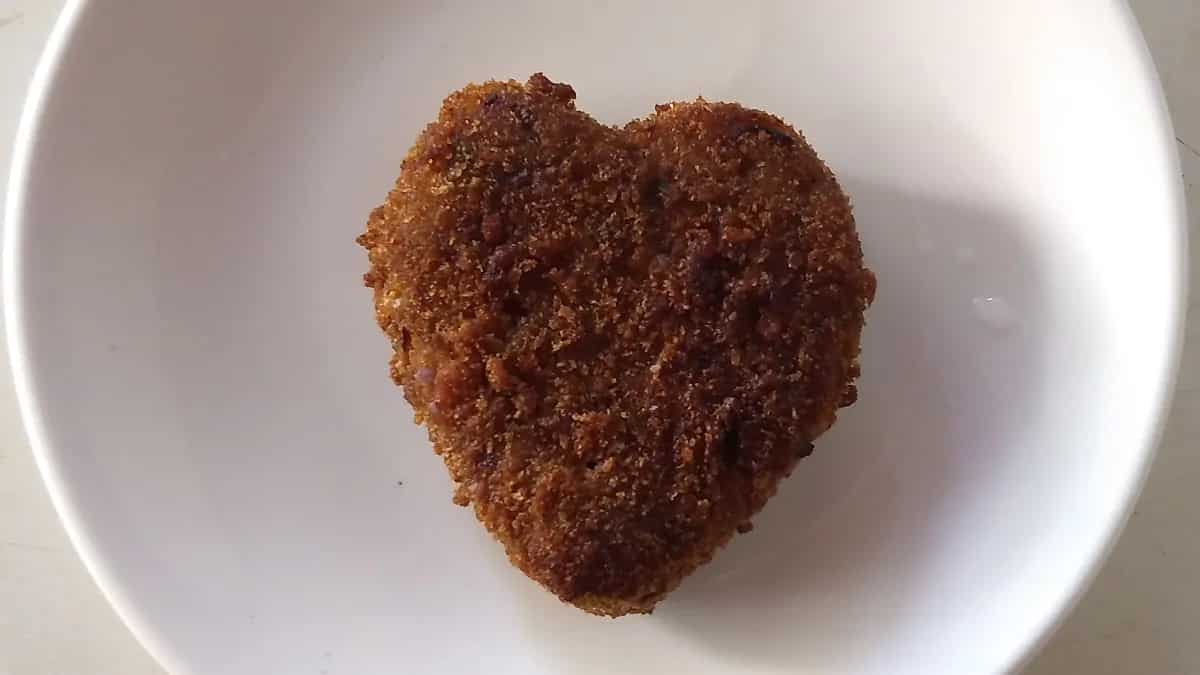
If a banana stem is sitting in the kitchen, do not ever dismiss it as kitchen refuse. The tender inner portion can be finely chopped after removing the tougher fibres into something delicious. Simply cook them until tender and combine with mashed potato, onion, green chilli, coriander, and a little roasted cumin. The cutlet mix is ready. Now shape them into small patties, coat lightly with breadcrumbs or semolina, and shallow-fry in your choice of oil. The banana stem imbues a pleasantly fibrous texture, while potato provides the familiar softness that makes the cutlet immediately approachable to all.
Also read: 6 Budget-Friendly Restaurants In Kolkata
Masala Murmura
Image credit: Wikimedia Commons
Puffed rice is one of the greatest emergency ingredients in an Indian kitchen. Toast it briefly in a dry pan. In the meantime, in another pan, warm a little oil and temper mustard seeds, curry leaves, green chilli, and peanuts if available. Then add a pinch of turmeric, then the puffed rice, and toss everything together. Finish with chopped coriander and a squeeze of lemon for extra freshness. The same inexpensive snack base can move around Indian states and regions simply through a change of ingredient or seasoning.
Leftover Vegetable Chop
A small amount of cooked mixed vegetables can be transformed into a tasty and fun snack rather than being served again in the same, uninspired form. Mash your leftover vegetables with boiled potato, ginger, green chilli, roasted cumin, and a little garam masala. Then add breadcrumbs or semolina, and shape them into small chops before shallow-frying. The trick is to make them small, as six little golden chops on a plate look far more abundant and appealing than three large ones, while the crisp coating makes yesterday's vegetables feel and taste completely different.