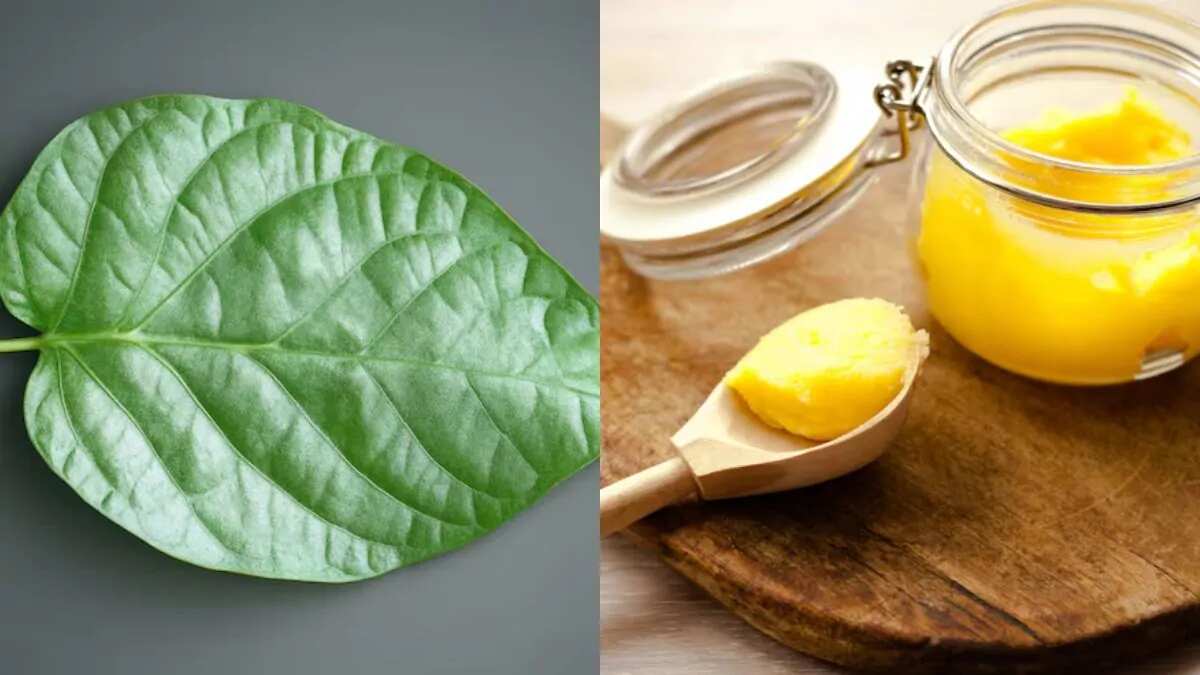
While scrolling reels on social media, you may have seen many people adding a betel leaf or paan ka patta while making ghee, and now you know why it's not just a random addition. At first, it may sound unusual as ghee is already rich, fragrant, and whole on its own. So why introduce something as particular as betel leaves to it? But when you have a closer, you will know it’s not just any random addition. Indian kitchens have always depended on small, thoughtful additions that have improved their flavour, digestion, or extended shelf life. This trend is like a modern rediscovery of that same instinct.
Ghee-making itself is a slow process, as watching butter melt, make foam, and turn golden. Adding a betel leaf only towards the end does not change the process drastically, but it lightly shifts the result. The beetle leaf releases a light, earthy aroma that mixes into the ghee, making it feel a bit deeper and more layered. It does not feel overpowering, but also noticeable if you pay attention to it. Beyond the usual flavour, many also believe it adds specific functional benefits. Here’s why this trend is catching awareness and how it might actually work for you as well.
Possible Benefits Of Adding Betel Leaves To Ghee
Betel leaves, often used in traditional practices, have a strong, a bit peppery aroma that can cut through the richness of the ghee. When added to hot, clarified butter, the leaf gently emits its oils, giving the ghee a slight lift. It does not make the ghee taste like paan at all, if you were thinking of it to be, but it softens the heaviness that ghee sometimes has. Many people also link this approach to older home remedies, where herbs were infused into fats to make them more effortless to digest and more useful in everyday cooking.
Helps Balance The Richness Of Ghee
Ghee is extremely flavourful but can sometimes feel a bit heavy, particularly during the summer or when used generously. Betel leaves have a bit of sharpness that balances this richness without also overpowering the taste. The result is a ghee that feels much lighter on the palate. It does not reduce the fat content, of course, but it changes how the ghee is experienced. This slight balance makes it much easier to use in everyday meals, whether you are drizzling it over dal, rice, or rotis, without feeling like it’s too much.
(Image credit: Freepik)
Supports Digestion
As a traditional practice, you may have seen people having paan after lunch or dinner; it's not just any random thought, but betel leaves are supposed to have benefits in digestion. When added to ghee, it is believed to carry over in a lighter form. Since ghee in itself is already known to support digestion when used in moderation, blending it with betel leaves makes a blend that feels softer on the stomach. This is particularly useful in hot weather when heavy foods can feel uncomfortable on the stomach, and also the digestive system slows down.
Adds A Subtle Aromatic Layer
What makes this even more interesting is not the flavour change, but a soft one. The aroma of betel leaves is distinctive, a bit warm, and feels slightly herbal. When added at the last stage of making ghee, it does not dominate but mixes in effortlessly. The ghee ends up scenting a little more complex, almost like it has an extra note that you cannot immediately identify. This makes even simple meals feel a bit elevated. This is a small change, but one that gives it depth without complicating the cooking process.
Reflects Traditional Infusion Practices
This trend also relates to a larger idea in Indian cooking, that is, infusing fats with ingredients for extra added value. From garlic-infused oil to the spiced ghee, there has always been a technique of enhancing basic cooking mediums. Adding betel leaves fits into this pattern as well. It’s not just about taste alone, but also about making everyday ingredients a bit extra. While it may feel like a viral trend now, it likely draws from older, less-known kitchen habits that concentrated on combining flavour with function.
(Image credit: Freepik)