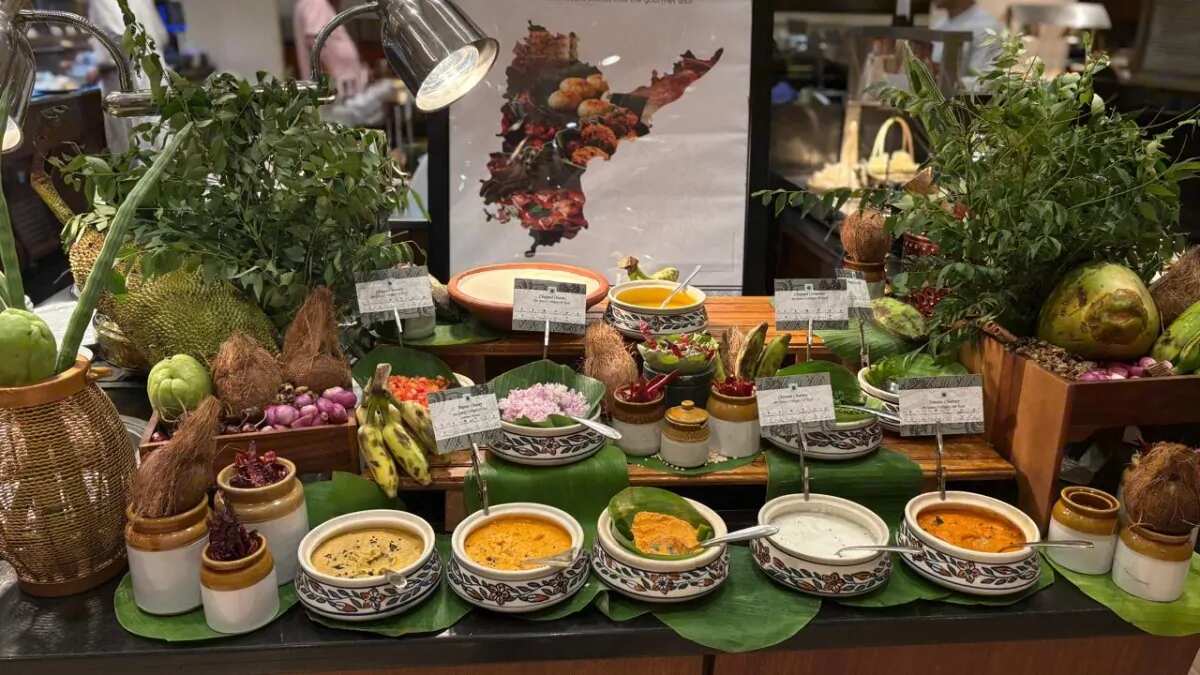
In a city teeming with pan-Indian restaurants, there’s something profoundly refreshing about a dining experience that doesn’t water down its roots. At ITC Maurya’s The Pavilion, known for its evolving thematic menus and all-day comfort, Dakshin Ruchi stood out as more than just a regional promotion—it was a powerful, flavourful assertion of identity.
Running for a limited time from July 6th to 11th, this curated showcase celebrated the robust, rustic, and rarely spotlighted cuisines of Andhra Pradesh and Telangana. From the smoky depth of a slow-cooked prawn curry to the grainy heartiness of finger millet mash, every dish had a story, and every course came with a deep sense of place.
But this experience isn’t the only one on offer by ITC Maurya’s The Pavilion–in fact, every month, this restaurant which shares a home with stalwarts like Dum Pukht and Bukhara (not to mention Avartana), offers a whole lineup of interesting food events that are grounded in regional Indian culture as well as the demands of Delhiites of every age. "There’s a growing appetite among diners for authenticity,” shared Mr Partab Bains, Head of Department – Food & Beverage at ITC Maurya. “Particularly for regional Indian cuisines that haven’t had the limelight. The bold, fiery flavours of Andhra and Telangana have long intrigued our guests. Dakshin Ruchi gave us the opportunity to present them in their true form—with flair, finesse, and integrity.”
And indeed, what unfolded at The Pavilion was a culinary journey through heat, heritage, and hospitality.
A Flavour Map Of The Deccan
Dinner opened with crisp paniyaram paired with velvety peanut chutney and podi, followed by a chilled glass of majjige, Andhra’s answer to spiced buttermilk. But from the first bite of the chepa vepudu—a pan-fried fish delicately seasoned and served with coriander chutney—it was clear that this showcase wasn’t playing safe.
The centrepiece of the meal, however, was the karevepaku royyala iguru. Plump prawns, slow-cooked in a tomato-coconut gravy and laced with curry leaves, offered a silky, smoky depth and a robust kick that lingered beautifully.
“This dish comes from coastal Andhra,” explained Executive Chef Shivneet Pohoja. “It’s slow-cooked so the prawns soak up the spicy, tangy gravy—made bold with red chillies and tamarind. The depth you taste comes from that traditional cooking method. It’s soulful, not just spicy.”
What followed was a parade of well-paired contrasts. The kodi kura, a fiery country-style chicken curry, came with delicate kal dosa (spongy instead of the thin variety most North Indians know about), while the humble pesarattu—a savoury green gram pancake—was reinvented with a trio of accompaniments: panasa kaiputtu (jackfruit bhaji), a comforting pumpkin dal, and a punchy garlic chutney.
And then came the ragi sangati, a finger millet mash typical of the Rayalaseema region. Warm, earthy, and served with a rustic sambar, this was comfort food elevated with quiet confidence.
“Millets like ragi are deeply tied to the rural foodways of Andhra,” said Chef Pohoja. “At ITC, we believe in Responsible Luxury, and that includes reintroducing sustainable grains into luxury dining. Ragi sangati might be humble in origin, but here, it’s honoured.”
To round off the evening, rawa kesari offered warmth and indulgence in a spoonful. But it was the mention of Pootharekulu that lit up the chef’s eyes. A rice paper dessert, ghee-laced and jaggery-sweet, it represents Andhra's poetic approach to sweets.
“Desserts weren’t just an afterthought,” Chef Pohoja noted. “We wanted a counterpoint to the fiery mains—and something that would stay with the guests. Pootharekulu, with its melt-in-your-mouth texture, was our ode to nostalgia.”
Where Regional Meets Refined
For Mr Bains, Dakshin Ruchi is part of a larger evolution. “The Pavilion isn’t just an all-day dining restaurant anymore. It’s becoming a canvas for India’s rich, regional food stories,” he said. “This is the direction we believe premium Indian dining is headed—away from generalisations, and toward nuance and cultural specificity.”
The showcase was also shaped by guest feedback and an increasing curiosity around Southern Indian cuisines. “We saw diners leaning in, asking questions, revisiting dishes they remembered from childhood. That kind of engagement—that emotional connection—is everything,” Bains added.
What’s On The Pavilion Menu Next?
While Dakshin Ruchi marked a high point for July, it’s just one part of the ongoing culinary programming that makes The Pavilion such a dynamic space. With daily themed lunches, dramatic Saturday feasts, and playful Sunday brunches, it’s clear that this is no ordinary hotel restaurant—it’s a platform for culinary storytelling.
Mandi Nights: Saturday Evenings with Yemeni Soul
Every Saturday, The Pavilion hosts Mandi Nights, where Yemeni-style rice dishes are served with flourish and generosity. Think tender meats, fragrant basmati, and a gentle layering of spices—all in a communal setting.
“Mandi, traditionally cooked in a taboon oven and spiced with hawaij, has parallels with Indian cuisine in terms of technique and comfort,” said Chef Pohoja. “We’ve kept it authentic but made it approachable. It’s become one of our most talked-about weekend offerings.”
“The shared-table format has clicked with guests,” added Mr Bains. “It’s theatrical, comforting, and ideal for families or group celebrations.”
The Pavilion Lunch Series: A New Cuisine Every Day
For those who think hotel lunches are predictable, The Pavilion’s weekday Lunch Series proves otherwise. Each day represents a different cuisine—from Deccan to Mediterranean to Sichuan.
“We created this for three kinds of guests,” said Mr Bains. “Business travellers looking for variety, locals looking for flavour discovery, and our loyal guests who love seeing something new on the menu each day.”
Behind the scenes, it’s a logistical feat. “Our team is trained to not just serve food but share its story—whether it’s the peppercorn profile of a Sichuan dish or the context of a regional Indian curry,” Bains noted.
Deccan Thursdays & Desi Wednesdays: Midweek with Character
Wednesdays at The Pavilion channel Delhi’s street food heritage—spicy, tangy, iconic. Thursdays take you deeper into Southern India, continuing the storytelling from Dakshin Ruchi with dishes that explore Deccan culinary traditions.
“Each menu is rooted in technique,” said Chef Pohoja. *“On Wednesdays, we recreate Old Delhi’s flavours. On Thursdays, we go back to ancestral methods of cooking that shaped South Indian food.”
Thematic Sunday Brunches: Mood Meets Menu
Then come the Sunday Brunches events that feel less like meals and more like experiences. From themes like “Retro Rewind” to “Millennial Mood”, each brunch blends food trends, nostalgia, and global innovation.
“Our younger diners especially love these themes,” said Mr Bains. “We’ve seen a rise in interest in Indian food with a twist—especially when it’s part of an engaging, Instagram-worthy experience.”
Looking Ahead: A Restaurant with a Voice
The Pavilion’s culinary team sees the space not just as a restaurant, but as a living, breathing showcase of India’s edible diversity.
“With our 24-hour format, we have room to experiment and evolve. We’re constantly innovating, without losing touch with our roots,” said Chef Pohoja.
“It’s about making every meal meaningful,” concluded Mr Bains. “Whether it’s a prawn curry that reminds someone of home, or a Yemeni mandi that introduces them to something new—we want guests to feel something with every bite.”
In a hotel where legends like Bukhara continue to rule the culinary landscape, The Pavilion is quietly writing its own legacy—one that’s immersive, introspective, and deeply Indian. Whether it’s the soulful ragi sangati or the fiery Royyala Iguru, Dakshin Ruchi proved that there’s a new kind of luxury on the table: one defined by honesty, heritage, and heart.