Even though tequila is almost universally recognised as a Mexican spirit, it’s not the only one. In fact, many other agave-based drinks originated in Mexico and are still produced there today. But first, why is agave so important to Mexico? Agave is so important to Mexico because it is the country’s largest export, with more than 80% of the world’s agave grown in Mexico to make tequila or mezcal. The Mexican government has actually been trying to increase agave production and make it a bigger export because they are worried that the plant’s population is diminishing fast. Agave plants take 10–15 years to mature enough to harvest, so the current stock that’s being used for tequila and mezcal will probably run out soon.
Pulque is the drink that is most different from the others on this spectrum. Pulque is made from a mix of agave and other ingredients like bananas, yams, and honey. It’s a fermented agave drink that’s made in a way that’s very similar to how wine is produced. The fermentation process for pulque is much different from that of tequila and mezcal. It’s actually a natural process that occurs when the sugars from the agave plants are mixed with bacteria.
Pulque has a very different flavour profile than tequila and mezcal because the fermentation process creates a very mild flavour that has almost no burning whatsoever. It’s actually more like drinking a really mild but really sweet beer than any other booze. The process for making pulque is very simple and has been around for thousands of years. Because of this, it’s a drink that’s still very popular in rural areas of Mexico.
History & Origin Of Mexican Pulque
Perhaps it makes sense that the rise in agave-based spirits would boost interest in pulque, one of Mexico's traditional drinks. This delicious and viscous beverage, which is prepared from the fermented sap of the agave plant, may be found in pulquerías, tabernas, and other businesses throughout Mexico City and the surrounding cities and states. The microorganisms present in the beverage that collaborate with raspadores, or tlachiqueros, the people responsible for its harvest, fermentation, and culture, are just as important to the manufacture of pulque as pride in one's country.
Image Credit: Wikimedia Commons
Pulque is fermented on a small scale by wild yeasts rather than lab-cultured yeasts. However, one must comprehend the importance of pulque's past and how it influences Mexican drinking culture today before delving into its production methods. Pulque predates even the Aztec civilisation by millennia, although it is frequently celebrated as the beverage of Aztec ceremony and deities.
Although the exact date of pulque use is unknown, archaeological evidence dates it to at least 2000 BC among the Hñññú (Otomí) people of central Mexico. Fermented agave beverages, utilised for both drinking and ceremonial purposes, are also depicted in ancient Mayan glyphs. Later, numerous other Mexican civilisations used pulque and other fermented drinks. Although it went by several names, including octili among the Aztecs, xè in Ixcateco, zo in Zapotec, and chih for the Maya, the name pulque most likely originates from the Nahuatl word poliuhqui, which means ‘decomposed.’
Image Credit: Pexels
These several names demonstrate the importance and extensive use of pulque. Agave sap is traditionally fermented in a tinacal to make it. Pulque lost its ceremonial significance and became a common beverage during Spanish rule. It withstood colonialism, but in the early 1900s, mass-produced beer and negative publicity disregarded it, portraying pulque as unsanitary while beer was marketed as sophisticated and contemporary.
The quantity of pulquerías and tabernas in Mexico City quickly decreased, giving way to cantinas and bars where beer and later distillates like tequila would become popular beverages. The few pulquerías that still exist in Mexico City bear witness to the tradition of pulque, even though it may not be as popular as it once was. In the rural areas around the city, several communities still extract pulque for commercial sale and consumption.
How Is Pulque Made?
Uncooked and fermented, pulque is not distilled. The fundamental procedure is largely the same, despite minor geographical variations. It takes about 10 years for an agave plant to reach maturity. A tall shoot known as a quiote starts to grow when it's ready. After this is severed, the plant is allowed to rest for a month or more to allow the sugars to accumulate inside.
When it's ready, the raspador or tlachiquero removes portions of the agave leaves to get at the piña, or core. To facilitate harvesting, the sharp edges are shaved down. After that, the bulb's top is scraped until it begins to release aguamiel, a pleasant sap. Although many individuals today use recycled plastic bottles, an acocote—traditionally a dried gourd—is used to gather this sap. When fresh, the aguamiel is delicious and revitalising. An agave is typically scraped twice a day and can provide one to eighteen litres of sap. It can continue to produce sap for several months, but it needs consistent care. The gathered aguamiel is transported to a tinacal, where wild yeast naturally ferments it. Although the scientific names of the various agave species used to make pulque, or agave pulqueros, vary, each location has its own unique local variants and customs.
Image Credit: Unsplash
Pulque In Modern Mexico
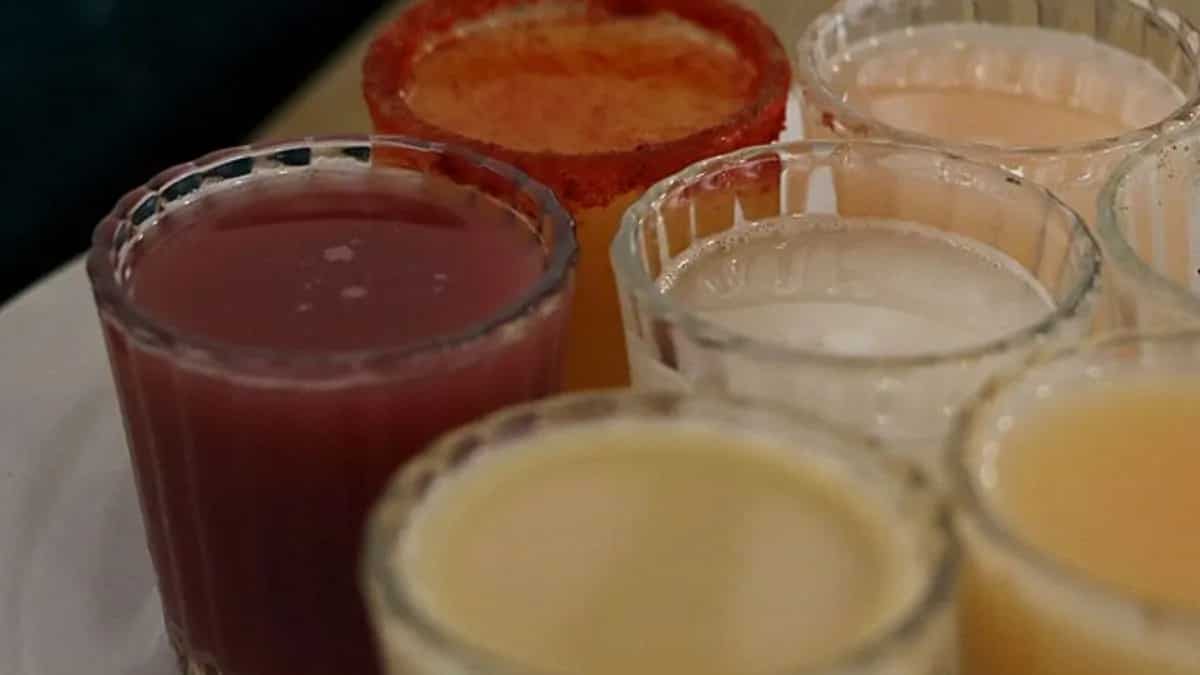
Curados, or flavoured or cured pulque, are widely available in Mexico City (though they are less prevalent outside of the city). Some are prepared using the pulp or juice of fruits and vegetables like celery or tomato, while others are combined with dairy products to provide creamy flavours like chocolate or cookies and cream.
Curados are an attempt to make pulque more palatable for people who aren't accustomed to its distinct flavours, but there is some criticism that the method can also be used to disguise rancid, vinegary off-flavours and cover over subpar pulque. Additionally, they occasionally contain covert ingredients that are employed to increase the viscosity of the beverage, like fake sugars or nopales.
Image Credit: Wikimedia Commons
Recently, attempts have been made to industrialise pulque in cans and bottles. These mass-produced pulques can drastically change the flavour of what real pulque should taste like because they are frequently loaded with additives designed to stop or slow down fermentation.
You can always enquire about the pulque's origin or harvest date as a conscientious consumer. Alternatively, if you're in Mexico, you can work with one of the many tour operators who will directly assist regional pulque makers. After all, the best pulque comes from its natural source and can be drunk guilt-free.