In Hyderabad, you will be fed lavishly, emotionally, and almost ceremoniously. Here, food has always meant much more than just eating, from wedding feasts and late-night biryani rituals to houses where an extra visitor is never considered too much. Nevertheless, the city started eating alone somewhere between gated enclaves, never-ending workdays, food delivery apps, and screens that never shut off. Families grew smaller, friendships were more difficult to maintain, and social life gradually shifted to scrolling and group chats. The circle surrounding the table had started to get smaller, but the table itself was still there.
Image Credit: Jungshi Imti, A Third Space Project
The tables started to fill up once more as these small get-togethers quickly transformed into havens of food and discussion. Supper clubs appeared in Hyderabad as a quiet recalibration of the city's dining culture rather than with much fanfare or show. The inspiration for A Third Space Project came from a very personal event for its creator, Jungshi Imti. Four years ago, he moved to Hyderabad to pursue his master's degree. A sense of community was initially provided by college life, but it quickly vanished once he entered the workforce and finding comfort in food became a challenge.
How Food From Nagaland Finds Its Audience In Hyderabad
‘I called my supper club A Thirdspace Project because Hyderabad with all its skyscrapers & fancy spaces lack “affordable” (Third) spaces where people from all walks of life can intersect and share cultural knowledge. Be it Naga, Manipuri, Assamese or Parsi, there are no restaurants in Hyderabad serving authentic food from underrepresented communities. It makes me wonder how a city with so many Eurocentric restaurants can be so selectively diverse.,’ he tells Slurrp. Jungshi missed intimacy, the type that doesn't need to be explained rather than attention. Friendships had always been a part of daily life back home. People unexpectedly showed up. Friends prepared meals together. Everything took place in the kitchen. That comfort seemed far away and perhaps even unreachable in Hyderabad.
The question lingered in his mind– ‘If there are no common spaces where people from different cultures intersect, how can we tell our stories? How can we share the food that shapes our identities?’ Imti made the decision to create that space rather than wait for it to show up. With A Third Space Project, he now conducts dinner gatherings all throughout Hyderabad, providing a forum for voices and cuisine cultures to be seen and eaten. He carried that emptiness for over two years until he resorted back to cooking, the one activity that always made sense to him. Jungshi uses his grandmother's recipes for everything.
Image Credit: Jungshi Imti, A Third Space Project
It all comes down to maintaining authenticity when serving Naga food to guests who could be trying it for the first time. He explains that Naga cuisine is fundamentally basic and based on the concepts of sharing and abundance. The majority of the ingredients he uses are either brought in bulk by northeastern "aunties" in the city or directly from his home in Nagaland. Substitution is rarely a possibility as a result. He states, "There are no ingredients one can really replace in this cuisine," pointing out that the unique flavour of Naga cuisine is derived from items that are difficult to duplicate. But there are drawbacks to such dedication to realism.
With Every Supper Club Dinner, Jungshi Imti Expands Hyderabad’s Culinary Curiosity
When planning his suppers, Imti is aware that limited availability frequently translates into greater expenditures. Even if it means cooking more than he needs and subsisting on the leftovers for days, he makes an effort to cover as much of the cost as he can. He acknowledges that the choice is personal. Imti knows how difficult it may be to access unique dining experiences because he was a newcomer to the city and struggled to pay rent. He claims that maintaining the integrity of the cuisine he serves is just as crucial as keeping the suppers as inexpensive as possible.
Image Credit: Jungshi Imti, A Third Space Project
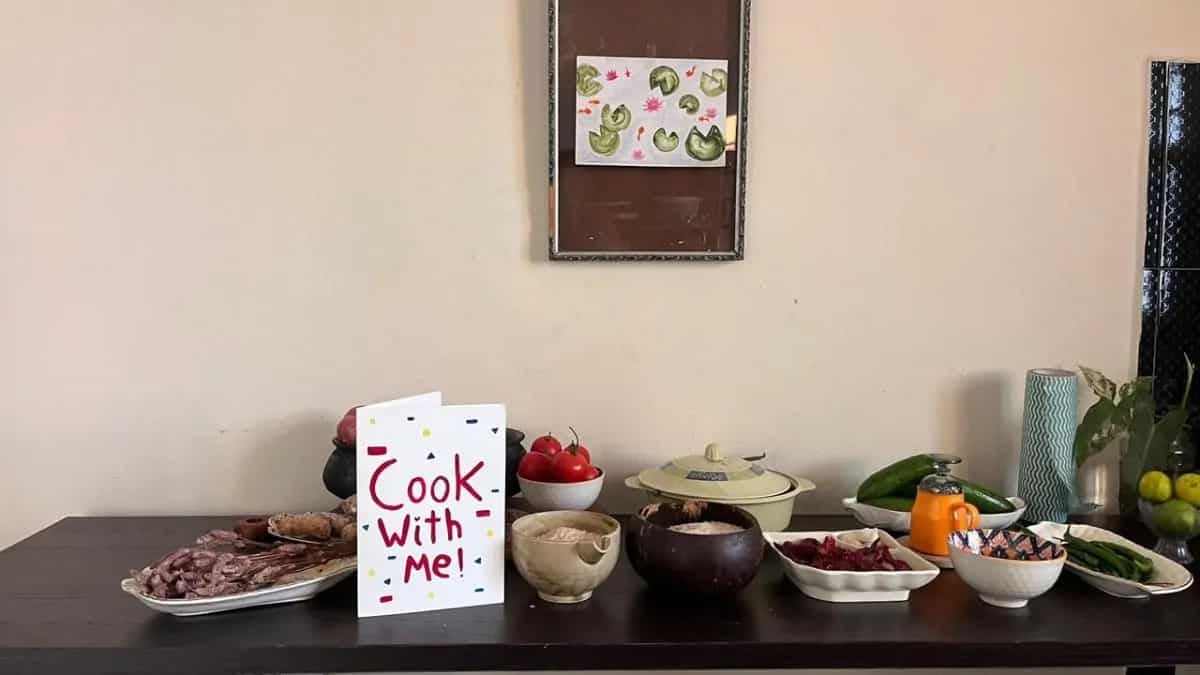
Imti is also well aware of the various misunderstandings about Naga food that exist throughout the nation, many of which stem from individuals who have never tried it. He claims that there is also sincere interest because a lot of folks just don't know how or where to get the cuisine. He attempts to close that gap with his "Cook With Me" dinners. The events are intended to provide casual introductions to the cuisine, when attendees prepare, eat, and converse in a welcoming rather than intimidating setting. People can experience Naga cuisine without passing judgement and develop their own thoughts as they go. Awareness can’t exist without experience, he mentions. “I believe awareness must always be enforced with experience to ensure any kind of impact,” he says.
Sometimes the conversations that emerge around the table can be uncomfortable, but he sees them as necessary steps toward understanding. Around the table, stereotype-driven questions are bound to come up. “Why do you guys eat dogs?” is among the most common ones he hears. Imti utilises these talks as an opportunity to dispel myths and start more in-depth conversations about culture and representation rather than shutting them down.
Slurrp questioned Jungshi Imti on whether introducing Naga cuisine to a Hyderabad audience was made simpler by their mutual love of meat, but Imti dismissed the notion. "Absolutely not," he replies. Although meat plays a major role in all culinary cultures, the underlying ideas are very different, he spotlights. Diners in Hyderabad frequently like chicken or mutton that has been cooked with a lot of spices, which help to shape the flavour. In contrast, Naga cuisine places a strong emphasis on aromatics and lets the protein's inherent flavour take centre stage.
Image Credit: Jungshi Imti, A Third Space Project
“The whole approach to meat consumption is as different as the preparation,” Imti explains, noting that Naga food celebrates a wider variety of meats and a far more restrained use of spices. Introducing those flavours to a new audience has not always been easy. Yet, he says, the city has been far more open than he expected. To ease diners into the cuisine, Imti began with dishes centred around bamboo shoot, a familiar but distinctive ingredient. Now, however, he is ready to take things a step further. “It’s time to bring the axone out more often,” he says with a smile, adding, “wish me luck!”
For Anyone Far From Home, A Third Space Project Offers A Place To Belong
When discussing Northeastern cuisine, the topic of home invariably comes up. He claims that regional food is as essential to identity and memory as any other Indian regional cuisine. The distance from home might feel especially acute when such flavours are hard to come by in places like Hyderabad.
‘I would like people to understand that there is a rich world of fermented foods, smoked meats, indigenous herbs, and cooking traditions that remains unexplored in the North East and it would be very lovely for people with curiosity and resources, to help create spaces where these food cultures can exist in their purest form through thoughtful collaborations with people from the region who carry these traditions’ he adds.