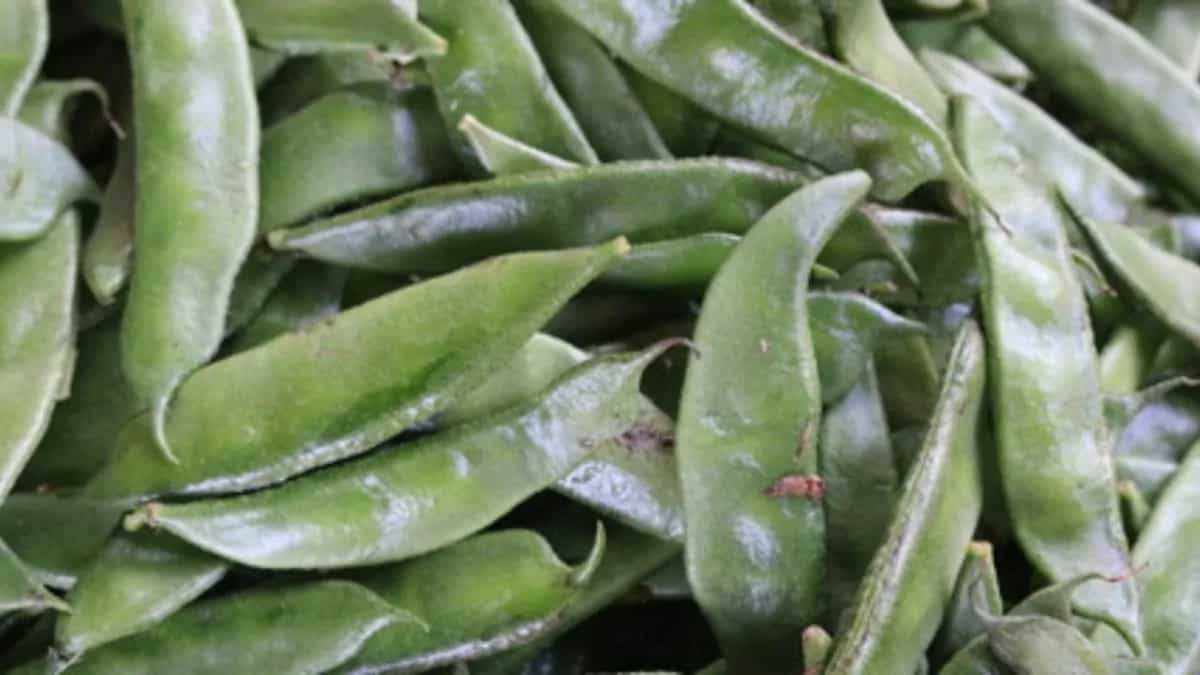
With a food map so vast when it comes to daily meals like dal, curries, and rice, Indian kitchens also give their seeds and legumes a very important spot on their plates. Legumes fit perfectly into the logic of Indian cooking; they are cheap, shelf-stable, deeply nutritious, and most crucially, they are extraordinary canvases for spice. Among all the legumes woven into Indian culinary tradition, few are as fascinating or as underappreciated outside the subcontinent as the hyacinth bean known across India by a beautiful scatter of regional names.
Image Credit: Adobe Stock
The plant itself is striking. It climbs with ambition, produces gorgeous purple flowers, and bears flat, glossy pods that range from deep violet to pale green. Both the pods and the dried seeds are eaten, though the beans carry a mild toxicity in their raw state that is easily dispelled through soaking, boiling, and discarding the cooking water, a step that Indian cooks have known instinctively for generations. What makes the hyacinth bean so emblematic of Indian culinary intelligence is how it demonstrates the culture's patient, accumulated knowledge, and so here are a few recipes you can try with it:
Masala Avarebele, Karnataka
In Karnataka, avarebele or the hyacinth bean, also known as field bean or valour, is not just an ingredient. The fresh beans flood markets across Bengaluru, and the rest of the state, and Karnataka's kitchens respond with an enthusiasm that borders on ceremony. Small, flat and pale green with a thin skin that carries a slight bitterness, a nuttiness, it also has a creaminess when cooked that no other legume quite replicates. The masala avarebele is cooked down with onion, tomato, and a freshly ground spice paste and is the version that earns the most loyalty. Rich, deeply flavoured and best eaten with ragi mudde or rice, it is Karnataka comfort food at its most honest and most satisfying.
Vaal Nu Shaak, Gujarat
Vaal nu shaak is a spicy, sweet and aromatic dish made from hyacinth beans. They’re cooked in a spicy and tangy gravy made with a blend of aromatic spices such as cumin, coriander, and turmeric. The use of tamarind pulp and jaggery or brown sugar gives the dish a sweet and sour flavour profile that perfectly balances the heat from the spices. Shaak is usually made from vegetables that are in season, which ensures that the dish is not only delicious but also nutritious. The use of spices, such as cumin, coriander, and turmeric, is also a hallmark of Gujarati cuisine.
Muiya Shim, Tripura
Shaped by the forests, the rivers, and the hill terrain that have defined the state's food culture for centuries, the kitchen here draws from what grows close, what can be preserved and what the season makes available. Bamboo shoots and hyacinth beans are both answers to that question, and Muiya Shim brings them together. The fermented shoot softens slightly with the heat but holds its character, the sourness deepening rather than disappearing, the pungency becoming something rounder and more complex as the dish comes together.
Sem Ki Phali, Uttar Pradesh
The classic preparation sem ki phali is cooked down with mustard seeds, ginger, tomato, and a generous hand with the coriander is the version that appears most reliably in home kitchens across Uttar Pradesh and Delhi. Dry-cooked until the beans are tender and the masala has clung to every surface, it is best eaten with hot phulkas and a smear of ghee, a combination so straightforward it needs no improvement and tolerates no substitution.
Image Credit: Freepik
Shim Chorchori, West Bengal
The cooking begins with mustard oil heated until it smokes, followed by panch phoron, the Bengali five-spice blend of fenugreek, nigella, cumin, mustard, and fennel seeds that crackle and release their fragrance the moment they hit the oil. Dried red chilli goes in next, then the shim, cut on the diagonal and tossed with turmeric and salt. What makes chorchori distinct is its dry nature; no gravy, no sauce. The vegetables cook down in their own moisture, the spices clinging to the surface rather than floating around them. Potato is almost always added, sometimes raw banana too, each ingredient softening at its own pace and contributing a different texture to the finished dish.