WELCOME, gourmands and culture vultures.
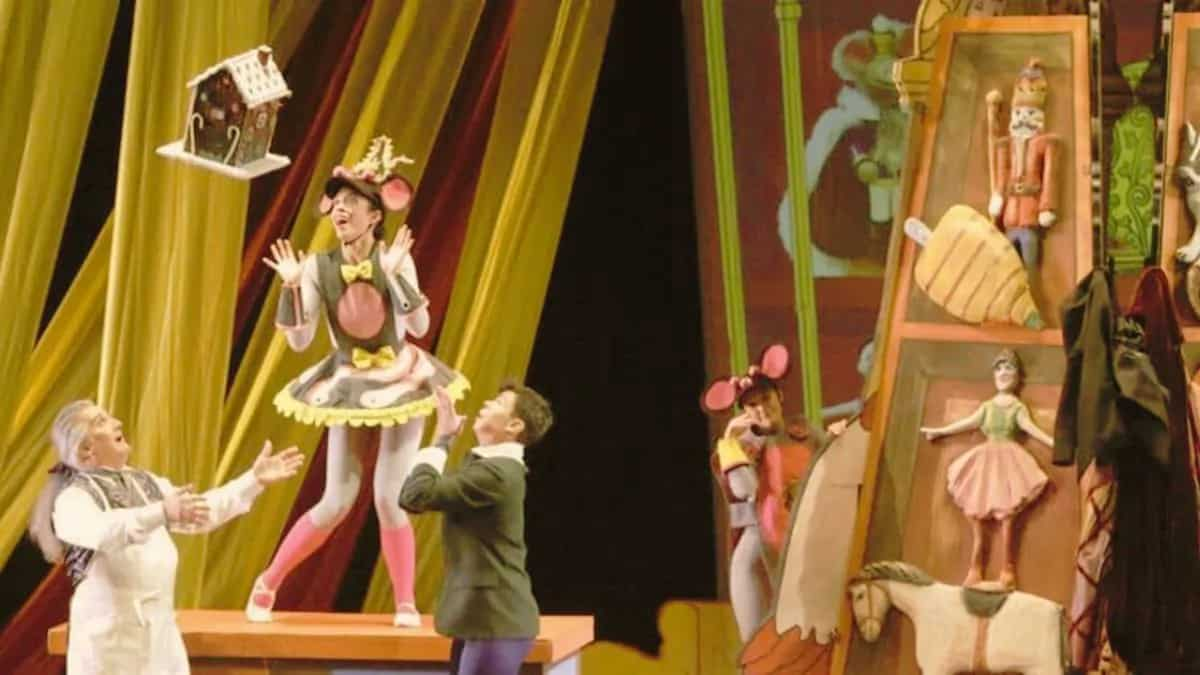
The 133rd anniversary of The Nutcracker recently passed us by. Traditionally, this is marked by reverent applause for the Sugar Plum Fairy. But let’s be honest: the ballet is, at heart, a lavish hallucination about snacks.
And it’s far from alone. Long before enchanted cutlery hit Broadway, the stage was already teeming with sentient vegetables, militant crockery, and desserts with suspicious amounts of agency.
To mark the occasion, we’ve curated a Gala Dinner Programme of the performing arts’ most edible characters. Forget the Michelin Guide. This is the only menu where the ingredients have rhythm, personality, and, occasionally, a personal grievance.
Take your seats. The curtain — and the menu — is about to rise.
THE SERVICE (CROCKERY & KITCHENWARE)
To begin, we set the table. In the magical world of the stage, plates don’t just hold the food — they steal the show.
Mrs Potts & Chip
From: Beauty and the Beast (Musical)
The matriarch of the kitchen. Mrs Potts is comfort incarnate: a teapot with the soul of a soothing grandmother. Her son, Chip — crack and all — is proof that “character” is just damage with good PR.
Together, they anchor Be Our Guest, which is less a song and more the hospitality industry’s most high-maintenance group project.
The Chorus of Flatware
From: Beauty and the Beast (Musical)
If you’ve ever wondered what a spoon does after hours, this is it. In a Busby Berkeley-style extravaganza, napkins, plates, and forks form geometric patterns that would make a synchronised swimming team nervous. This remains the gold standard for dancing dinnerware.
Chef Bouche
From: Beauty and the Beast (Musical)
Every kitchen has a temperamental chef. In this castle, he’s also a stove. Chef Bouche is a moody artist made of pots and pans, prone to weaponising molasses and feathers when displeased.
In short: do not send the risotto back.
The Wedgwood Teapot & The Chinese Cup
From: L’Enfant et les Sortilèges (Opéra)
Think “Goth Disney,” but angrier. In this avant-garde opera, the crockery isn’t here to serve — it’s here to settle scores.
A black Wedgwood teapot boxes like a prizefighter, shouting in broken slang, while a porcelain Chinese Cup delivers multilingual sass with alarming confidence. It is chaotic, fragile, and deeply unserene. Which is precisely the point.
THE SAVOURY ENTRÉES (VEGETABLES & FRUITS)
A course dedicated to the garden. Proof that if you leave vegetables alone long enough, they will organise.
Cipollino (The Little Onion)
From: Cipollino (Ballet)
Imagine Les Misérables, but everyone is produce. Cipollino is a plucky Little Onion leading a working-class uprising against the aristocracy of the fruit bowl.
He is, unequivocally, the hero the salad bar deserves.
Prince Lemon & Signor Tomato
From: Cipollino (Ballet)
The villains of the patch. Prince Lemon presides over the “fruit aristocracy,” taxing sunshine and rain with imperial zeal, while Signor Tomato serves as his red-faced, pompous enforcer.
It’s a literal food fight between sweet and savoury — and no one stays clean.
King Carrot
From: Le Roi Carotte (Opéra-féerie)
Long before VeggieTales, there was King Carrot — a root vegetable usurper conjured into power by a witch named Coloquinte (yes, that’s Bitter Gourd). In modern productions, his massive orange headpiece makes the metaphor mercifully unsubtle.
The Court of Vegetables
From: Le Roi Carotte (Opéra-féerie)
A full procession of radishes, beets, and turnips pulled from the soil to form a satirical royal court. They may look elegant, but they are still, fundamentally, dressed-up roots.
THE GRAND SUCRÉ (SWEETS & CONFECTIONS)
The pièce de résistance. The reason we are all here: the sugar rush.
The Sugar Plum Fairy
From: The Nutcracker (Ballet)
The absolute Queen of Confectionery. Ruler of the Land of Sweets, she greets guests with a celesta-heavy solo that sounds exactly the way sparkling sugar tastes.
Light. Airy. Technically terrifying.
The International Delicacies
From: The Nutcracker (Ballet)
Tchaikovsky’s travelogue of treats: Spanish Chocolate (fiery, trumpet-heavy), Arabian Coffee (slow and steamy), and Chinese Tea (crisp and jumpy).
And then there’s Mother Ginger — a towering gingerbread figure concealing an army of bon-bons beneath her skirt. As one does.
Princess Praline
From: Whipped Cream (Ballet)
If The Nutcracker is a polite dessert, Whipped Cream is a sugar binge. Princess Praline rules a kingdom made entirely of Schlagobers (Viennese whipped cream). She arrives in a “fantastic procession” to save a boy hospitalised after eating too much cake.
A narrative arc we all recognise.
The Court of Confections
From: Whipped Cream (Ballet)
A full-blown dessert fever dream. Prince Coffee. Don Zucchero (Mr. Sugar). Armies of Marzipan Archers and swashbuckling Gingerbread Men. It is visually stunning, narratively unhinged, and alarmingly calorie-dense.
Gingy
From: Shrek the Musical
A sweet, earnest cookie baked by the Muffin Man, Gingy endures milk-dunking torture and lives in fear for his gumdrop buttons.
Proof that being delicious is, historically, a risky career choice.
THE DIGESTIFS (LIQUORS)
A darker finish. Strictly for the adult palate.
The Liquor Bottles
From: Whipped Cream (Ballet)
Yes, there is a ballet where the booze dances. Specifically: Marianne Chartreuse, Ladislaw Slivovitz, and Boris Wutki.
In a surreal hallucination sequence, these spirits leap from their bottles to intoxicate hospital staff. It’s a tipsy, delirious finale — and the correct way to end a very heavy meal.
CHEF’S NOTE
Whether it’s a revolutionary onion or a tea set staging a Broadway revue, food has long been one of theatre’s most reliable scene-stealers. It sings, it dances, and occasionally, it throws a punch.
So as you celebrate the season, raise a cup — ideally poured by a sentient teapot — to the most delicious characters ever to grace the stage.
Bon appétit! Enjoy the show.