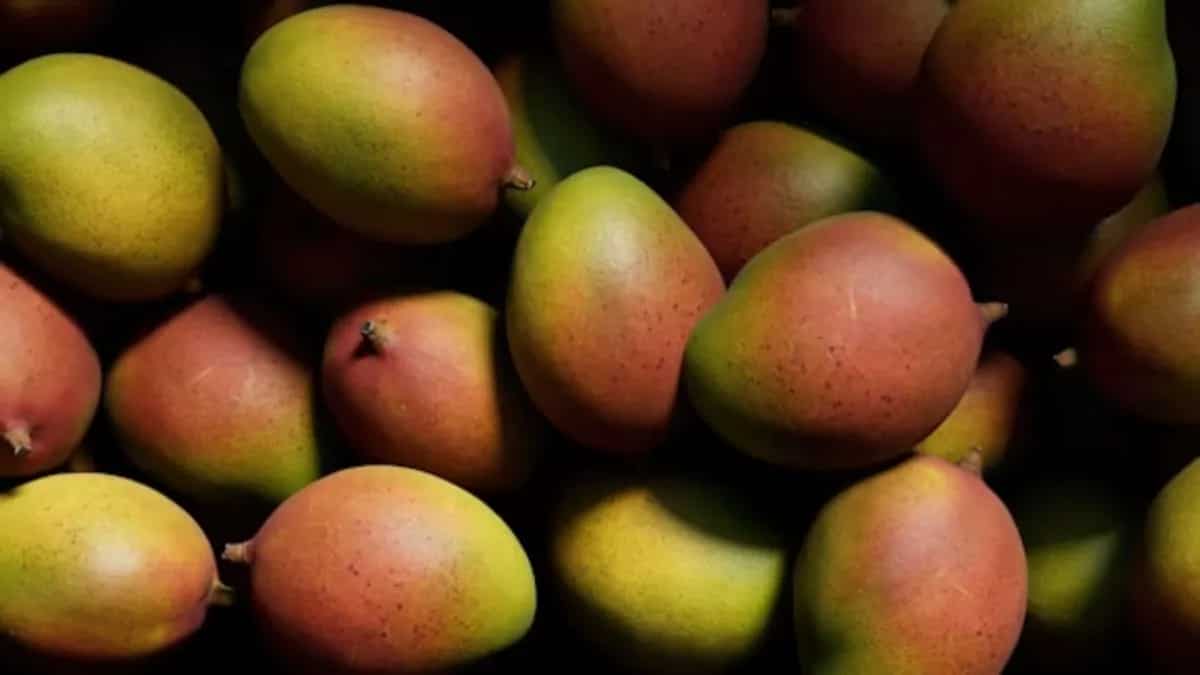
One small internet search can let you know that India produces more than 1,500 mango varieties out of which merely 10-30 types are known by the world and the country’s people. Some mangoes have claimed their spots for the way they are grown, flavour profile and so on while other lesser-known ones are grown for or by a community of people.
Image Credit: Unsplash
But at the end of the day, Indian mangoes reign supreme all over the world. Your childhood, your life, your summer memories are shaped around these incredible mango varieties. The stories reflect in the way you feel the taste of each mango after every meal and you know this is what has shaped your culinary taste buds.
Mangoes are a summer mood in India and here are 7 unique and tasty mango varieties that live to tell the tale!
Malgova Mango
This particular mango variety is apparently premium and ultra-luxurious and is a native to South India, especially Tamil Nadu and Karnataka. They are said to weigh between 350 - 450gm which is quite heavy when compared to other mangoes. What’s unique about this mango is the oval-to-oval shape it grows in with a yellowish-green tinged skin and a small white lenticil when ripe in form. The term, ‘malgova’ comes from the native word, ‘paal’ meaning milk and ‘khova’ meaning solid and sweet milk desserts. And it is very evident why the name is so since these mangoes have a creamy dessert-like taste. Ideally grown in the Salem district of Tamil Nadu,they require a climate that is warm and tropical through and through. What is interesting here is that the trees are grown in the winters, then the flowers bloom and these turn into fruit in the summers. The malgova mangoes are considered to be a practical choice for many families due to the size that can feed a large group but it takes longer to grow but it’s a carbide-free variety which has a great health impact.
Image Credit: Unsplash
Rani Pasand
If West Bengal is considered the land of sweets, then even in terms of incredible mango varieties, they top the category with rani pasand mangoes, all the way from Murshidabad, once a district that was a royal throne for Nawab Murshid Quli Jafar Khan, Nawab of Bengal who had promoted for cultivation of mangoes by setting up orchards when he shifted his capital from Dhaka, Bangladesh in 1704. Murshidabad orchards alone grow around 124 varieties and one of them is rani pasand. Of course, the name stems from the likes of the queen herself. After the fall of Nawab Siraj-Ud-Daulah, most of the heirloom variety of mangoes have lost its way with its trees called Mirza pasand nowhere to be found or even if there are some, it's very little. If you ask people around Bengal about rani pasand mangoes, they will tell you how these fruits had timeless tales of their Chhote Nawabs who upheld this mango culture. These mangoes are small, do not have any fibre and mature very quickly in a bright yellow hue. During those times, these mangoes were treated as precious jewels where everyone had to tend to them wearing cotton gloves, chopped with real silver knives and rested on cotton beds for keeping the flavour and texture intact.
Mithila Bambai Mango
Bihar is a state of not only diverse cuisines and desserts but also a real ace when it comes to growing the rarest and most incredible Indian mangoes known to you. Mithila bambai mango grows in Bihar since the climate is a perfect balance of scorching summers and pleasant monsoons. This particular mango is grown on the entire stretch of Northern Bihar in June when the season is at its peak. Fresh, firm, fibreless and aromatic, Mithila bambai are medium-sized mangoes weighing around 150g-200g and stays green even after it has ripened up. That’s why locals who consume this mango call it bambai hara for its distinctive green. With Mithila being a hotspot for growing mangoes, the town also holds several mango festivals and fests to celebrate the variety. Some of Mithila’s literature and folk songs also speak about these mangoes in great volume.
Saranga Mango
Tracing the roots of the most incredible mangoes in India with amazing stories, having Murshidabad in it, is very fitting. As you already know, the mango culture of Murshidabad and its orchards, another mango that comes to mind is the saranga mangoes. This mango is an early-season variety of mango that was growing under the Nawabs of Bengal having a juicy centre with minimal to no fibre at all. What does this mean? It means that Saranga mangoes, when taken a bite into, do not pull apart in strands like other mangoes like a string, you just bite into chunks of fresh mango. Once ripe, the skin is golden-yellow and the size of the tree because it has been grafted makes it possible for many to grow them in terrace gardens or balcony gardens.
Image Credit: Unsplash
Fernandin Mango
Also called Ferdinand, these mangoes hail from Goa and are perfect for those people who enjoy a slight tart-flavour in their mangoes. This local variety of mango is a late-season bloomer across the Konkan coast, it grows into a small oval shape and shines in red and yellow. While the flesh is yellow and fibreless, the seed is small and monembryonic. The most interesting aspect of these Fernadin mangoes is that they are resistant to spoilage from rains and fruit flies! Since it takes time to grow, these mangoes are harvested in the month of June and are usually kept with other table fruits on the fruit tray.
Udgo/ Manukurand Mango
The renowned summer staple of Goa, mancurad, formerly malcurada or malcorada, derives from the Portuguese term “malcorado” which means bad colour. In Portuguese, “mal" means bad while “cor” means colour. It eventually became mankurad aamo (mango) in Konkani, the state language. Sometimes it is also called udgo or udga depending on the sub-type and fibre of the fruit. Fibreless, deeply aromatic with a taste that lands somewhere between honey and caramel, layered with hints of allspice and cinnamon, no other mango tastes quite like home to a Goans.
Malgesh Mango
This variant, also called malgesta, malgessa, malgueso, and malgess, is common in North Goa and varies in fruit colour, size and quality. The name means “difficult to digest” in Portuguese and the fruit is served as a table fruit along with other fruits. The two varieties that are popular and an incredible Indian mango variety are the Khand malgesh having thick skin and lighter in taste while Akno malgesh is of higher quality. The Malgesh is what growers call an alternate or irregular bearer or a medium yielder which means it doesn't flood the market every season and that irregularity makes it quietly precious. The mature fruits are preferred for making mango chutney or sweet pickle where that tanginess and intensity shine rather than compete.