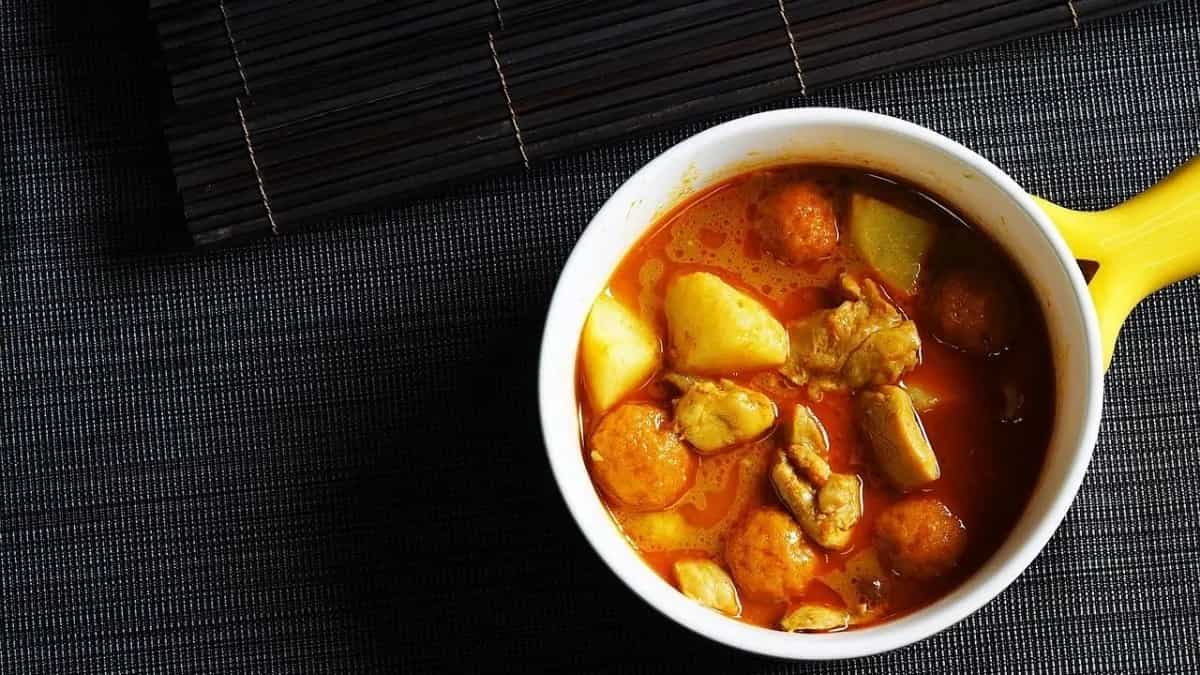
Making good gravy with the correct consistency is an art few have mastered. Of course, you see your mothers and grandmothers perfect it every day in their kitchens, but ask them, and you will know that it took them years to reach that level of perfection. The main secret behind a good, luscious gravy is its correct consistency, and we have some tips, tricks, and hacks for you to crack the code!
From classic thickening agents that have withstood the test of time to unconventional yet surprisingly effective tricks, join us on this flavourful adventure as we unveil the secrets to achieving the perfect consistency in your gravy. We'll explore simple yet effective techniques, reveal hidden ingredients that work wonders, and arm you with the knowledge to rescue any thin gravy emergency. With these kitchen hacks up your sleeve, you'll never have to settle for thin gravy again!
Besan Powder
Another great way to adjust the consistency of your gravy and make it thicker is by adding roasted besan or gram flour to it. If you see that your gravy is becoming too thin, especially in Indian curries, all you have to do is roast some besan without oil in a thick pan and add it to the gravy. But remember, this only works with nicely roasted besan; otherwise, there would be a raw, nutty smell in your gravy.
Flour
If you don't have cornstarch on hand, you can use flour as a thickener. Mix a few tablespoons of maida or wheat flour with an equal amount of cold water to create a smooth paste. Slowly whisk the paste into your gravy and let it simmer for a few minutes to thicken. Remember to cook the flour thoroughly to avoid a raw taste.
Image Credit: Pixabay
Potatoes
For a natural thickening method, try adding mashed potatoes to your gravy. Simply cook and mash a small portion of potatoes until they are smooth, then whisk them into your gravy. The starch in the potatoes will help thicken the sauce, adding a subtle flavour and velvety texture.
Arrowroot
Similar to other pure starches, arrowroot is almost entirely composed of carbohydrates and contains no protein; hence it does not have the same nutritional value as wheat flour. Compared to flour or cornstarch, arrowroot thickens at a lower temperature, is less sensitive to acidic components, has a more neutral flavour, and is unaffected by freezing. Dairy and it don't mix well together, resulting in a slimy mess. For acidic foods, arrowroot is a better alternative than cornstarch, which loses thickening strength in acidic combinations. Before adding arrowroot to a hot liquid, it is advised to combine it with a cool liquid.
Image Credit: Pexels
Rice Flour
A type of flour formed from rice that has been finely ground is called rice flour. It differs from rice starch, which is often made by soaking rice in lye. Wheat flour can irritate the digestive systems of people who are gluten intolerant; thus, rice flour is a particularly appropriate replacement. Due to its ability to prevent liquid separation, rice flour is also employed as a thickening agent in recipes that are meant to be frozen or refrigerated.
Tapioca Pearls
Tapioca pearls are a very famous ingredient that is used in bubble teas. What people don't know about them is that they are obtained from the root of the cassava plant. Tapioca is a very potent ingredient, and just 1 ½ tablespoons of tapioca starch is enough to make the liquid thicker. One should be extremely careful about adding tapioca starch to the liquid and only slowly add it to avoid overuse. Adding too much of the starch might make the gravy too thick.