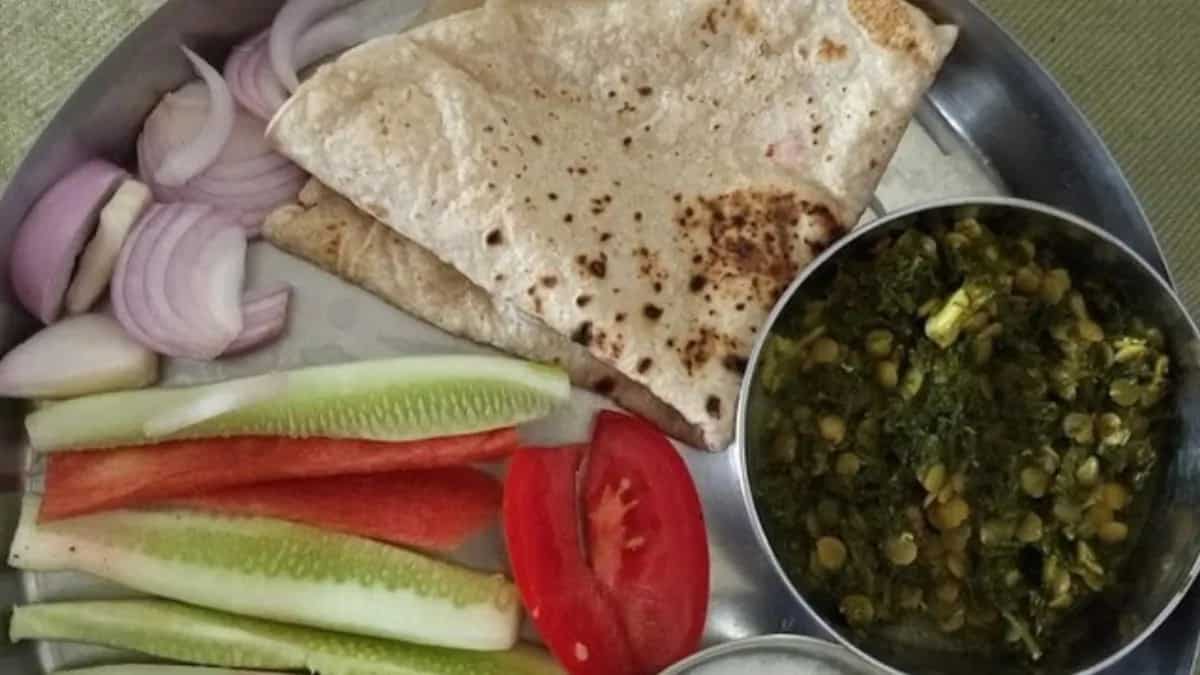
Dipping into traditional, rustic Maharashtrian fare? This simple, wholesome lunch needs to include staples like a bhakri-bhaji pairing, comprising a freshly made warm flatbread and a seasonal vegetable. Bhakri-bhaji is a staple across several Maharashtrian regions across Vidarbha, Konkan and Marathwada.
In each province, different types of bhakri are prepared according to the changing seasons. Jowar and rice bhakri can be made around the year, still others like bajra bhakri are reserved for cooler climes and the foxtail millet bhakri is often prepared during summers. Either way, a nourishing bhaji-bhakri combo promises a hearty, homely meal, especially when paired with chopped onion wedges, some homemade curd and a little bit of green chilli thecha.
Jowar Bhakri And Garlic-Infused Fenugreek
What makes this combination stand out is the pronounced garlicky flavours of the leafy vegetable sabzi which comes together with the spiciness of dried red chillies and the robust aroma of mustard added to the tempering. Mixing fenugreek leaves into the tempering makes this dry roasted vegetable prepared in the cast-iron kadai, that much more earthy, nutritious and complex. This dry fenugreek sabzi can be paired with a soft, freshly prepared jowar bhakri. This millet has a slightly sweet flavour of its own which undercuts some of the inherent bitterness of the fenugreek leaves.
Bajra Bhakri And Bharli Vangi
Rice Bhakri And Chicken Sukka
Often enough, chicken sukka is prepared in a dry, black homemade masala and packs quite a bit of heat. Dried coconut comes together with spices such as bay leaves, cloves, pepper, star anise, dried red chillies and more to prepare the black chicken masala. This traditional ‘gavran’ or village-style masala gets its signature blackish, dark hue when the spices are dry roasted in an iron kadai. Chicken cooked in this spice mix releases its own oils to craft a bold and intense dish. It pairs exceedingly well with the subtly flavoured, soft yet quite filling rice bhakri. In fact, the contrasting colours of the white bhakri and the dark chicken bring a sheer bright contrast onto a meal plate.
Nachni (Ragi) Bhakri And Laal Maath
In traditional Maharashtrian cuisine, bhakri is generally paired with leafy vegetables. This is because both bhakri and leafy vegetables are high in fibre, micronutrients and vitamins. Together they make up a very wholesome, filling and nourishing meal. One such enduring pairing which creates a vibrant palate of red hues on the meal platter is the ragi bhakri paired with red amaranth. The maroonish, red leaves are cooked in a tempering of garlic, green chillies, some chopped onions and mustard. Dark red nachni bhakri is served warm with the red amaranth sabzi, along with a bitter gourd chutney. This hearty, hyperlocal combination is exceedingly healthy for the gut.
Multigrain Bhakri And Jhunka
Many households across Maharashtrian rural regions prepare single millet bhakris like jowar or bajra. Yet, in the contemporary culinary landscape, there are some kitchens which craft a bajra, rice and jowar flour to create a highly complex and nourishing multigrain bhakri. This goes well with jhunka, a timeless agrarian favourite made using besan flour. The dry jhunka is cooked in a tempering of mustard leaves, chillies, garlic and cumin. A multigrain bhakri, with its slightly coarse texture is softened slightly when paired with the crumbly jhunka. The plate gets its classic rustic quality when presented with curd, raw onions and a whole green chilli.