You have undoubtedly had rice if you have ever eaten Japanese cuisine, and even if you were unaware of it, you have most likely also experienced dashi. The unsung umami backbone of Japanese cooking, this simple seaweed-based stock shapes everything from soups to noodle broths for ramen, udon, and soba. It infiltrates sushi rice and even yakitori glazes. However, dashi is strangely underappreciated, often viewed as complicated or best left to chefs rather than the straightforward, necessary ingredient that it is, while soy sauce, miso, and teriyaki are kitchen staples around the world. This is due to the fact that Japanese cooks are known for their unwavering dedication to honing their dashi, which can take years or even a lifetime. The important thing is to understand that this applies to the professional preparation of the majority of Japanese cuisine, if not all of it. It is advisde home cooks approach this art with a different set of goals and expectations. Because dashi is quite simple on a very basic level, even though there is undoubtedly a universe of depth and delicacy to explore.
What Is Japanese Dashi?
An exceptionally adaptable stock that gives a substantial yet delicate taste to a broad range of savoury recipes. Japanese dashi can be used to make tare dipping sauce, ramen broth, and miso soup. Furthermore, it can be just as helpful in Western preparations, even though it is clearly essential to other distinctively Japanese meals like chawanmushi, a savoury egg custard, and nimono, which are simmered dishes. Although dried fish is used in the most popular type of dashi, vegan versions are also quite good and a great substitute for veggie stock.
The term ‘dashi’ is frequently used to describe a stock that is produced from smoky katsuobushi, which are shavings of dried, smoked, and occasionally fermented skipjack tuna or bonito, and mild oceanic kombu, which are edible sheets of dried seaweed. For starters, even while the majority of Japanese home cooks use dashi on a daily basis, many of them substitute the more conventional sheets of kombu and bonito shavings with instant dashi granules made by big food firms like Ajinomoto.
Shavings of dried and smoked bonito that have not gone through the fermentation process are frequently used in most eateries and even by people who prepare their own fresh dashi every day. Because of this, dashi can be thought of as a liquid flavour enhancer made with whole foods, which is why the Japanese cookbook uses it in so many savoury meals.
Image Credit: Wikimedia Commons
How To Use Japanese Dashi In Everyday Meals
It is made with several extremely specific ingredients and can change the taste of a variety of foods. Most varieties of dashi have a faint flavour that may be difficult to detect in a dish; instead, dashi enhances and brings out the flavour of other savoury ingredients, giving the dish more depth, complexity, and intensity. Here are a few ways to use dashi in your meals and recipes:
Mushroom & Egg Donburi
Donburi is a popular Japanese rice bowl dish topped with seasoned ground meat and vegetables. The dish is typically made with ground chicken or your choice of meat, cooked with soy sauce, mirin, and sugar for a sweet and savoury flavour. This oyakodon-inspired meatless version involves simmering mushrooms and leeks in a dashi-based sauce, then adding beaten eggs and cooking until custardy. Vegetarian versions of oyakodon are sometimes cooked with cubed tofu or other thinly sliced veggies and egg, but the combination of leeks and mushrooms is particularly delicious since it doubles down on the savoury and sweet contrast in the sauce. Use fish-free dashi, which is prepared with kombu and dried shiitakes, or buy it to keep it vegetarian.
Shrimp Tempura With Dashi Tsuyu
Place the peeled, cleaned shrimp in a food processor and pulse to slowly mince. Add the starch, egg white and soy sauce and continue to pulse until well minced. Using a spatula, scrape the mixture into a mixing bowl. Then, stir and blend to make sure all the ingredients are thoroughly combined. Add the mirin, soy sauce, and daikon radish to the prepared dashi broth. Heat until warm and maintain on the ‘keep warm' setting. The ideal way to pack the prawn mixture in this recipe is with large Japanese shiso leaves, which also look great in the tempura batter. Every stage of the process, which culminates with serving in a warm dashi soup, will demonstrate your hospitality and attention to detail in making this a memorable occasion for friends and family.
Image Credit: Wikimedia Commons
Mushroom Dashi Noodle Soup
Use roughly 1 pound of any kind of mushroom, chopped to the desired size before roasting, to simplify or save money on the soup. In the end, roasting the mushrooms enhances their already earthy flavour and requires less effort than sautéing them. If you don't have time to get the ingredients for the homemade mushroom dashi base, you can still eat your noodle soup. The mushroom dashi is easy to make on its own and doesn't need to be cooked, but it does require an overnight rest period to get the most flavour.
Suimono Or Clear Soup
Translating to ‘sipping thing’ and described as a light soup with little to no filler, it is essentially a cup of broth. Dashi is turned into a satisfying, hearty soup of the sea with just a dash of salt. Despite its name, ‘clear soup,’ you can still add anything to it! Asari clams and enoki and matsutake mushrooms are traditional suimono accessories. You can also add a little soy sauce and sake. As a general guideline, it qualifies as suimono if there are few ingredients and you can see the bottom of the bowl through the soup! The term ‘suimono’ refers to the entire class of clear soups. Using the honorific Japaneseo-prefix, you might say ‘o-suimono’ to describe a real cup of soup. You realise how significant this basic dish has been throughout history when you see it displayed with such devotion.
Image Credit: Wikimedia Commons
Miso Soup And Ramen
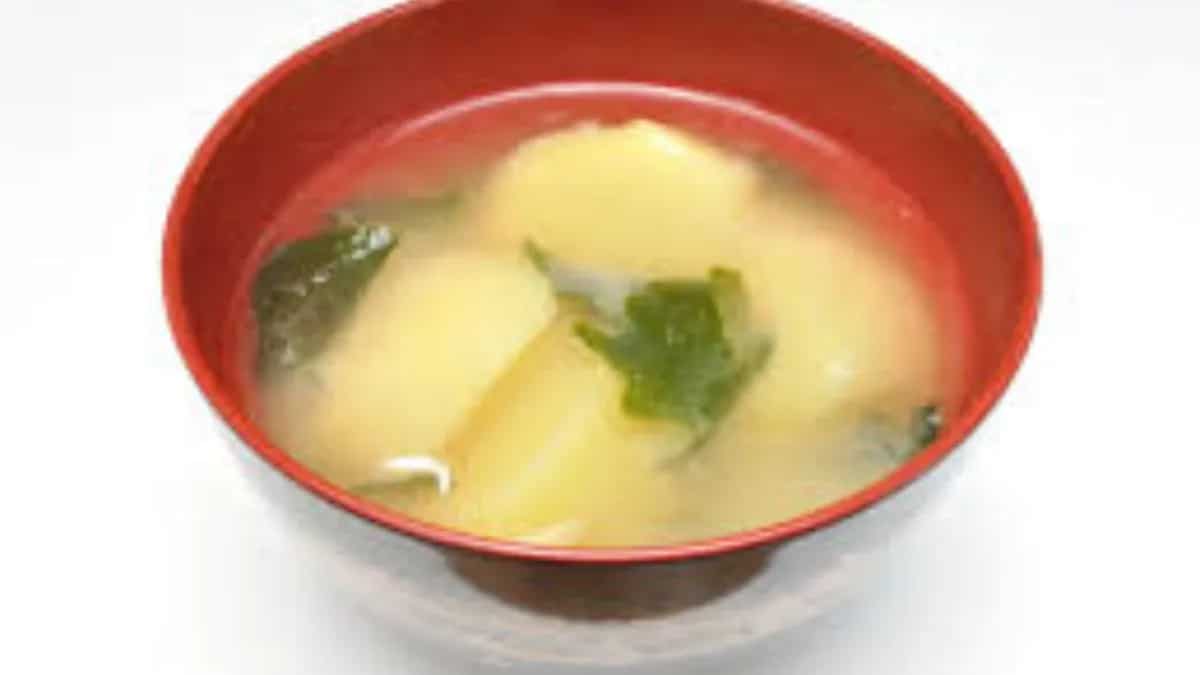
Miso shiru, often known as miso soup, has a personality that goes beyond simple cuisine. It's customary. For over three-quarters of the Japanese population, miso soup is a daily meal. There are two solid reasons for this frequent feasting–the health benefits of miso soup and its ease of preparation. Every household has a unique recipe for miso soup. For crunch, many mix diced daikon into it while others continue to use wakame seaweed, onions, and tofu. The soup is made from a fermented soybean paste called miso, which is combined with a dashi broth made from seaweed (kombu) and bonito flakes. Additional ingredients such as tofu, green onions, and seaweed are often added to enhance the flavour. Miso soup is typically prepared by dissolving miso paste in the dashi broth and then adding the desired ingredients before serving.
Happo Dashi
This is the ultimate Japanese cooking sauce. Many restaurants in Japan and across the world use happo dashi on probably half of the menu to give you a sense of its variety. To begin with, it's quite simple to make. Just take dashi, light soy sauce, sake, and mirin at a respective 10:1:1:1 ratio, and bring to a simmer. You can then adjust the flavour; for example, by adding a bit extra dashi to your recipe. It has a deep umami base that is appropriate for everyday cooking without being overpowering.