


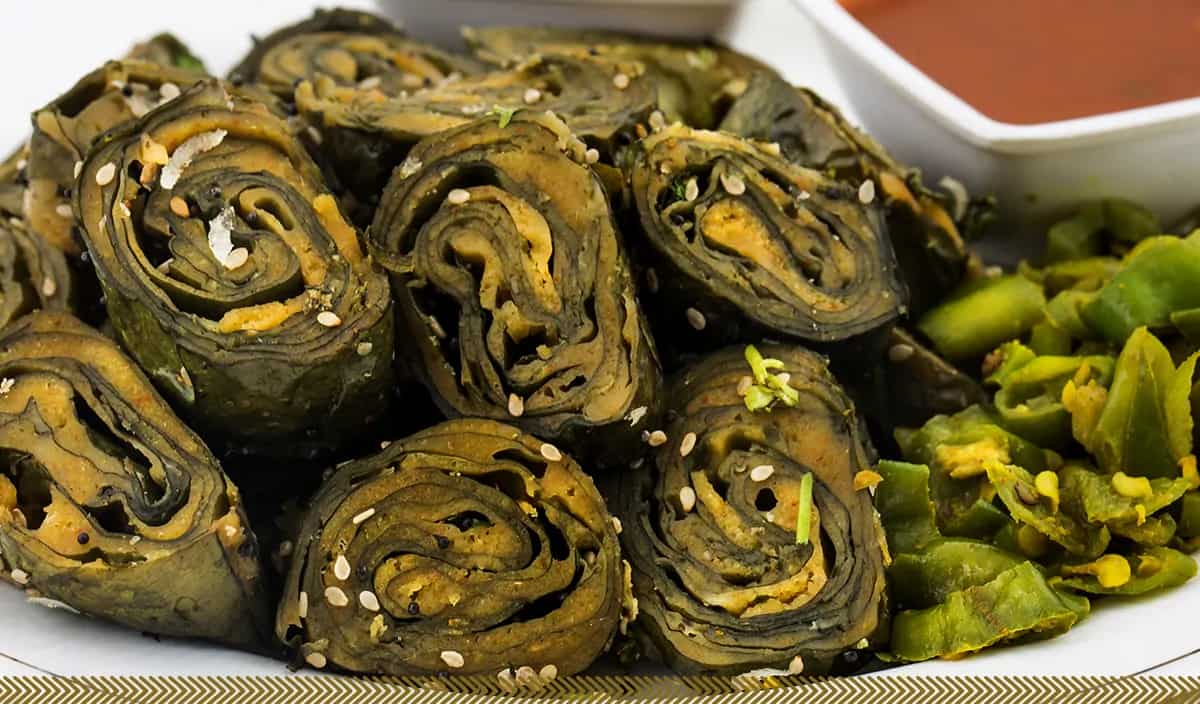
Patra
Nutritional Value
1943
Calories
per serving
- Fat79 g
- Protein74 g
- Carbs230 g
- Fiber42 g
- Sodium0 g
- Others0 g
- Place of OriginINDIA
- CuisineIndian
- Common Ingredients
- CourseStarter & Appetizer
A distinctly Indian dish, Patra has many variations across the country, all following the process of layering leaves with a flavourful mixture, rolling, and then steaming them. While Gujarat calls it Patra, Mangalore refers to it as Pathrade, Maharashtra prepares Aloo Vadi, Uttar Pradesh has Rikwach, some other parts of North India have Patode, and so on.
It’s made with colocasia leaves as the base. Added to it are oil, mustard seeds, sesame seeds, and asafoetida. On it goes a besan mixture, which includes ginger-chilli paste, turmeric powder, chilli powder, asafoetida, jaggery, tamarind water, and salt. Preparing it requires skill and getting the rolls right is an art form that one can perfect with practice.
Colocasia leaves are popular all over the country, and referred to by different names. In Hindi it is called Arvi ke Patte, in Marathi it is Alu che Paan, Gujarati is Alu na Paan, Bengali is Kochu, Odiya is Sarue, Tamil is Seppam Ilaigal, Kannada is Shamangadde, Malayalam is Chembu Ilagial, and Telugu is Chama Akulu.
The leaves have several health benefits. These include improving eye health, since they’re a great source of Vitamin A, while also being helpful in delaying cataract onset. They also boost one’s immunity. Being rich in Vitamin C, which grows white blood cells, it's good for the immune system. It has a lot of fibre which helps reduce the body’s cholesterol levels and potassium which helps to maintain normal blood pressure. Together, they protect heart health. It's also rich in antioxidants and helps maintain the digestive system health. Its fibre may also aid in weight loss, when not consumed as fried food.
Nutritional Value
1943
Calories
per serving
- Fat79 g
- Protein74 g
- Carbs230 g
- Fiber42 g
- Sodium0 g
- Others0 g