


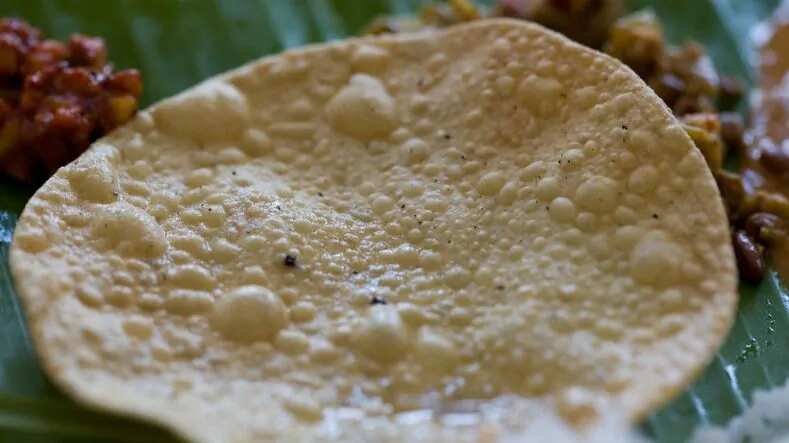
Papad
Nutritional Value
2109
Calories
per serving
- Fat63 g
- Protein116 g
- Carbs255 g
- Fiber60 g
- Sodium0 g
- Others0 g
- Place of OriginINDIA
- CuisineAsian
- Common Ingredients
- CourseCondiment
Papad, Papar, Papadam, Poppadom—addressed by different names across different regions, this crunchy food item is a staple in every Indian cuisine, served both as a main course and an appetiser. However, the Papad industry, which has widely evolved over the last few decades, has a fascinating history and an intriguing connection to women's emancipation in the nation.
The thin, crisp condiment, which is typically shaped like a disc, is created from a variety of ingredients, including rice, chickpeas, potatoes, and other vegetables, as well as black gram flour, and tapioca pearls. Papads can be prepared in a variety of ways; while some choose to fry them, some dry roast them and many homes just prefer to microwave them. It is occasionally consumed with chutneys or dips, or even topped with cheese and veggies.
Shri Mahila Griha Udyog Lijjat Papad, popularly known as Lijjat Papad, is one of the most well-known success stories in the papad industry. This Papad is the creation of seven Gujarati women from Mumbai who wanted to build a business to harness their culinary skills to make a sustainable living. The Lijjat crew, which was established in 1959, quickly grew to 25 women who manually made Papads.
According to culinary historian and author KT Achaya, Papad's history goes back to 500 BC and is mentioned in Buddhist-Jain canonical literature. Back then, Papads were made with Urad, Masoor, and Chana Dal.
In the subcontinent, Papads have been around for at least 1,500 years, if not more, according to historical records. The fact that Papad is first mentioned in Jain literature is not a coincidence. Phaphalia, or simply sun-dried vegetables that serve as Papad, is one of the foods that is fast becoming extinct in Shekhawati, a bastion of the Marwari Jain trading community.
When possible, the community would dry vegetables and store them in large Dabbas (steel containers). These veggies would be rehydrated and cooked in the dry summers or chilly winters when there wasn't much else to eat. These dried veggies would travel well and thus were brought along for trade voyages.
Nutritional Value
2109
Calories
per serving
- Fat63 g
- Protein116 g
- Carbs255 g
- Fiber60 g
- Sodium0 g
- Others0 g