


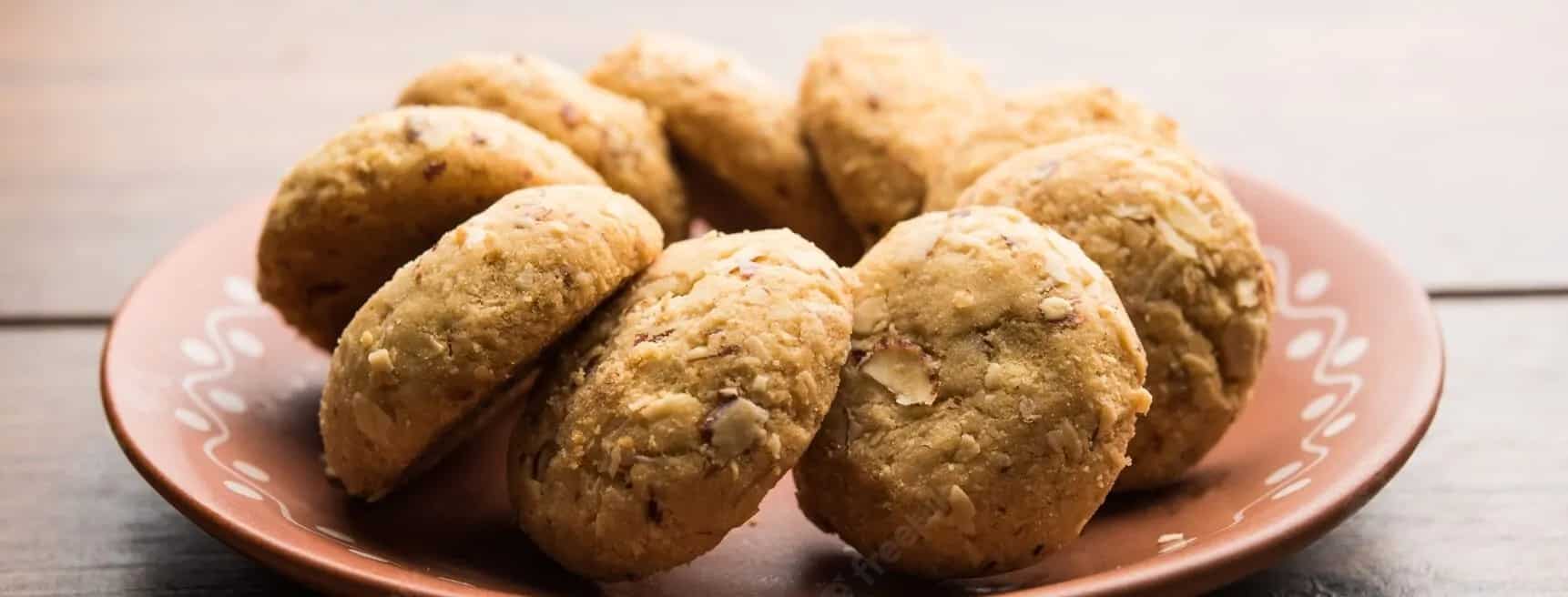
Nankhatai
Nutritional Value
808
Calories
per serving
- Fat49 g
- Protein7 g
- Carbs86 g
- Fiber7 g
- Sodium0 g
- Others0 g
- Place of OriginAFGHANISTAN,,PAKISTAN,,INDIA
- CuisineAsian,Middle Eastern,Persian
- Common Ingredients
- CourseStarter & Appetizer
Nankhatai reveals its ancestors from its name itself. The Persian word "nan" means flatbread and the Afghan word "khatai" means biscuit. Known as the “Indian cookie”, Nankhatai is probably the oldest Southeast Asian snack that's stood the trying times of constantly evolving culinary histories. Popularly prevalent in India, Pakistan and Iran, the Nankhatai finds its predecessor in Afghanistan’s Kulcha-e-khataye, where the word ‘Kulcha’ literally stands for flatbread (similar to ‘Nan’ in Nankhatai). In fact, even during the colonial years in India, the British were known to widely consume the desi biscuit with cups of light Darjeeling Tea. An evidence of that is found in various historical accounts of colonial India where the ‘Nuncatie’ is mentioned, an obvious anglicisation of the Nankhatai.
The main ingredients of Nankhatai include sugar, wheat flour, palm toddy, ghee, almonds and eggs. These easily available items made it possible for common roadside food peddlers to sell them across counters. The sweet and crunchy mixture was the perfect snack for the epicurean elite as well as the everyday worker. Understandably then, Nankhatai is eaten as a midday snack across states in India till date.
Yet another account of Nankhatai in India owes its origins to Dutch cuisine. Due to the dense trade relations between the Dutch and the West Indian port cities of Surat, Gujarat and even Mumbai, the former saw a lucrative opportunity to open up bakeries selling authentic Dutch pastries and baked treats. After the Dutch left India, handing over these bakeries to their Indian successors, many struggled to continue maintaining bread sales since locals would prefer consuming toddy and eggs. As a result of this, the leftover breads would often be sold to the poor working classes at subsidised rates. These workers would then dunk the stale bread into steaming cups of chai (Tea). This tradition was known to have sparked an idea in one such Indian bakery owner who started experimenting with the bread to ultimately make the proverbial ‘Indian cookie’.
The tradition of chomping on Nankhatais with Tea is followed to date with sights of Tea-stall owners handing these hot biscuits with creamy milk Tea (with a dash of ginger to add spice). Punjab, Haryana, Delhi and even Agra have strong associations with the biscuit even now.
The advantage of Nankhatai’s recipe is its hassle-free preparation. For DIY projects, one can easily source the main ingredients like maida (flour), ghee or clarified butter, salt, powdered sugar and chopped almonds.
Nutritional Value
808
Calories
per serving
- Fat49 g
- Protein7 g
- Carbs86 g
- Fiber7 g
- Sodium0 g
- Others0 g