


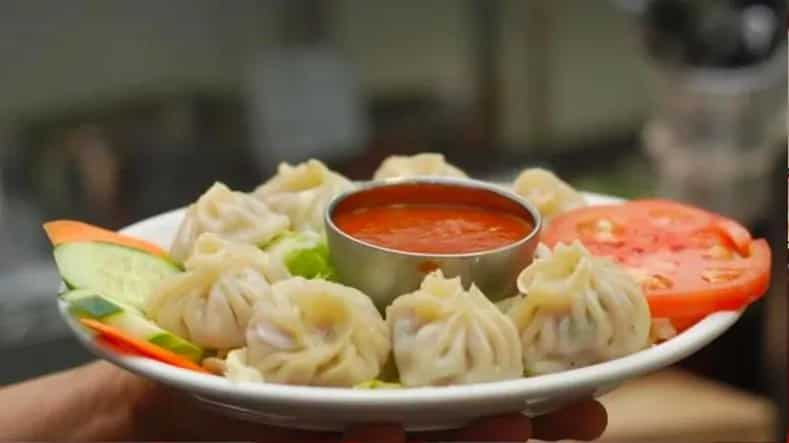
Momo
Nutritional Value
231
Calories
per serving
- Fat5 g
- Protein6 g
- Carbs40 g
- Fiber2 g
- Sodium0 g
- Others0 g
- Place of OriginTIBET,,NEPAL
- CuisineAsian,Tibetan,Nepalese
- Common Ingredients
- CourseStarter & Appetizer
Momos, the ubiquitous meat dumplings that when bit into, reveal a world of scrumptious wonder, have slowly but steadily captured the intrigue and interest of the entire Indian subcontinent. While the origins of Momo trails back to Tibet and Nepal, India and its neighbouring states have always had a soft corner for the dish. Vaguely similar to the Chinese Baozi and Jiaoz (two dishes that are especially prepared during important occasions like the Chinese Lunar New Year), the Momo underwent slight tweaks over its period of existence. The one-biter gained so much popularity among the billions, that various novel versions of the dish cropped up—from Soup Dumplings, to Veg Momo, and for the ones inclined with a sweet tooth, even the Chocolate Momo.
Crowned the national dish of Tibet (unofficially), Momos were traditionally steamed dumplings that had a minced meat filling along with zesty spices including chopped chillies, finely chopped onions, garlic, tomatoes and ginger. Before carefully placing the mixture and wrapping it in the silky dough, the concoction is carefully sautéed in a hot wok (pan), with all the spices. However, an important precaution during cooking of the meat entails not overcooking the mince, to retain the succulent, tender juices to get the perfect slurpy bite every time you dig into the heavenly potsticker.
Through trade routes, Momos travelled far and wide. While Tibet’s neighbouring regions like Bhutan, Nepal and India readily embraced the delicious wonder, the Chinese Dim Sum (a close cousin of the Tibetan Momo) made its presence felt in the West. In Bhutan, for example, the Momo filling often has yak meat or beef. The vegetarian options (extremely famous in Bhutan and Indian states like Gujarat, Indore and Rajasthan) include cabbage, paneer (cottage cheese), mushroom, potatoes or even spinach fillings. The Bhutanese variant of these dumplings are also laced with a special sauce. The concoction for the sauce comprises the deadly Dalley chillies (locally grown), also called Dalley Khorsani. In Nepali language, ‘dalley’ stands for round, while ‘khorsani’ means chilli. The chillies are ground with sliced onions and tomatoes into a coarse paste. As garnishes, the Bhutanese often use their special peppers that add the extra zing to the dish. The non-vegetarian options for the dish mostly have beef, pork, chicken or a shrimp mince.
Nutritional Value
231
Calories
per serving
- Fat5 g
- Protein6 g
- Carbs40 g
- Fiber2 g
- Sodium0 g
- Others0 g