


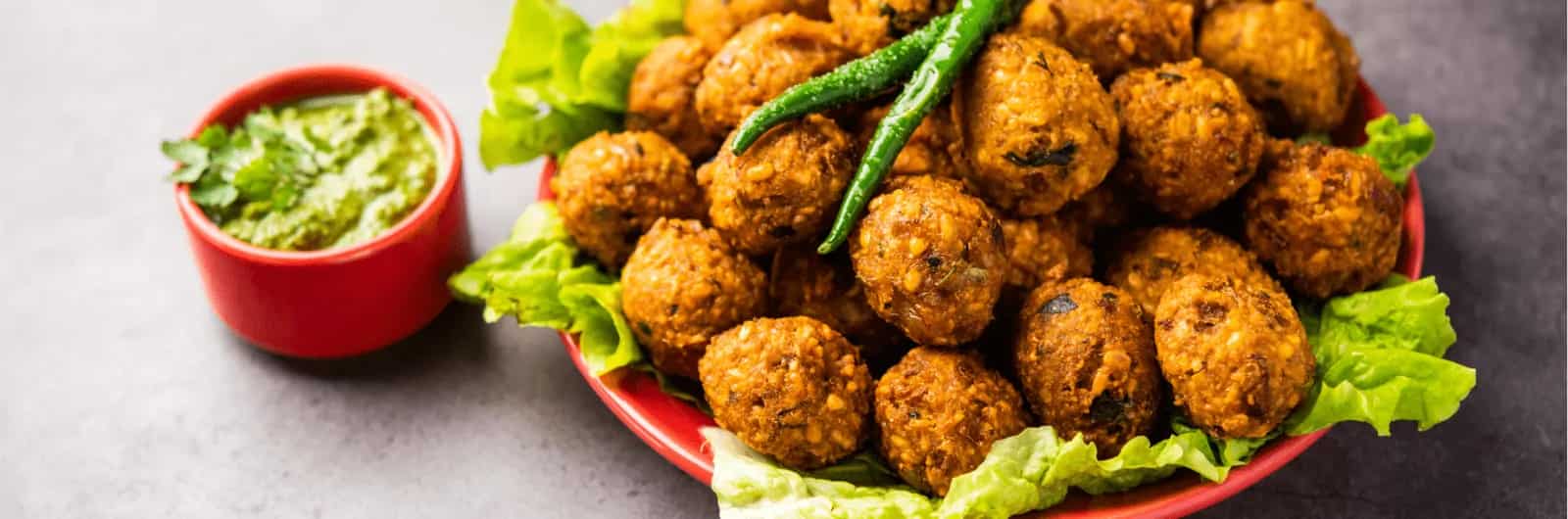
Masala Vada
Nutritional Value
1360
Calories
per serving
- Fat14 g
- Protein89 g
- Carbs210 g
- Fiber52 g
- Sodium0 g
- Others0 g
- Place of OriginINDIA
- CuisineAsian,Indian
- Common Ingredients
- CourseStarter & Appetizer
A popular south Indian snack, the Dal Vada is a spicy, crispy fritter made of chana dal (Bengal gram). It's also called Chana Dal Vada, Parippu Vada, and Paruppu Vadai. One variation of the Dal Vada is the Masala Vada, which uses a more complex amalgamation of spices and flavours. To make it, one needs spices like asafetida, dry red chillies, fennel seeds, coriander seeds, and black peppercorns, all grinded together. For the vadas, combine the masala mix to soaked chana dal, onions, ginger, chillies, curry leaves, coriander leaves, rock salt or salt, and oil for frying.
Vadas, from the medu vada to mirchi vada and from the vella vadai to the batata vada, have a long history in India. An early mention pops up in the 728 AD book Susiddhikara Sutra, chapter 12 of which details different food offered to the gods. Among them are Vatakas, round cakes made of pulses and fried in oil. The 12th century treatise Manasollaasa also mentions a similar food; urad dal is seasoned with asafoetida, salt, and pepper, and fried in oil. In his Pradhulingaleela, author and poet Chamarasa also mentions Vatakas, and a variation of that recipe still exists today.
Chana dal, the base ingredient of the Masala Vada, is also full of health benefits. It energises the body and is a great source of protein. Rich in antioxidants, it also keeps the heart healthy. With a very low glycemic index, it’s also a great food for diabetics, also lowering insulin resistance. It also maintains blood pressure. Being high in fibre, it also aids digestion and makes one feel full longer, in turn also aiding weight loss. It’s also good for skin and eyes and strengthens bones and teeth.
Nutritional Value
1360
Calories
per serving
- Fat14 g
- Protein89 g
- Carbs210 g
- Fiber52 g
- Sodium0 g
- Others0 g